

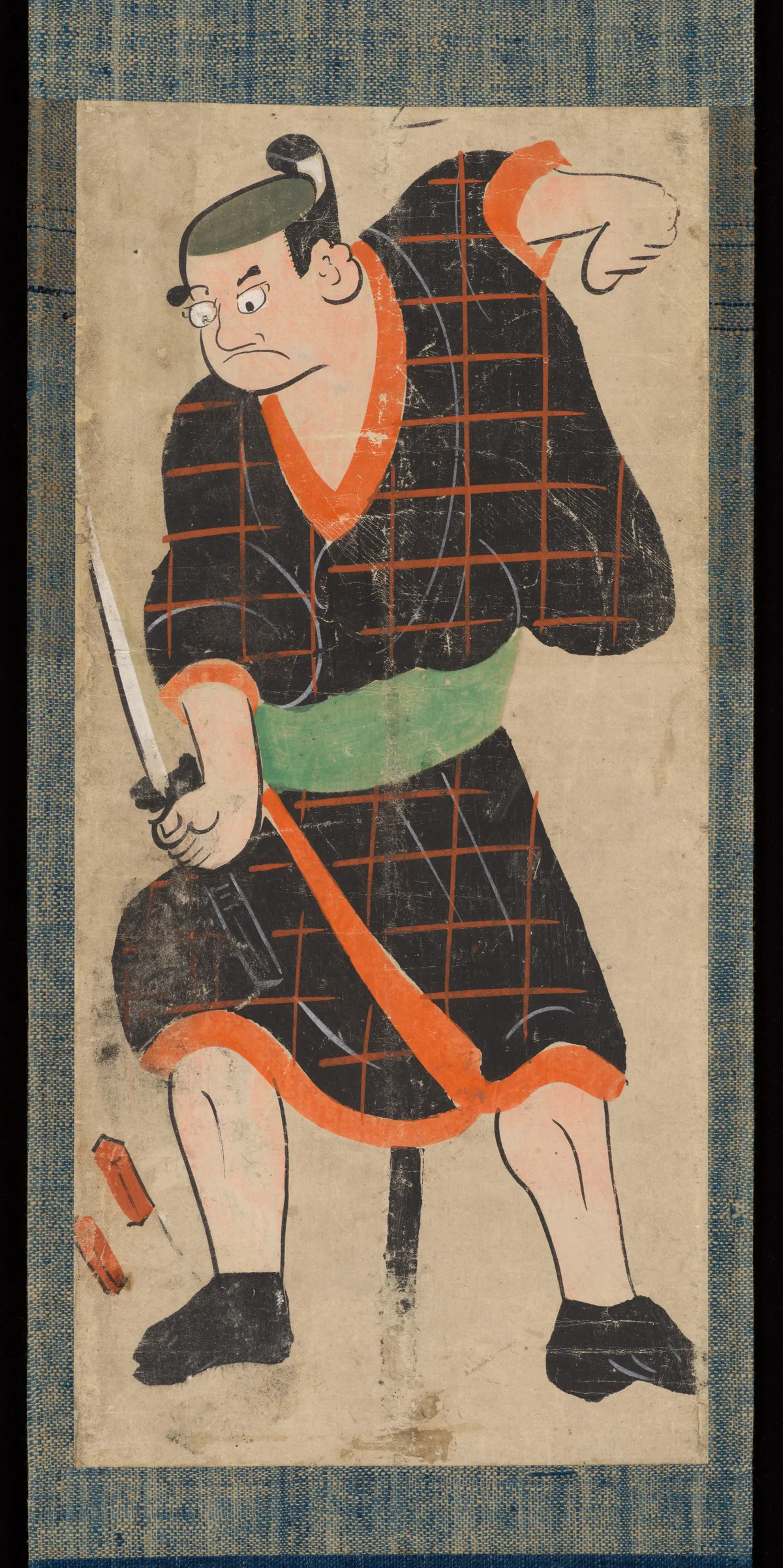
The Outlaw's Masquerade
The kabuki stage flickers with lantern light. Shadows dance on the wooden boards. An actor steps forward, embodying the outlaw Hotei Ichiemon. His eyes glint like steel. The crowd breathes in, anticipation thick as smoke. His kimono drapes heavily, a cascade of bold patterns. Each step deliberate, echoing in the silent hall. The air is dense with the scent of incense and sweat. He pauses, his face a mask of audacity. Silence holds the room.
The actor’s voice breaks through, low and resonant. It tells of the Karigane Five, bandits of legend. The tale winds through the dimly lit space, a thread of crime and defiance. His hands move with precision, slicing the air. The audience leans in, caught in the outlaw’s spell. His laughter is sharp, cutting through the soft murmur of the crowd. He is Hotei Ichiemon, if only for this fleeting moment. The stage is his world, the audience his captives.
Historical Echo
In the early 18th century, kabuki thrived as a vibrant art form. Stories of outlaws and heroes captivated Edo audiences. Actors became legends, their performances etched into memory. Ōtsu-e, simple yet powerful, captured these theatrical moments. They brought tales of rebellion into homes, a reminder of the stage’s enchantment. Through the prints, the echoes of kabuki's golden age linger on, whispering tales of the past to those who listen.