

A Sound in the Stillness
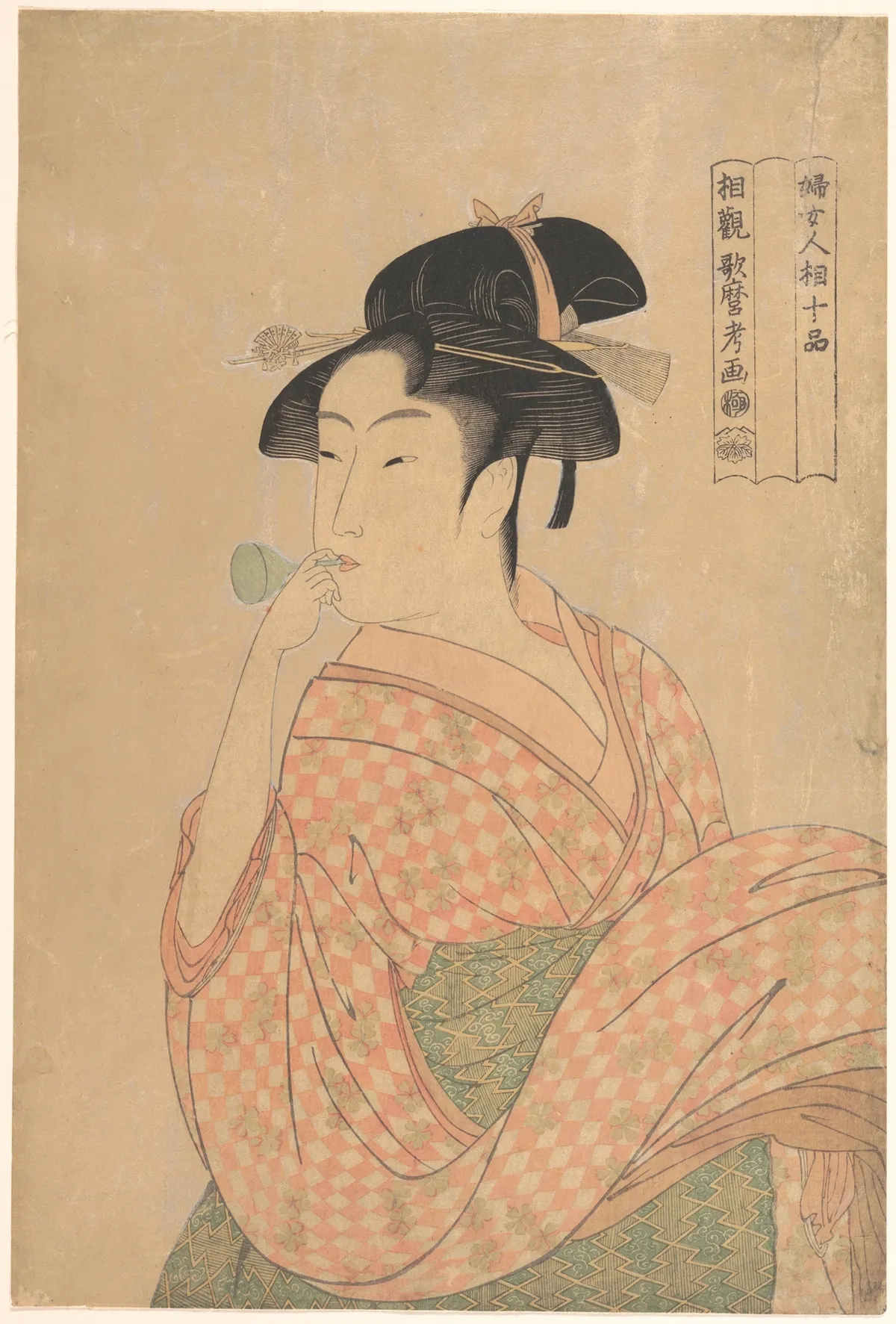
The room hums with silence. A young woman stands near a paper screen. Her fingers grip the delicate glass popen. She raises it to her lips. A soft breath escapes, filling the air with a gentle, high-pitched note. The sound hangs, suspended like a fragile bubble.
Her kimono whispers against the tatami mat as she shifts. Light from a nearby lantern flickers across her face. Shadows dance momentarily, then settle. The air is thick with the scent of sandalwood, a small incense burner smoldering quietly in the corner.
Her eyes, downcast, reveal nothing. She seems lost in the simple act of creating sound. The popen's note fades, leaving behind an echo of its fragile existence. Silence returns, heavy yet comforting, as if the room itself breathes with her.
Utamaro's brush captures this moment, preserving the stillness between breaths, the solitude of a single note. The young woman lowers the popen, and the world waits in anticipation of another sound.
Historical Echo
In the late 18th century, Kitagawa Utamaro captured the essence of fleeting moments. His portraits focused on the subtleties of human expression and the quiet beauty of everyday life. The popen, a simple glass toy, was popular among Edo-period women. It symbolised both fragility and the ephemeral nature of sound. Through Utamaro's work, we glimpse the delicate balance between sound and silence, presence and absence, in the lives of Edo's women.