

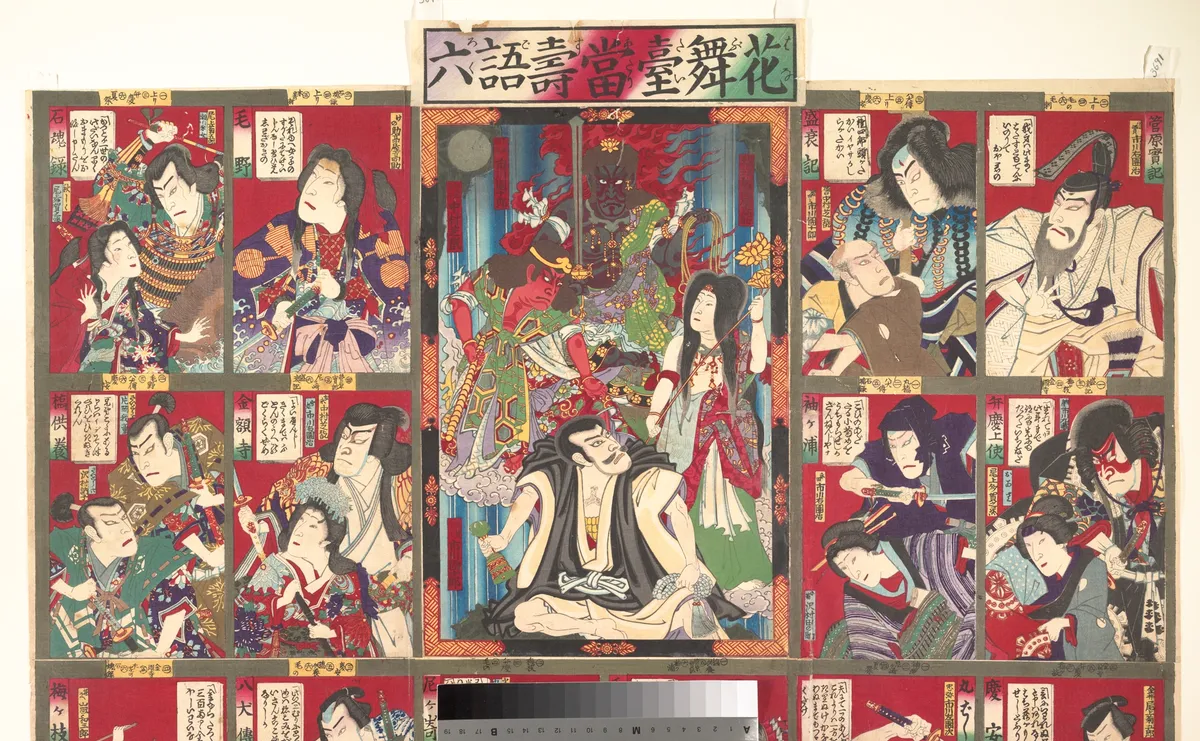
Board Game on a Flower Stage
The lanterns flicker softly, casting shadows on the polished wood of the stage. Actors, their faces painted in vivid hues, gather around a board game. The air is thick with anticipation. A breeze carries the distant hum of the city, mingling with the murmur of the crowd. The actors exchange glances, their eyes gleaming with the thrill of the game. Each move is deliberate, echoing the artful precision of their performances. The game pieces, worn smooth from countless hands, click against the board like whispers of old tales. Costumes rustle as an actor shifts, leaning closer, his gaze intense. The scent of rice powder and incense hangs in the air, a testament to the world that exists beyond the stage, yet feels so close. Outside, the night deepens, but here, time is suspended. The board game, a flower stage, holds them all in its delicate embrace.
Historical Echo
In 1883, the world of Kabuki theatre thrived under the watchful eye of Toyohara Kunichika. This print captures more than a mere game; it is a window into the vibrant heart of Edo's theatrical life. Sugoroku, a popular board game, mirrors the drama of the stage. Each piece and move reflects the actors' lives, where every gesture carries weight. The scene is alive with the echoes of applause and the rustle of silk, each detail a testament to the era's artistry and passion. Kunichika, a master of capturing the essence of his time, renders a moment that lingers, haunting and beautiful.