

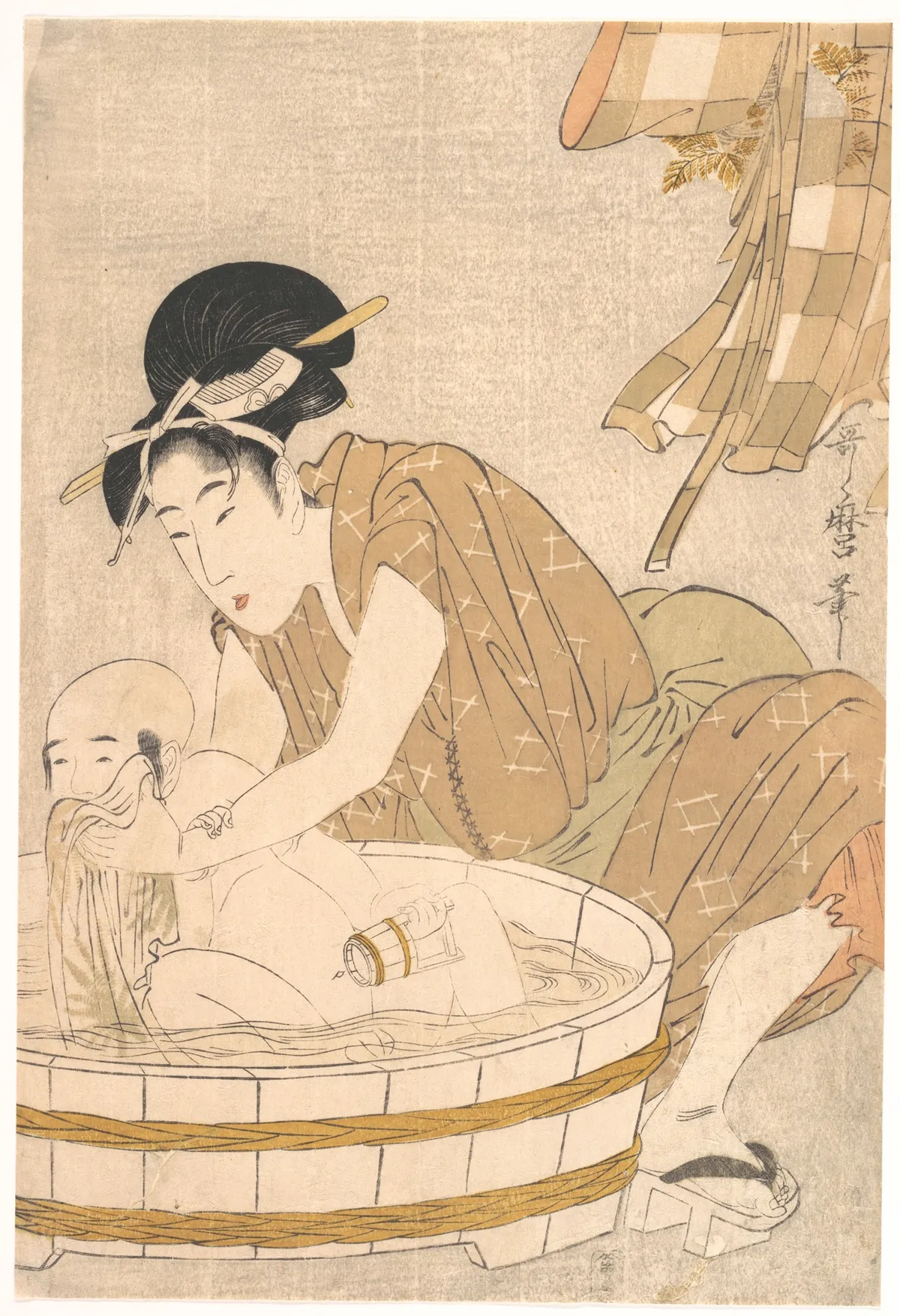
Bathtime
Steam clings to the air, blurring the edges. A woman kneels by the wooden tub. Her kimono slips softly from her shoulders. The room is silent save for the water's gentle lapping. She pours a ladle of warm water, watching it cascade over her skin. Her face is calm, eyes almost closed. Shadows play across her features, gentle and fleeting.
Utamaro captures the quiet intimacy. The serenity of a private moment. The world outside fades. Here, the warmth of the bath envelops her. The scent of hinoki wood mingles with the steam. It is a moment suspended in time, delicate and ethereal. The light flickers, caught in the sheen of her wet skin. Each movement is deliberate, a ritual of cleansing and reflection.
Historical Echo
In the Edo period, bathing was more than cleansing. It was a meditative ritual. Utamaro, known for his bijin-ga, painted women in moments of introspection. Through his work, he offered a glimpse into their world. It was a time when beauty was found in the everyday. The act of bathing became an art form, revealing grace and vulnerability. Utamaro's prints captured this ephemeral beauty, making the mundane extraordinary.