

Ceremonial Whispers
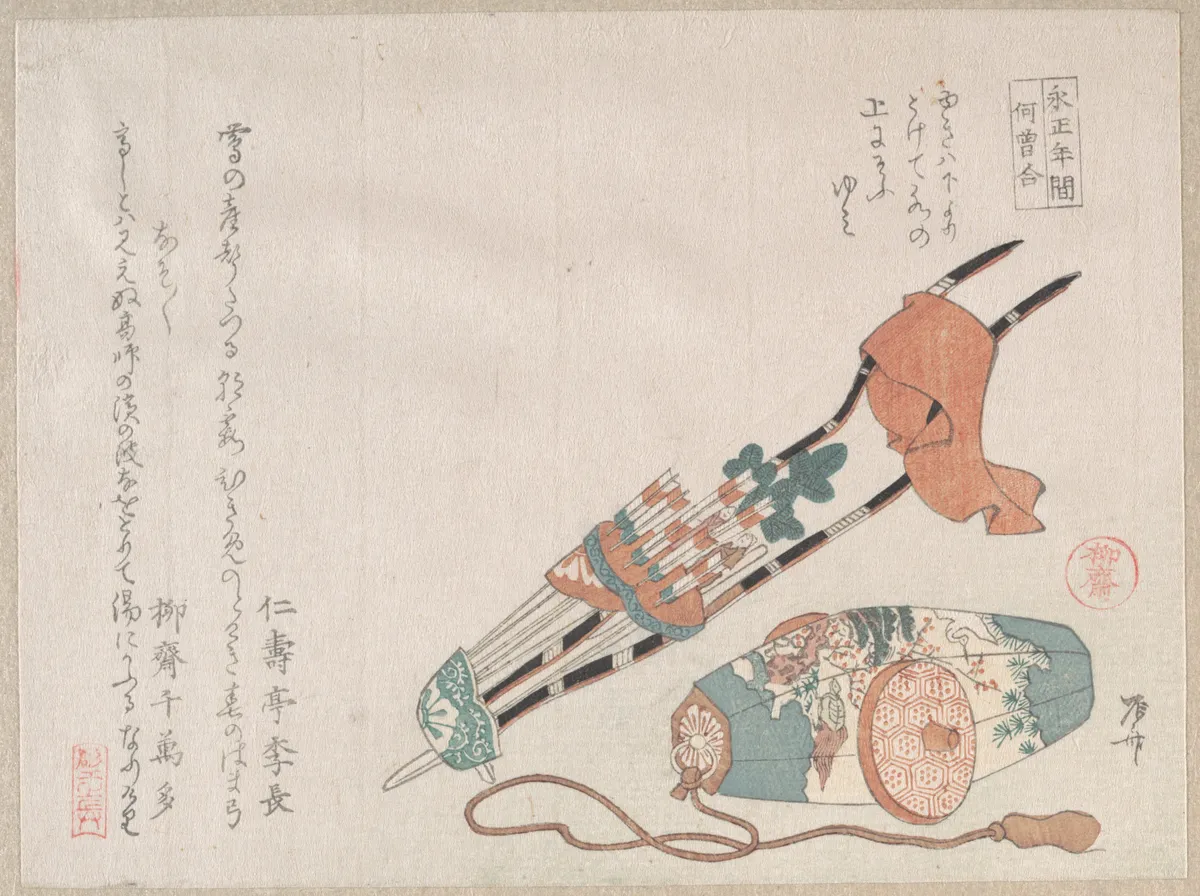
The room was silent, save for the rustle of silk. A faint aroma of incense lingered. Light filtered through paper screens, casting gentle patterns on the tatami. At the centre, two ceremonial toys lay: the hama-yumi and buriburi-gitcho. The bow, crafted with care, gleamed in the soft light. The rattle, snug and round, seemed to hold secrets within its painted shell.
A young boy approached, his feet padding softly on the mats. His eyes wide with wonder. He picked up the bow. Its weight was reassuring. His fingers traced the smooth wood, feeling the grooves made by careful hands. He imagined himself as a warrior, standing tall and fierce.
Beside him, the rattle awaited. Its surface cool to the touch. He shook it gently. The sound, like distant thunder, filled the space. It was a sound that spoke of protection, of warding off evil spirits. He smiled, a quiet joy blooming within him.
The toys were more than mere objects. They were a promise of growth, a whisper of the future. The boy placed them back with reverence. The room, once again, was silent.
Historical Echo
In the Edo period, ceremonial toys like the hama-yumi and buriburi-gitcho were symbols of hope and protection. Given to boys during the New Year, they carried cultural significance. The bow, known as hama-yumi, was believed to repel malevolent forces. The rattle, buriburi-gitcho, echoed with the promise of strength and vitality. Crafted with precision, these toys were not simply for play but for tradition and spiritual safeguarding. Ryūryūkyo Shinsai, through his delicate lines, captured this essence, offering a glimpse into a world where the future was cradled in the small hands of a child.