

The Whisper of New Year
The room was silent, save for the soft rustle of paper. A gentle light filtered through rice paper screens, casting pale shadows that danced across the tatami mats. The air was heavy with anticipation, the kind that only the promise of a new year could bring.
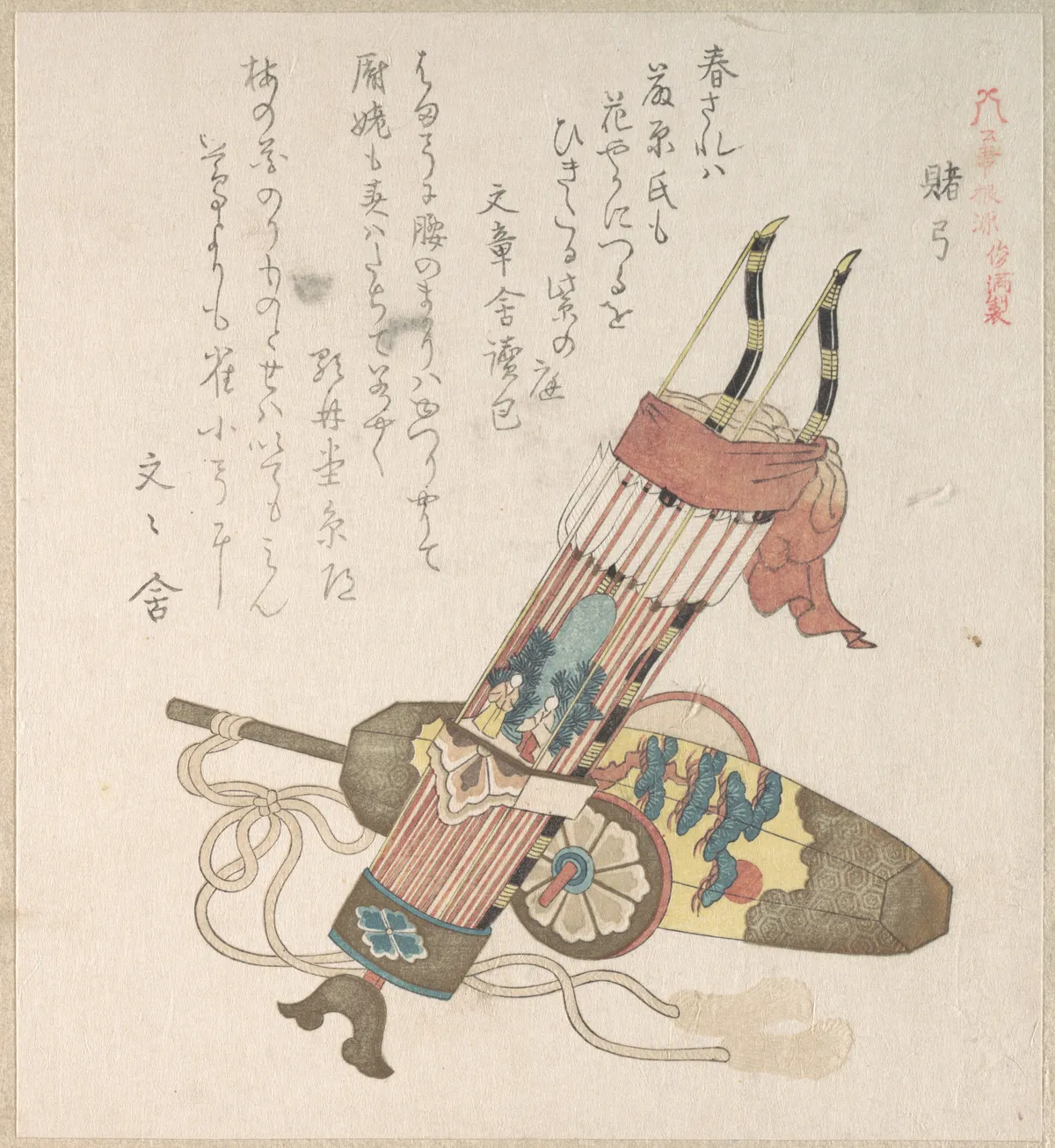
In the centre, a boy sat cross-legged, his small fingers tracing the delicate lines of his new toys. A hama-yumi, a sacred bow, lay before him. Its string, taut and silent, seemed to hum with a quiet energy. Beside it, a buriburi-gitcho, a spinning top, glinted under the muted light. Each toy, a promise of protection and prosperity for the coming year.
The boy’s gaze lingered on the hama-yumi. He imagined the twang of the bowstring, the arrow soaring through the crisp winter air. A talisman against evil, they said. A silent guardian.
Outside, the world was hushed. Snow fell softly, blanketing the earth in a serene white. The boy's mother moved quietly, her presence a comforting shadow. Her kimono whispered as she knelt beside him, smoothing his hair with a tender hand.
"Play, my son," she murmured. "The new year awaits."
He nodded, releasing the top with a flick of his wrist. It spun gracefully, a dance of colour and light. The world seemed to hold its breath, captivated by its motion.
As the top slowed, the boy touched the bow once more, feeling the weight of the moment. The room, the toys, the year—all poised on the edge of something new.
In the stillness, the future whispered, a gentle promise carried on the cold air.
Historical Echo
In the Edo period, toys like the hama-yumi and buriburi-gitcho were more than mere playthings. They held cultural significance, symbols of hope and protection. The hama-yumi, a ceremonial bow, was believed to ward off evil spirits, while the spinning top, with its vibrant spin, heralded good fortune. These traditions, woven into the fabric of New Year celebrations, offered comfort and continuity in a world that was ever-changing.