

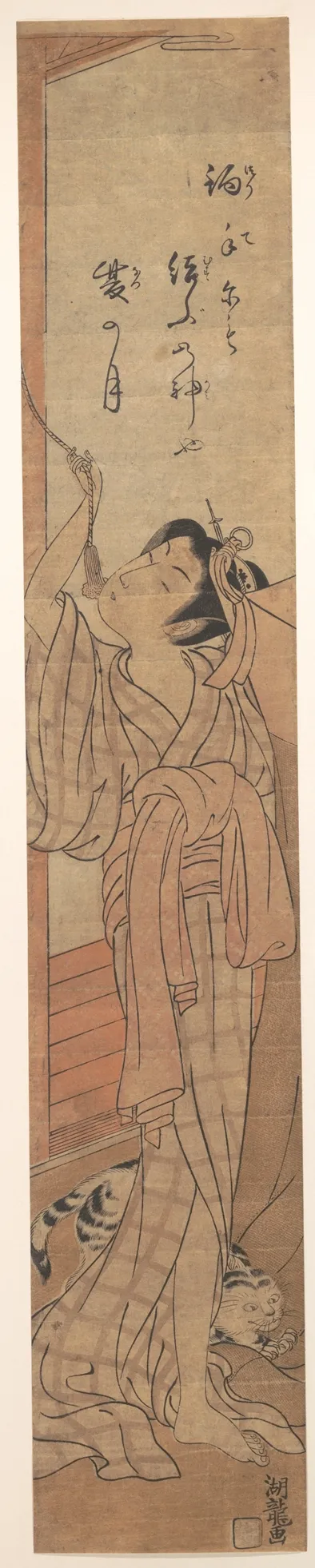
A Midnight Whisper
The room lay cloaked in soft shadows. A paper lantern flickered gently, casting faint glows on the tatami floor. She sat beside the bed, fingers absent-mindedly twisting the silk tassel of the bed-net. The fabric whispered against her skin. Her gaze drifted to the tabby cat, a creature of quiet mischief, batting at the tassel's swaying end.
The air was warm, stirred only by the faintest breeze through the open shoji screen. Outside, the garden murmured with the rustle of leaves. She could hear the distant call of a night bird, a solitary note echoing in the stillness.
The cat, persistent and playful, pounced with silent paws, its tail a twitch of curiosity. She smiled, a fleeting shadow of a smile, as if sharing a secret with the feline. The world beyond the screens felt distant, as though the room were afloat on a sea of tranquility.
Her kimono, a cascade of delicate patterns, rustled with her every movement. The scent of sandalwood lingered in the air, mingling with the faint aroma of tea leaves. She paused, her fingers ceasing their dance with the tassel, and listened to the silence that filled the spaces between the sounds.
The moment stretched, timeless, as if captured in the delicate lines of a woodblock print.
Historical Echo
In the Edo period, such intimate scenes were often captured by artists like Isoda Koryūsai. These prints, known as bijin-ga, celebrated the beauty and quiet moments of everyday life. The presence of the cat adds a touch of playfulness, a common motif symbolising fortune and companionship in Japanese culture.