

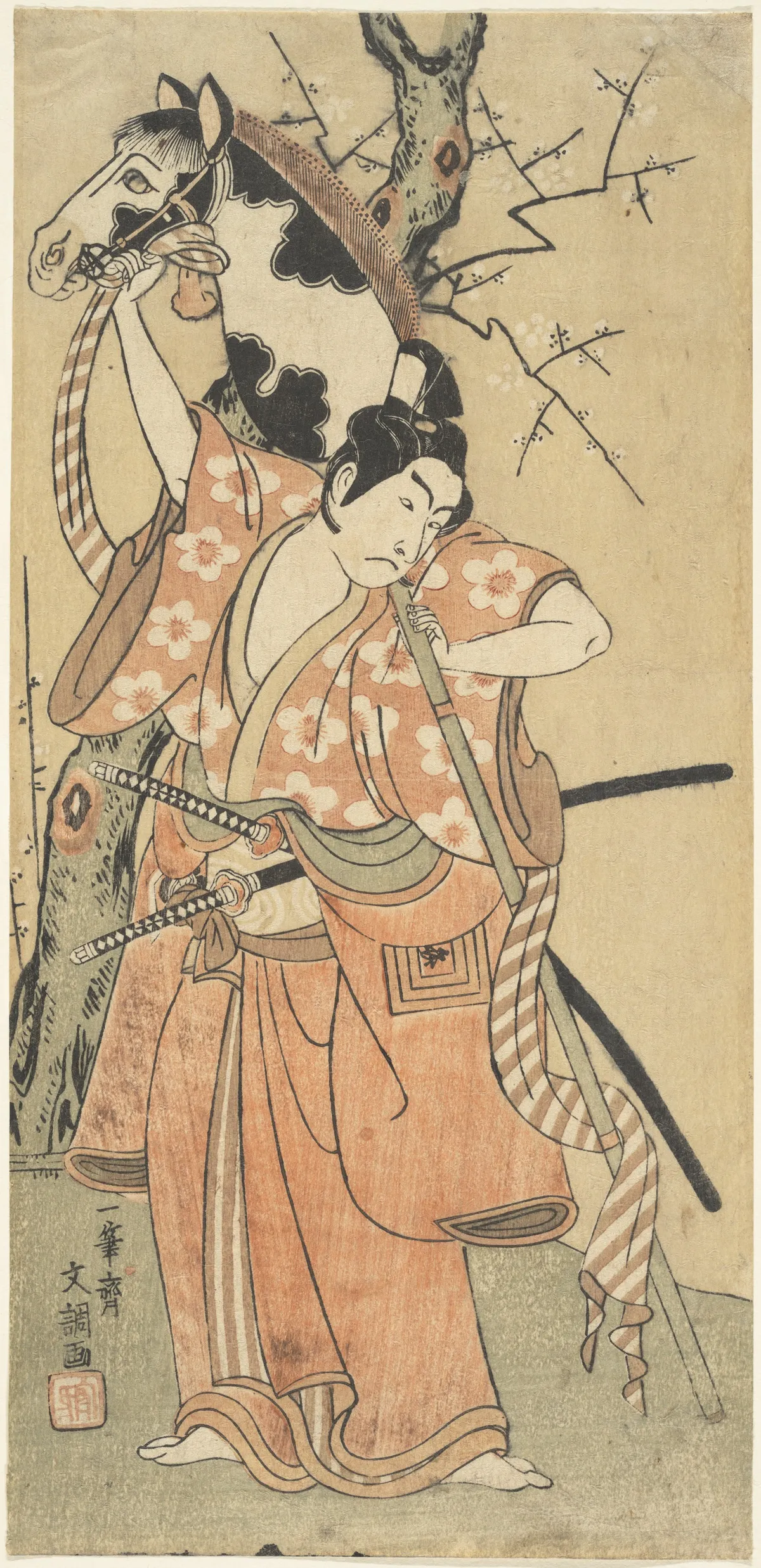
Under the Plum Blossoms
The boy stood beneath the plum blossoms. Their pale petals fluttered around him like a soft rain. In one hand, he held a toy horse, its wooden form smooth and familiar against his fingers. The air was cool, carrying the scent of the blossoms, a delicate fragrance mingling with the damp earth.
His name was Danjuro, a name that would echo in the theatre halls long after the blossoms had fallen. But now, he was just a boy, lost in the quiet world of play. He moved the horse through the air with a gentle motion, as though coaxing it to life.
The garden was hushed, save for the occasional rustle of leaves. Shadows played on the ground, shifting with the breeze. Danjuro’s eyes followed the patterns, tracing the dance of light and dark. He was alone, yet not lonely, enveloped in the presence of the trees, the earth, and the sky above.
A distant sound broke the silence—a faint call from the house, a reminder of the world beyond this tranquil space. Danjuro paused, the horse suspended mid-gallop. He hesitated, then turned, leaving the blossoms to their gentle sway.
The air vibrated with a lingering echo, the memory of a moment, captured beneath the plum blossoms.
Historical Echo
Danjuro, a name synonymous with kabuki, carries weight and legacy. The Ichikawa family, renowned for their mastery of this theatrical art, passed the name through generations. Ippitsusai Bunchō captured a young Danjuro, before the stage lights, before the legacy, at a time when the world was simple, framed by the ephemeral beauty of plum blossoms. This print, untethered to a specific date, offers a glimpse into a fleeting moment, an intimate pause in the life of one destined for greatness.