

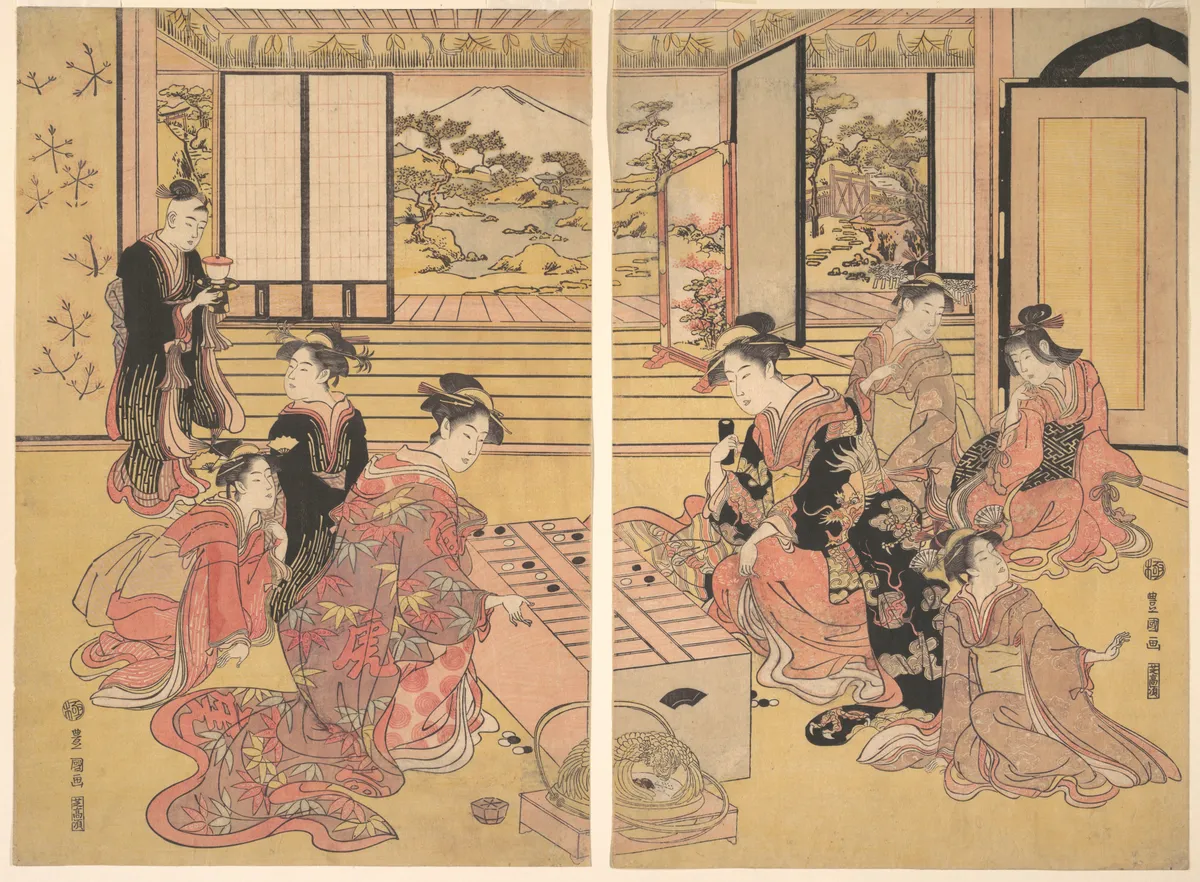
Two Young Women Playing a Game of Sugoroku
The room hums with the quiet anticipation of a game yet to unfold. Two young women, poised in the gentle glow of a paper lantern, lean over a board of Sugoroku. The air is thick with the aroma of incense, curling like whispers through the dimly lit chamber. Each wears a kimono of fine silk, the fabric rustling softly with their movements.
Their eyes meet briefly, a fleeting moment of silent rivalry. One reaches forward, her sleeve trailing like a whisper on the tatami mat. The dice clatter across the board, breaking the night’s stillness. Their world, reduced to the confines of the game, tightens around them. The outside world fades, leaving only the soft crackle of the lantern and the muted rustle of silk.
The game proceeds with deliberate grace, a dance of strategy and chance. Shadows flicker against the shoji screens, casting elongated forms that sway with the rhythm of the lantern’s flame. The women’s voices, low and measured, punctuate the silence as each move draws them deeper into the game’s embrace.
A distant temple bell tolls, its echo a haunting reminder of time slipping away. Yet, in this room, the moment feels suspended, captured in the delicate balance of play and pause.
Historical Echo
Sugoroku, a game of strategy akin to backgammon, was a cherished pastime in the Edo period. It brought people together, weaving social bonds amidst the rolls of dice. Utagawa Toyokuni I, renowned for his bijin-ga, captured the elegance of women in their private moments. This print, though its exact date of creation is unknown, reflects the intimacy and subtle tension of such gatherings. The artist’s deft hand immortalises a transient moment, a quiet echo of Edo’s vibrant culture.