

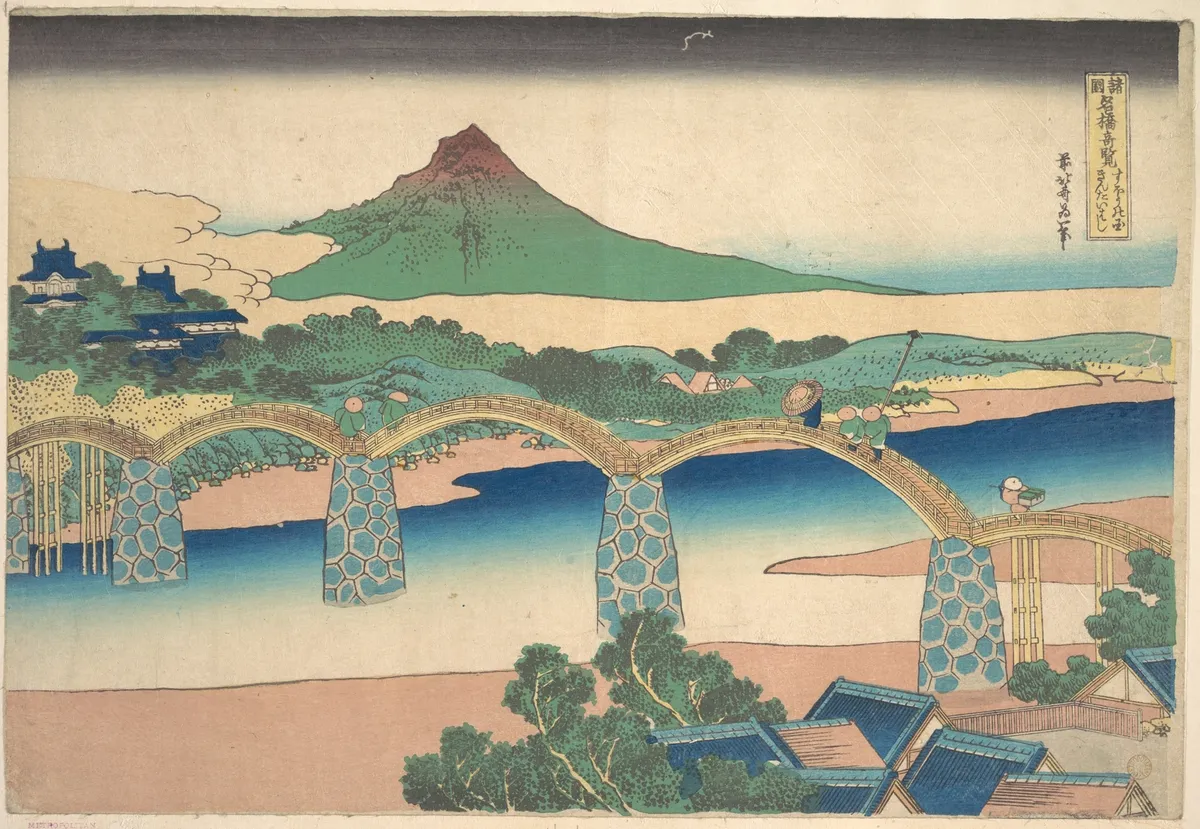
Kintai Bridge in Suō Province
The river whispers beneath the Kintai Bridge. Solid arches rise, carved from the patience of wood and stone. Mist curls, lazy and soft, around the bridge’s feet. A fisherman stands alone, his silhouette a shadow against the dawn. He casts his net, rhythm slow, like breathing. Water droplets catch the first light, jewels for an instant before they fall.
Birds call from the trees lining the riverbank. Their cries are distant, woven with the sound of water. The bridge groans faintly, an old man stirring in his sleep. Across its span, footsteps echo, slow and deliberate. A traveller, wrapped in layers against the chill, pauses at the midpoint. He stares into the mist as if searching for something lost.
The air is thick with the scent of rain, not yet fallen. It carries the promise of cleansing, of renewal. The world holds its breath, suspended between night and day. The fisherman pulls his net, heavy with the river’s bounty. A small smile flickers, quick as a fish, across his face.
Historical Echo
Katsushika Hokusai's print captures a bridge both ordinary and extraordinary. Built in Suō Province, Kintai Bridge was famed for its unique five-arch design. It stood resilient against floods and time, a testament to human ingenuity. Hokusai, ever the observer of nature and man, found poetry in its structure. Through his eyes, the bridge becomes a quiet stage for life's small dramas, eternal yet fleeting.