

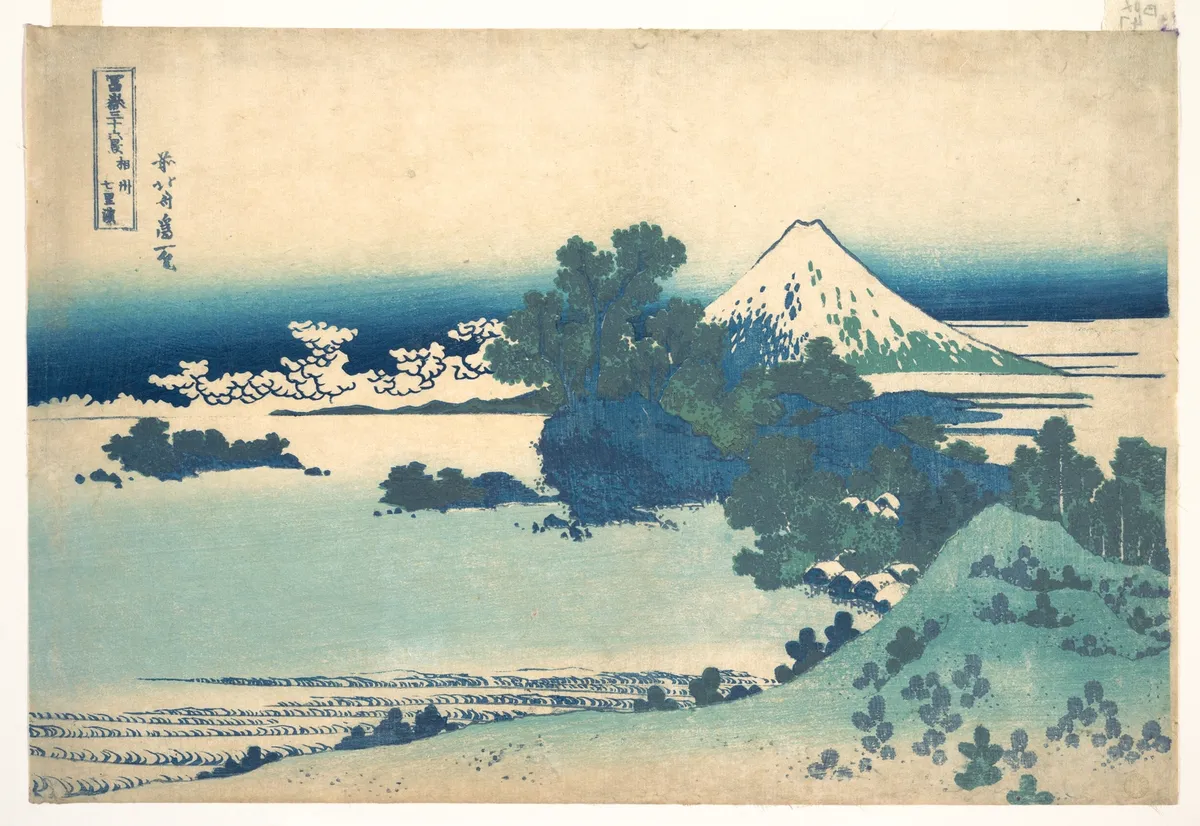
Shichirigahama's Whisper
The waves lapped gently at the shore. A muted rhythm against the sands of Shichirigahama. The air carried a salty tang, mingling with the scent of pine from distant groves. Fishermen, silhouetted against the morning light, dragged their boats with laboured breaths. Their voices, hushed by the vastness of the sea, merged with the wind's soft exhalation.
Mount Fuji loomed, serene and eternal, its peak wreathed in delicate wisps of cloud. A guardian over the province, watching the ebb and flow of life below. The mountain's presence was both comforting and daunting, a constant reminder of nature's indifference.
A lone traveller paused, feeling the dampness of the earth seep through his sandals. He squinted against the rising sun, eyes tracing the horizon where sea met sky. His thoughts, like the waves, retreated into silence.
The day stretched ahead, full of unseen possibilities. Yet, here, in this moment, time seemed to hold its breath. The world whispered its secrets in the rustle of leaves, the cry of distant gulls, and the endless murmur of the sea.
Historical Echo
Katsushika Hokusai, a master of ukiyo-e, created this scene around 1830–32. Part of the iconic series "Thirty-six Views of Mount Fuji," it captures the tranquil beauty of Shichirigahama in Sagami Province. Hokusai's work reflects a deep reverence for nature and a profound understanding of its transience. The series, celebrated for its innovative use of perspective and colour, continues to resonate, offering glimpses into the Edo period's soul.