

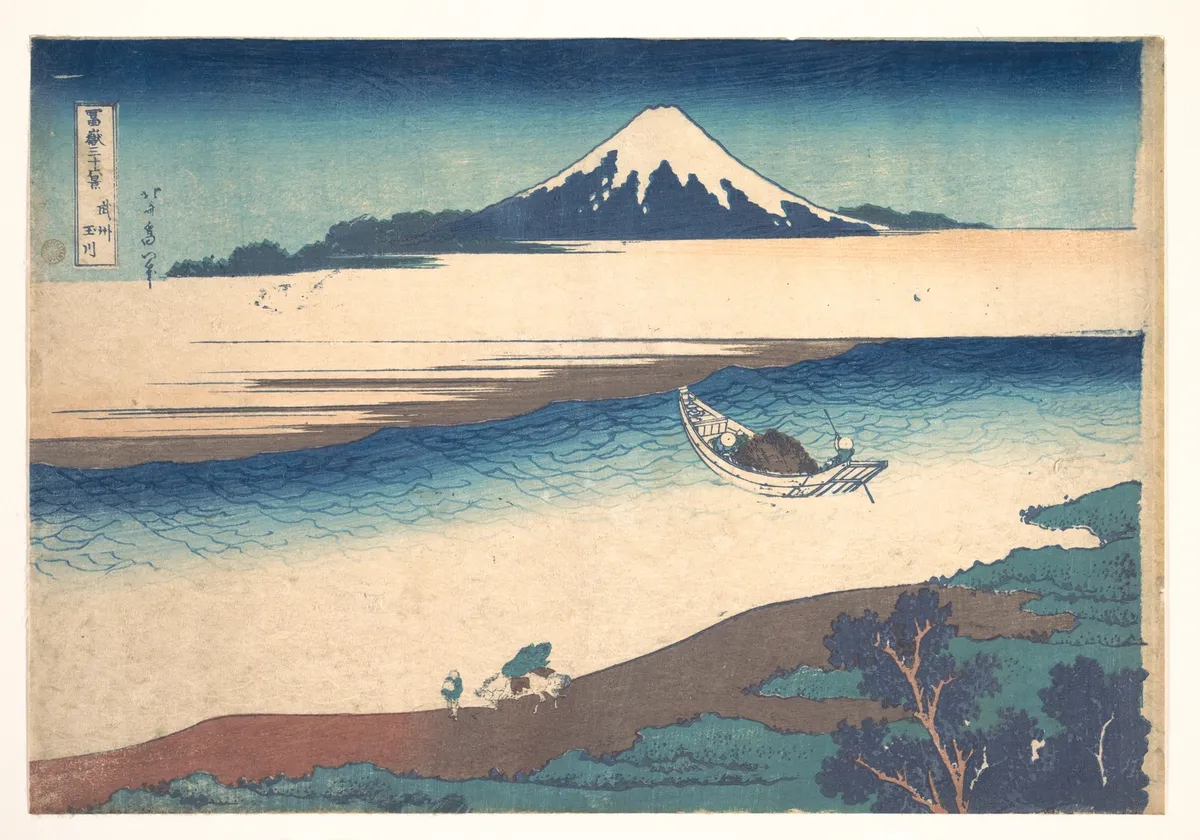
The Quiet Flow of Tama
Dawn breaks over the Tama River. Mist clings to the water's surface. Boats drift silently, their shadows long and soft. The air is cool, carrying whispers of damp earth and pine. Fishermen move with practiced ease, poles dipping into the river, disturbing the mirrored sky.
In the distance, Mount Fuji stands sentinel. Its form looms, a silent witness to the daily rhythm of life below. The mountain's peak is brushed with the first light, a pale pink glow that fades into the morning.
The river flows gently, its path winding through Musashi Province. Trees line the banks, their leaves whispering secrets in the breeze. Time seems to pause here, caught between the river's flow and the mountain's stillness.
A lone figure stands by the water, watching the boats. He listens to the river, hears its stories. The sound of oars, the rustle of leaves, the distant call of a bird. Each note a part of this world, a world that continues as it has for centuries.
The moment is fleeting, suspended between the past and future. Yet, in its quiet simplicity, it holds the weight of eternity.
Historical Echo
Katsushika Hokusai captured the essence of Edo Japan. His series, "Thirty-six Views of Mount Fuji," immortalises the landscape. The Tama River scene reflects life entwined with nature. It is a moment untouched by modernity, where the river's flow mirrors the passage of time.