

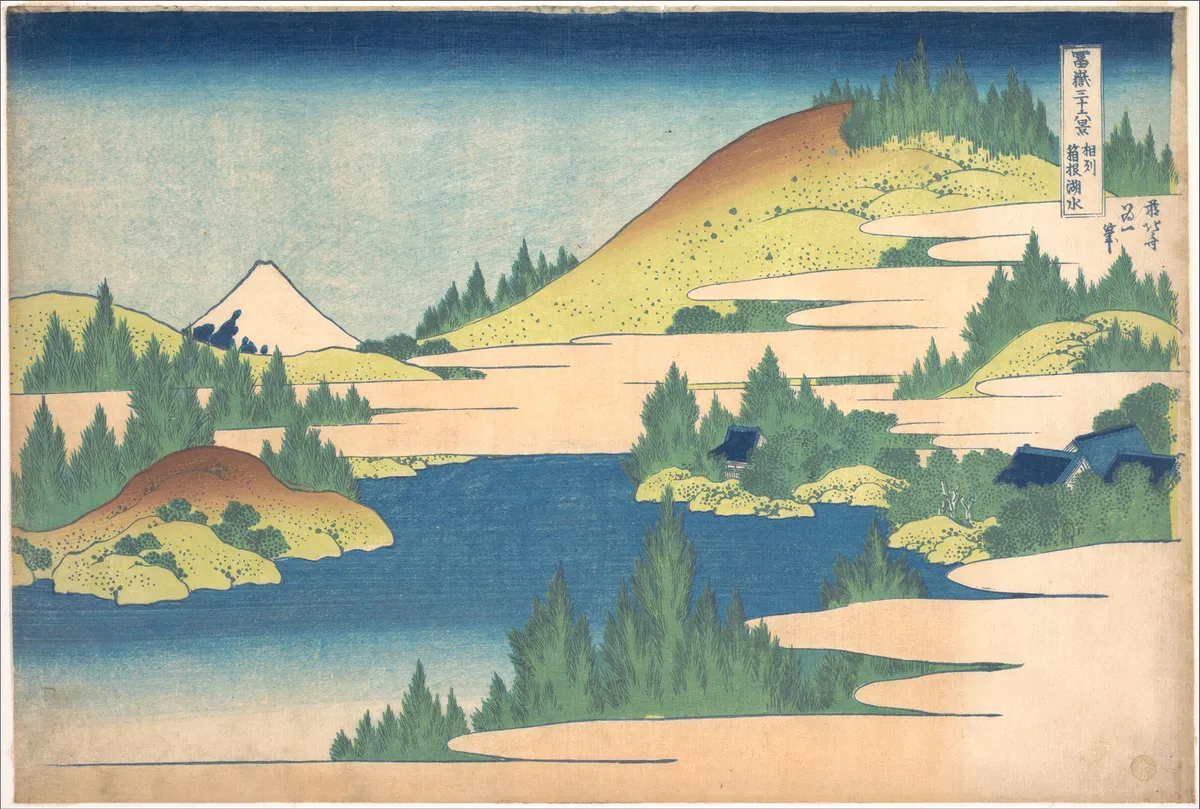
The Lake at Hakone
In the stillness of dawn, a thin mist clings to the lake's surface. The distant silhouette of Mount Fuji looms quietly, its peak a ghostly presence against the pale sky. Water laps softly at the wooden hulls of the boats, tethered to the shore like sleeping creatures. A lone fisherman stands at the edge, his breath visible in the crisp morning air. He casts his line, the gentle plop of the lure breaking the silence.
The air is heavy with the scent of damp earth and pine. A faint rustle of leaves whispers through the trees, a subtle reminder of life stirring beneath the serene facade. The lake mirrors the mountain, a perfect reflection that blurs the line between reality and illusion.
Time seems suspended here, in the embrace of Hakone's quiet majesty. The fisherman waits, patient as the earth itself. He knows this moment is fleeting, a delicate balance of light and shadow, captured forever in the woodblock's embrace.
Historical Echo
Katsushika Hokusai's vision of Hakone captures a world both timeless and ephemeral. The print is part of his famed series, "Thirty-six Views of Mount Fuji." Created during the early Edo period, it reflects a deep reverence for nature's tranquil beauty. Each stroke of Hokusai's hand evokes the subtle interplay of water and sky, a testament to the enduring allure of Mount Fuji.