

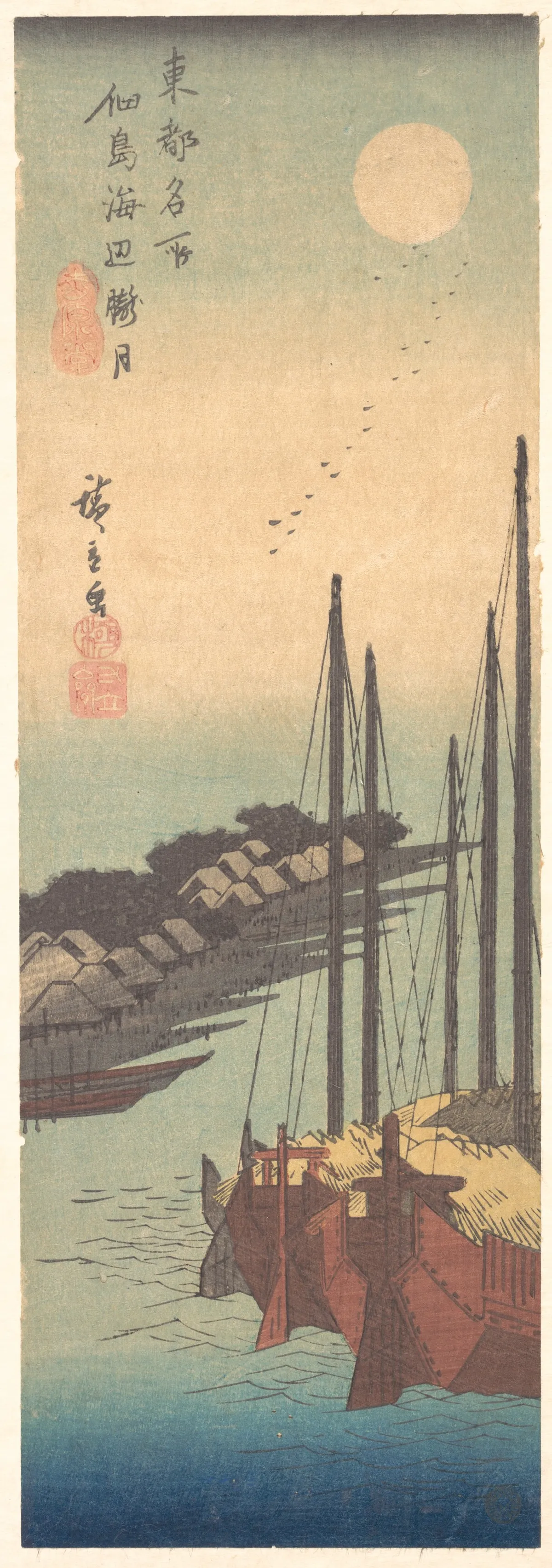
Tsukudajima at Twilight
The sea murmurs softly against the shore. A gentle breeze carries the scent of salt and the distant echoes of fishermen's songs. The moon hangs low, casting silver trails across the water, reflecting the quiet grace of Tsukudajima. Boats, like black silhouettes, drift lazily, their oars resting. Shadows lengthen as the day surrenders to night.
A lone figure stands on the beach, their silhouette framed by the ethereal glow. They watch the horizon, where the sea meets the sky, both vast and unknowable. The air is thick with the promise of rain, yet calm prevails. The distant laughter from the nearby village is carried by the wind, a reminder of life beyond this solitary moment.
The figure kneels, touching the damp sand. The cool grains slip through their fingers like time. Above, the sky deepens into indigo, stars begin to pierce the veil, and the world holds its breath, suspended in this fragile balance between light and dark.
Historical Echo
In the Edo period, Tsukudajima was a place of quiet industry. Fishermen and their families lived by the rhythms of the sea. Utagawa Hiroshige captured this serene landscape in 1836, inviting viewers into a moment of stillness. His art whispers of a time when nature and humanity moved as one, under the watchful eye of the moon.