

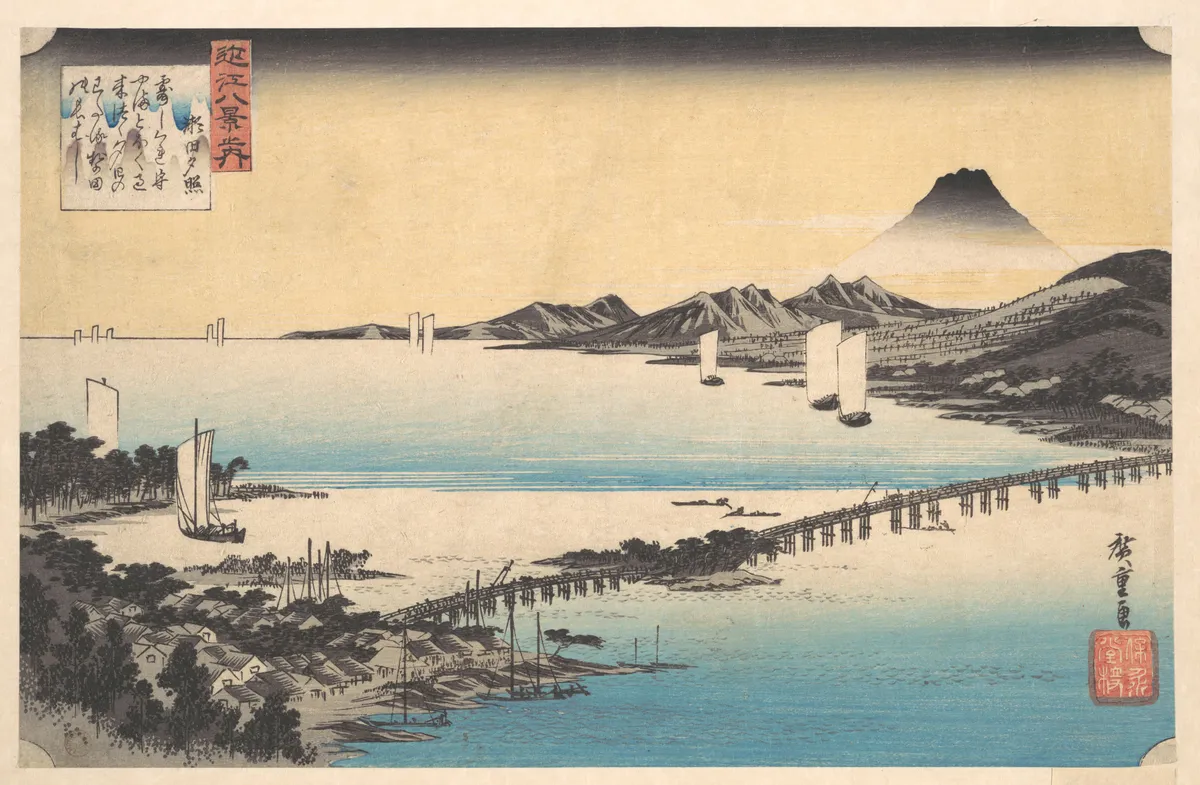
Sunset at Seta
The sun dipped low, painting the sky with muted reds and oranges. A wooden bridge stretched across the water, its silhouette stark against the dying light. The air was thick with the scent of pine and the rustle of leaves. Shadows lengthened, creeping along the path like silent whispers.
Footsteps echoed on the bridge, a lone traveller making his way home. His cloak fluttered in the gentle breeze, its fabric heavy with the dampness of the lake. He paused, looking out over the expanse of water. The surface mirrored the sky, a shimmering canvas of twilight hues.
Birds called out in the distance, their cries mingling with the soft lapping of waves against the shore. The world was quiet, wrapped in the stillness of evening. Time seemed to pause, suspended between day and night.
As the light faded, the traveller moved on. His figure grew small, merging with the shadows, becoming one with the landscape. The bridge stood empty, a solitary line between earth and water, waiting for the next soul to cross.
Historical Echo
In the Edo period, travellers often crossed this bridge at Seta, a vital passage over Lake Biwa. The station was known for its scenic beauty, captured here by Hiroshige's masterful hand. The peace of the scene belies the bustle of commerce and the weight of journeys taken. The print whispers of a world both transient and eternal, where nature and man briefly meet.