

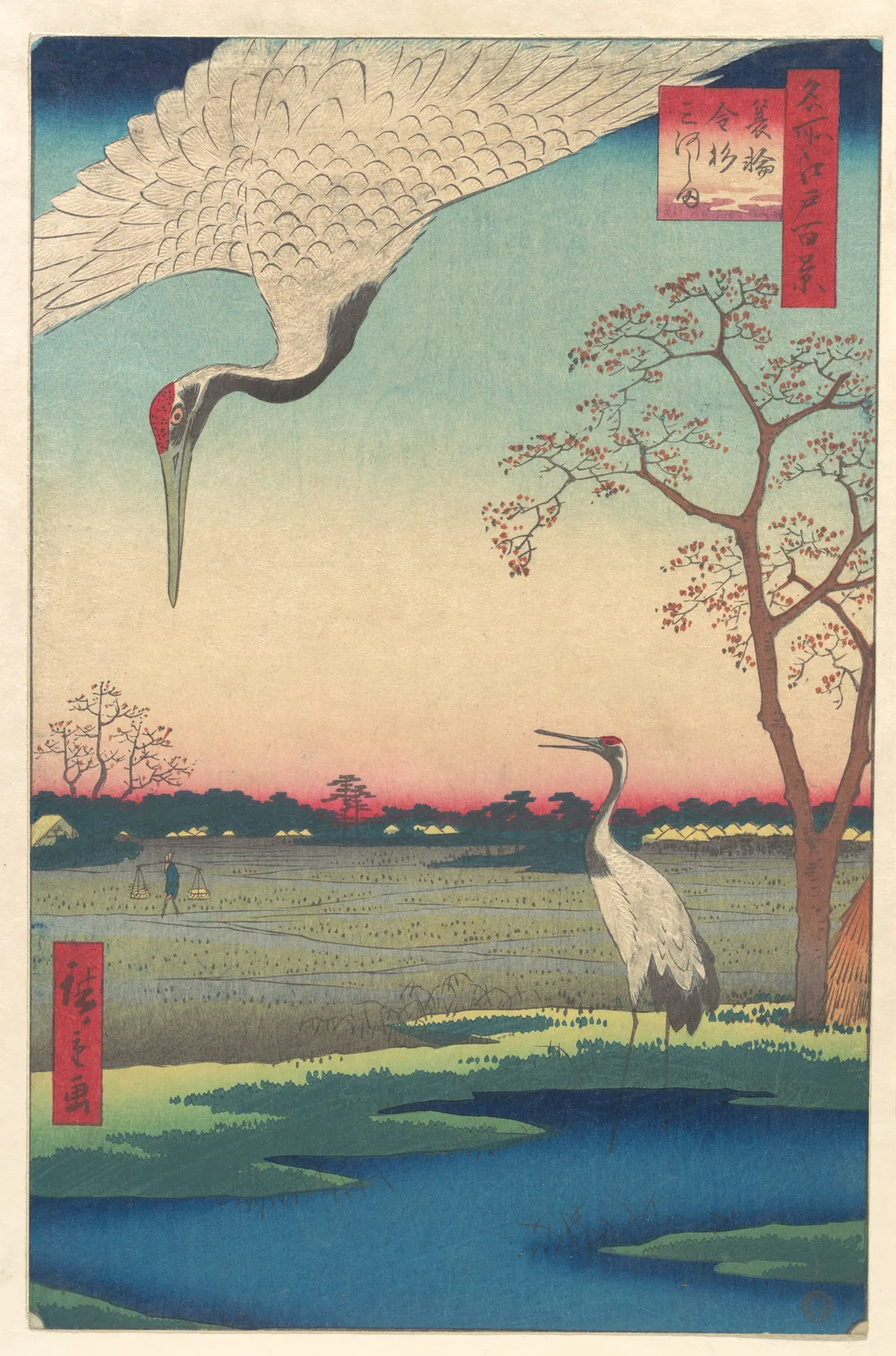
Minowa, Kanasugi at Mikawashima
The rain had just ceased. Earth exhaled a damp sigh that mingled with the scent of pine. A soft mist clung to the undulating hills, gently caressing the distant peaks. The river, a silver ribbon, wound its way through the lush green embrace of Minowa, Kanasugi, and Mikawashima.
A solitary figure stood by the riverbank, his straw hat casting a shadow over weathered features. His gaze traced the water's path, where small ripples caught the muted light. The air was still, save for the occasional whisper of a breeze that rustled the leaves overhead.
Somewhere, a bird called out, its song echoing like a forgotten promise. The path beneath his feet was damp, each step sinking slightly into the earth, leaving faint impressions soon to be erased by time.
He turned towards the village, where smoke curled lazily from chimneys. Life moved with a gentle rhythm there, untouched by the hurried pulse of the city. Here, in the embrace of the landscape, time seemed to pause, inviting contemplation.
The man continued his walk, the weight of his presence light against the enduring majesty of the land. Each step carried him further into the embrace of Edo's serene beauty, where every moment was a brushstroke in nature’s quiet masterpiece.