

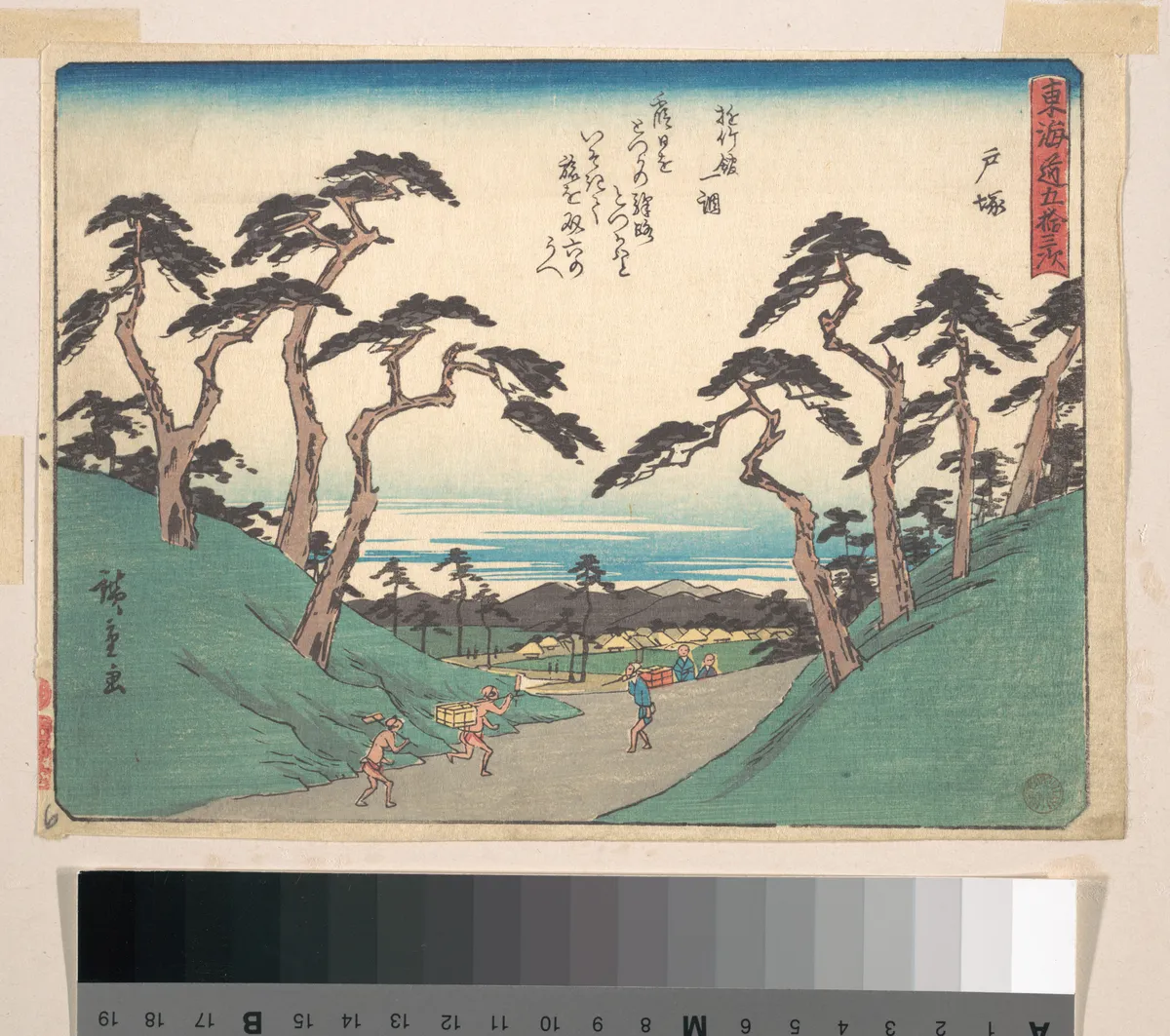
Totsuka's Quiet Path
The road stretches under a sky heavy with impending rain. A traveller, cloaked against the chill, trudges along the muddy path. His footsteps, soft upon the earth, echo the distant murmur of a village waking. Lanterns flicker within houses, casting warm, trembling light upon paper walls.
Tall pines line the road. Their needles whisper secrets to the wind. A solitary crow caws, its voice cutting through the thick morning air. The traveller pauses, adjusting his straw hat, glancing toward the dim outline of Totsuka.
In the distance, a bridge curves gracefully over a stream. Its wooden planks, worn smooth by countless feet, glisten with moisture. The traveller presses on, drawn by the promise of shelter and a bowl of steaming rice.
The village emerges, slowly, from the mist. Roofs huddle together, their thatch darkened by the damp. The air smells of wet earth and wood smoke. A child, barefoot, runs across the road, laughter trailing behind like a fading melody.
The traveller sighs, feeling the weight of the journey in his bones. Yet, in Totsuka, there is solace. The promise of warmth and the gentle hum of life.
Historical Echo
Totsuka, one of the fifty-three stations of the Tokaido, held a quiet charm. Travellers found respite here, in the embrace of its simple beauty. Utagawa Hiroshige captured this moment, around 1838, with a tender eye for detail. His prints, like whispers from the past, speak of journeys long ended but never forgotten.