

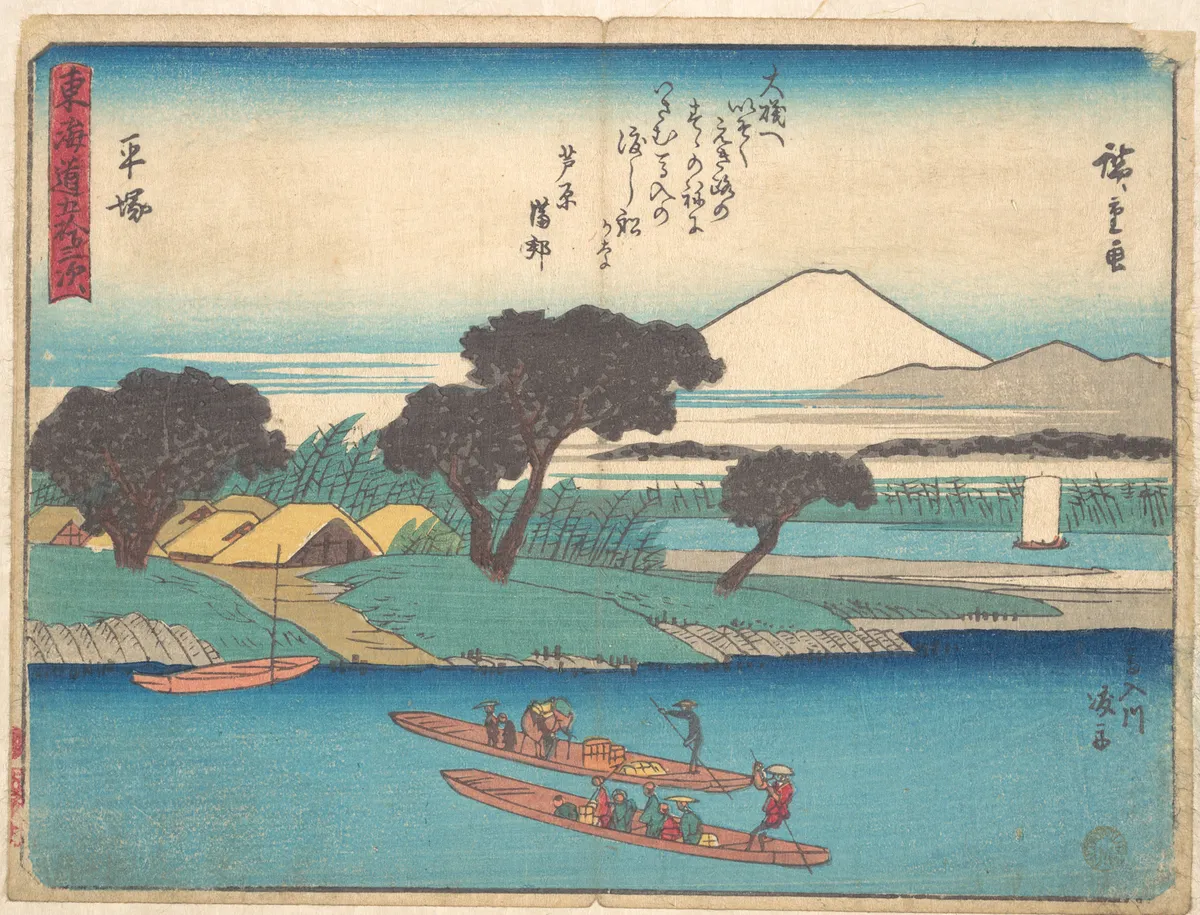
Hiratsuka
The night air is heavy with mist. Hiratsuka lies under a blanket of silence. The river whispers softly, its surface touched by faint moonlight. A solitary traveller walks along the path, the wooden sandals tapping against the damp earth. The sound echoes, then fades. Lantern light flickers gently, casting long shadows that dance among the trees. The traveller pauses, listening to the night. In the distance, a faint glow marks the village, a promise of warmth and rest. The scent of pine needles hangs in the air, mingling with the freshness of the river. Time seems to slow in this quiet moment. The weight of the traveller's journey is felt in the slow, deliberate steps, each one a step closer to home.
Historical Echo
Hiratsuka, a station on the Tōkaidō road, was a place of passage. Hiroshige captured its essence with quiet precision. The traveller, a symbol of countless souls who walked this path, carries the weight of Edo's movement. In 1838, the world was shifting. The Tōkaidō connected Edo to Kyoto, a lifeline of trade and culture. Hiroshige's prints, like this one, served as windows into the transient beauty of these moments. His work echoes the simplicity and depth of the journey, a gentle reminder of the passage of time.