

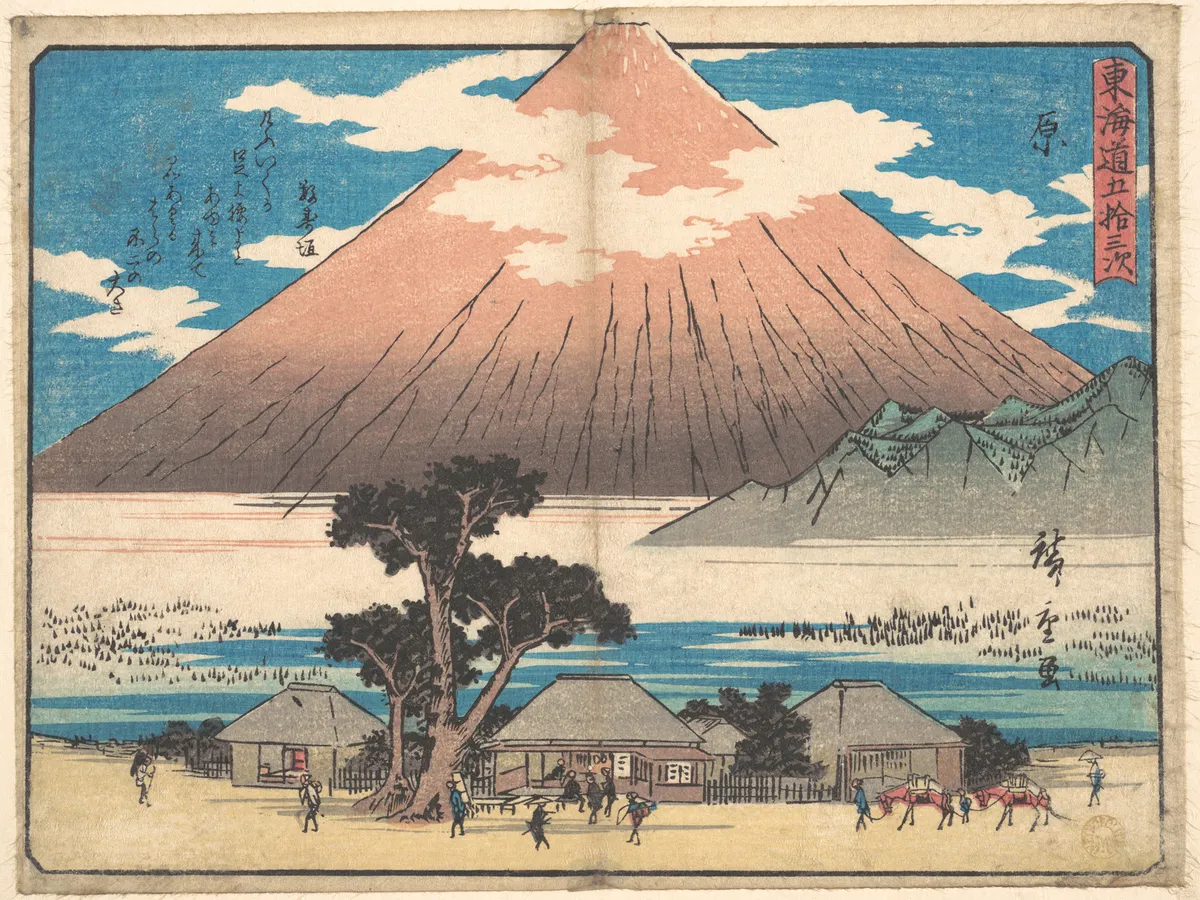
The Snow at Hara
The snow lies thick on the ground, muffling the world. Mount Fuji looms, its peak a ghostly presence against the pale sky. A procession of travellers struggles along the road, their footsteps crunching softly in the snow. Heavy cloaks hang from their shoulders, weighed down by the damp chill. The air is still, save for the occasional rustle of a distant pine tree. Each breath forms a fleeting cloud before vanishing into the cold.
The travellers huddle close, their faces buried in scarves, eyes fixed on the path ahead. They are silent, their thoughts hidden beneath layers of fabric and frost. A lone horse carries its burden, steam rising from its flanks, a fleeting warmth in the icy landscape.
Ahead, a small village nestles at the foot of the mountain. Smoke curls from chimneys, promising warmth and respite. The travellers quicken their pace, driven by the promise of shelter. The snow continues to fall, covering their tracks, erasing their passage.
Mount Fuji watches over them, an eternal witness to their journey. Its distant slopes hold secrets of the past, stories untold, whispers of the ancient land.
Historical Echo
Hara, one of the fifty-three stations of the Tōkaidō, was a place of rest and reflection for weary travellers. Utagawa Hiroshige captured this moment in time with precision, portraying the delicate balance between human endurance and nature's vastness. The woodblock print, created around 1838, remains a testament to the enduring allure of Japan's landscapes and the timeless journey along the road.