

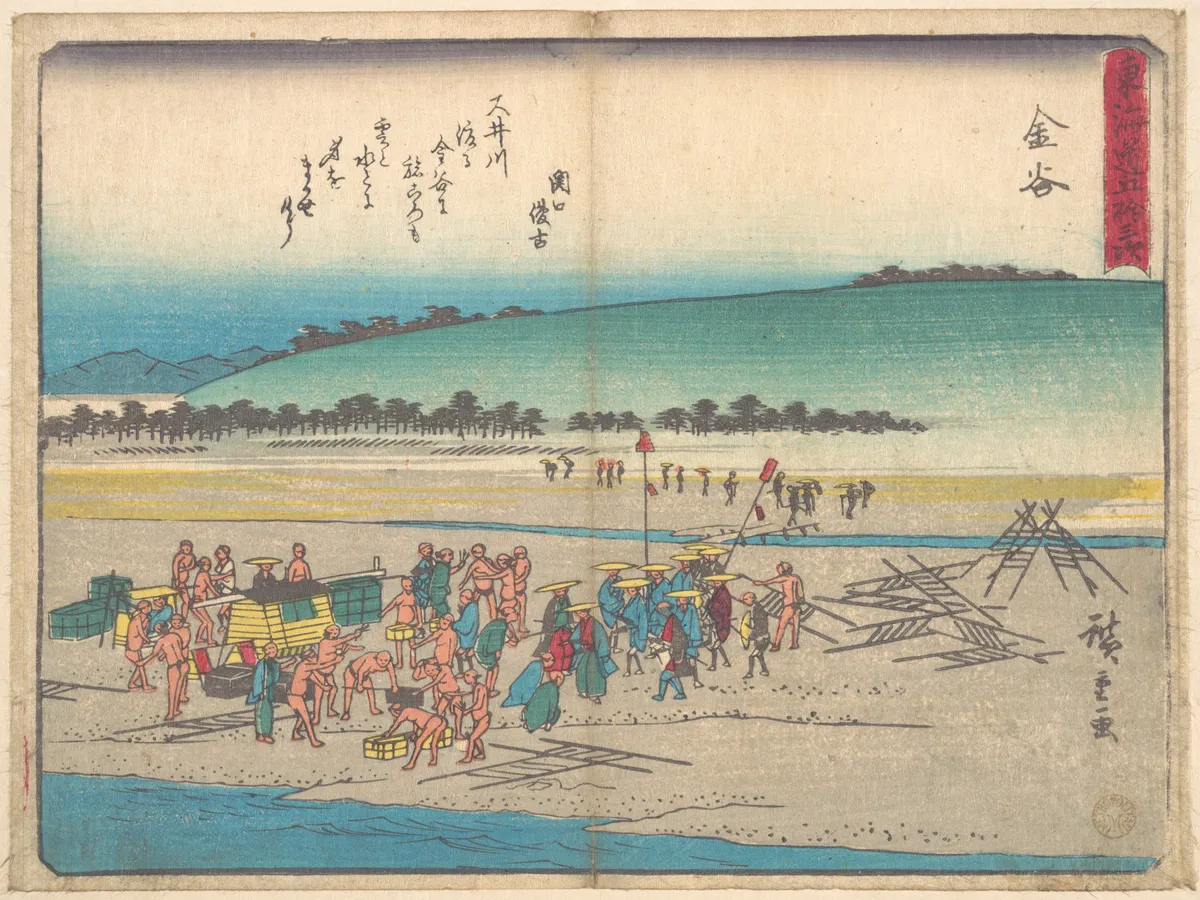
Crossing Kanaya
The river flowed silently beneath the wide wooden bridge. Travellers moved slowly, their sandals whispering against the planks. Mist clung to the water's surface, blurring the horizon. A lone figure paused, adjusting the weight of his pack. It was heavy, laden with memories of distant towns and echoing laughter.
The air was cool, carrying the scent of wet earth and distant pine. A merchant passed, his cart creaking, wheels groaning against the load. He glanced at the sky, where clouds drifted like forgotten thoughts. Another day on the Tōkaidō Road, another crossing at Kanaya.
The bridge stretched across the Oi River, a lifeline between the provinces. Beneath it, the water whispered secrets to the stones. Birds called from the reeds, their cries sharp against the soft murmur of the current.
A mother and child watched from the bank, their chatter a gentle counterpoint to the river's song. The child's laughter rose like a bell, clear and bright. The mother smiled, her eyes tracing the path of the bridge, a line unbroken by time.
As the sun dipped low, shadows deepened, casting long fingers across the landscape. The evening air grew thick, wrapping the world in a cloak of impending night. Travellers quickened their steps, eager to reach their destinations before darkness fully claimed the land.
The bridge at Kanaya stood firm, a silent witness to the ebb and flow of life. Each footstep a story, each crossing a moment etched in the memory of the wood. Time moved on, but the bridge remained, steadfast against the river's relentless embrace.
Historical Echo
The print captures a moment at the Kanaya Station on the Tōkaidō Road, one of the famous fifty-three stations. Hiroshige's work, created around 1838, reflects the quiet resilience of those who travelled these routes. The bridge over the Oi River was a vital link, yet often treacherous due to flooding. Travellers relied on such crossings, their lives intertwined with the rhythms of nature. Hiroshige's landscape echoes the transient beauty of these journeys, where each step was a testament to endurance and hope.