

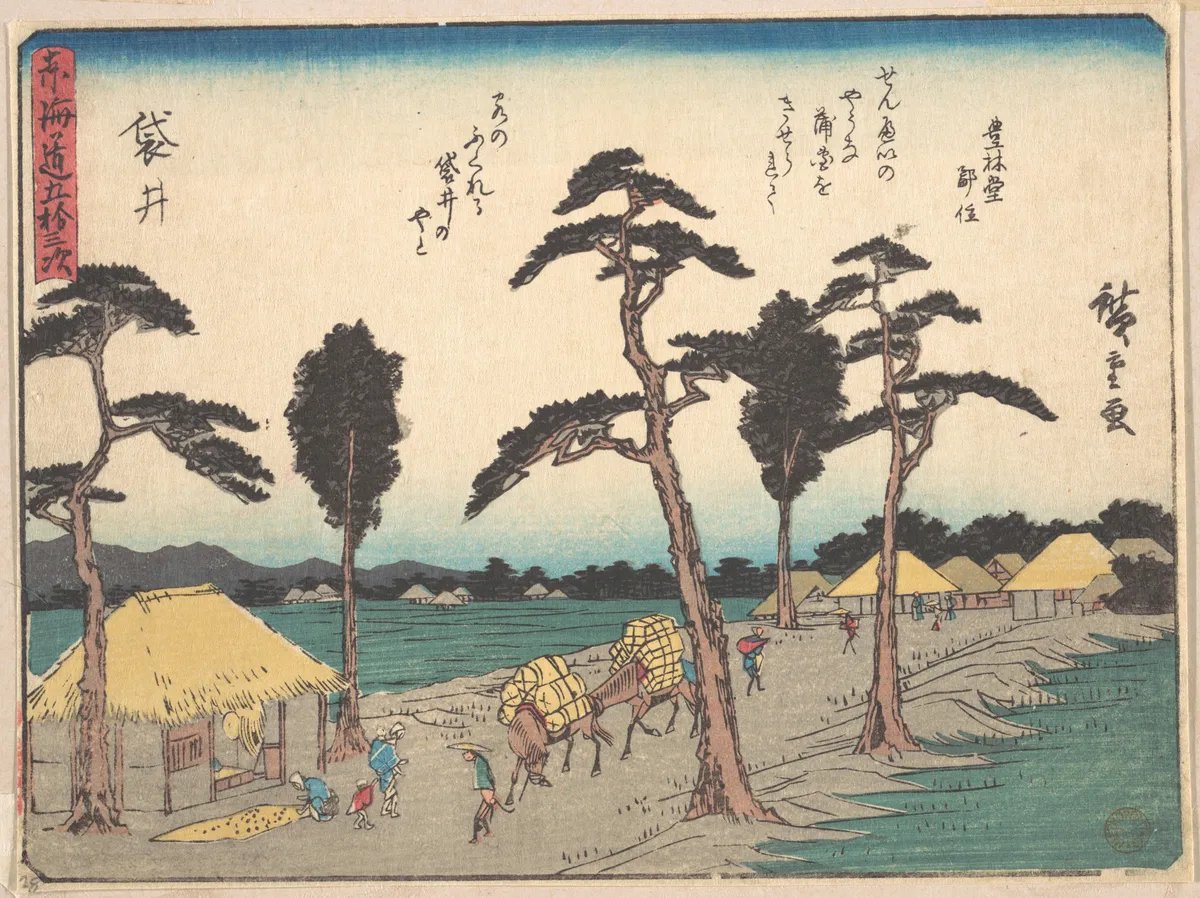
Fukuroi
The air is thick with impending rain. A cluster of travellers make their way along the narrow road. They are silent, their footsteps muffled by the damp earth beneath. A lone lantern flickers weakly, casting wavering shadows on the ground. The sky is a palette of greys, threatening to spill over at any moment.
Two figures walk side by side, their straw hats pulled low. They exchange no words, only glances, as the wind tugs at their clothes. The village of Fukuroi lies ahead, its outlines blurred by the mist. Roofs peek through the haze, promising shelter and a moment's rest.
The scent of wet pine mingles with the earthy smell of the road. A distant bell tolls, its sound swallowed by the heavy air. The world holds its breath, suspended in the space between storms.
Historical Echo
In 1838, Utagawa Hiroshige captured a fleeting moment on the Tōkaidō road. Travellers on their journey, caught in the quiet tension before the rain. His prints are windows into a world both transient and eternal. The village of Fukuroi, a waypoint for weary souls, remains etched in time through Hiroshige's delicate lines and muted hues. This is a landscape of movement and pause, where the past whispers through the rustle of leaves and the murmur of distant voices.