

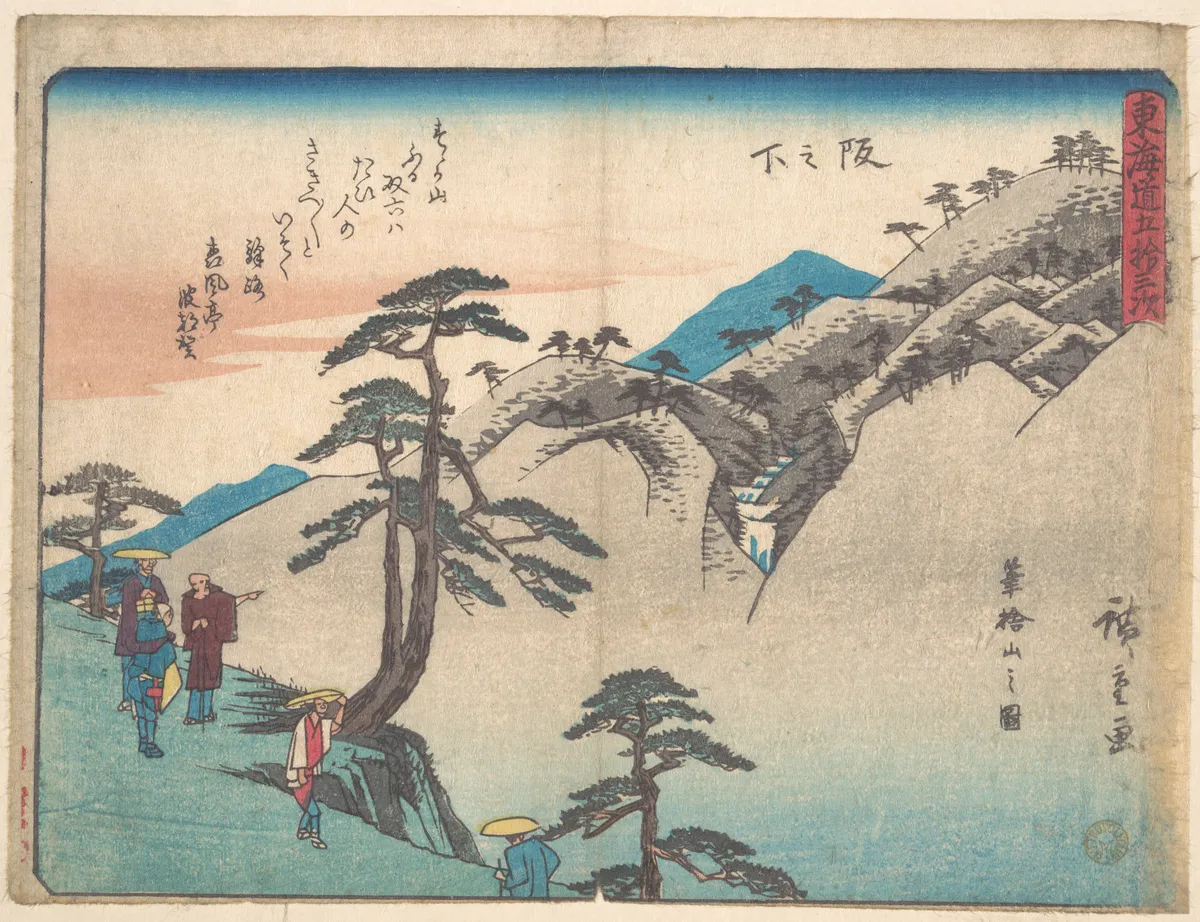
Saka-no-shita
The air was heavy with mist. It clung to the earth, muffling sounds beneath its shroud. A lone traveller paused, adjusting the weight of his straw hat. Before him, the slope descended steeply, a path snaking into obscurity.
The distant echo of a temple bell rolled through the fog, resonating against the hills. Pine trees stood like sentinels, their branches heavy with dew. The traveller inhaled the scent of damp earth and moss. Each step was deliberate, the soft crunch of gravel underfoot.
A merchant, burdened with wares, trudged past, his breathing laboured. The traveller nodded, acknowledging the shared solitude. The road was a ribbon of silence, winding through a landscape painted in layers of grey and green.
Above, the sky was a muted canvas, the sun a pale disc struggling to pierce the veil. The traveller moved on, his figure soon swallowed by the mist, leaving only the echo of footsteps behind.
Historical Echo
Utagawa Hiroshige captured the transient beauty of the Tōkaidō Road in his series of prints. "Saka-no-shita" reveals a moment suspended in time, the landscape a study in quietude and subtle movement. Created around 1838, this woodblock print embodies the Edo period's appreciation for nature's ephemeral beauty and the solitude of travel.