

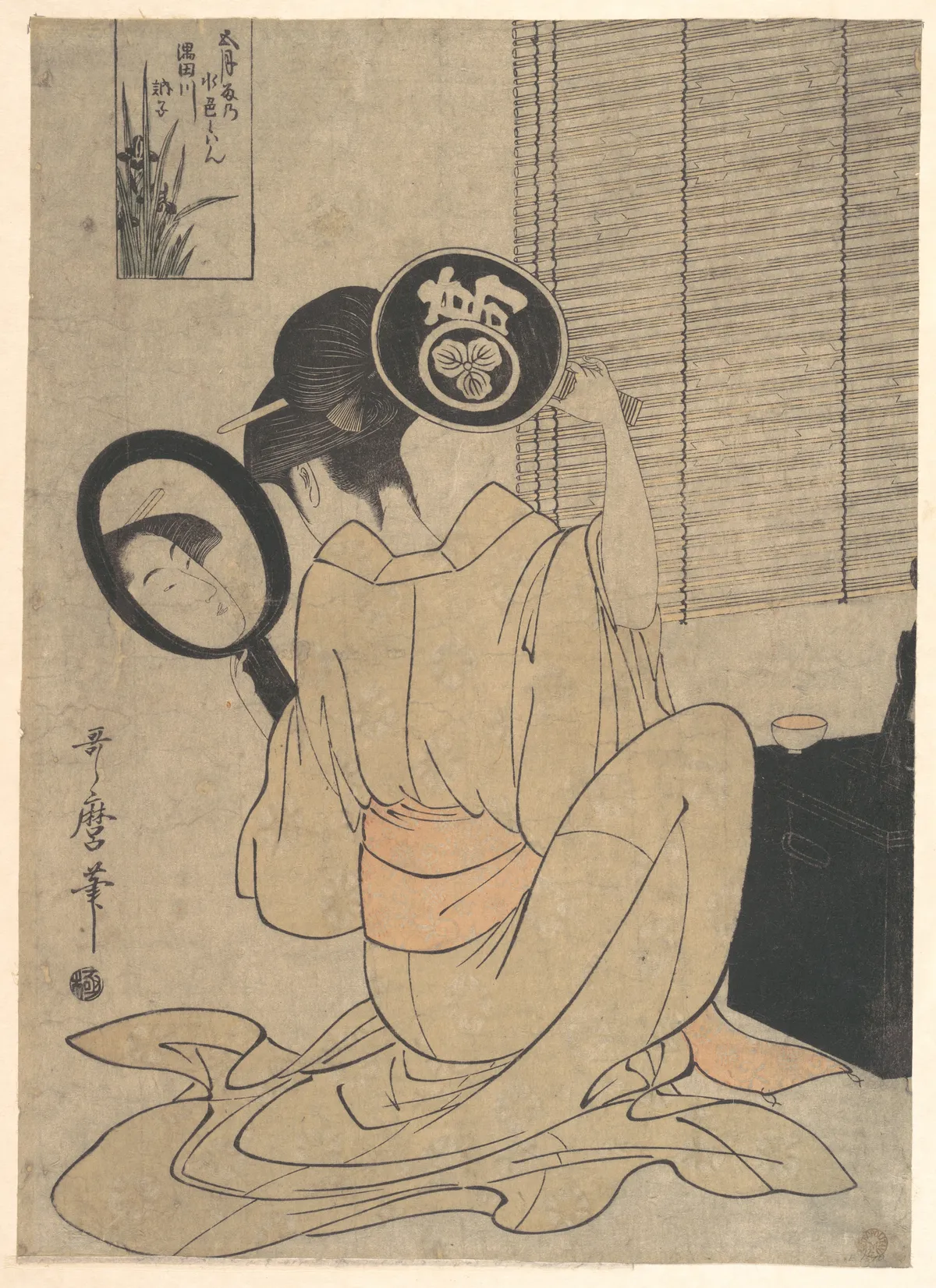
The Quiet Reflection
Ohisa sat in the dim room. She held a mirror in each hand. The air was still, heavy with the scent of camellias. Her kimono rustled softly as she shifted. Candlelight flickered, casting shadows that danced across the tatami. Her eyes, steady and intent, watched the reflection of another reflection. The delicate art of arranging her hair unfolded like a silent ritual.
The polished glass revealed the secrets of her coiffure. Each pin, each strand, spoke of precision. Her fingers moved deftly, weaving an intricate pattern. Outside, the world whispered of the Edo night. The city was alive with distant echoes—laughter, footsteps, the creak of wooden carts. Yet here, in this intimate space, time seemed to pause.
Ohisa's reflection gazed back, serene and composed. Her beauty was a gentle assertion, a quiet defiance against the fleeting hours. Utamaro captured this moment, the ephemeral grace of a woman in contemplation. The mirrors held stories untold, reflections of a life lived in poised elegance.
Historical Echo
Takashima Ohisa was renowned in Edo as a celebrated beauty. Kitagawa Utamaro, master of bijin-ga, immortalised her grace. His prints captured the essence of feminine allure, often in private moments. Ohisa, a daughter of a teahouse proprietor, became an icon. Her image, forever etched in woodblock, reflected the nuanced artistry of the time. Through Utamaro's lens, her elegance transcended the mundane, becoming a timeless muse in the floating world.