

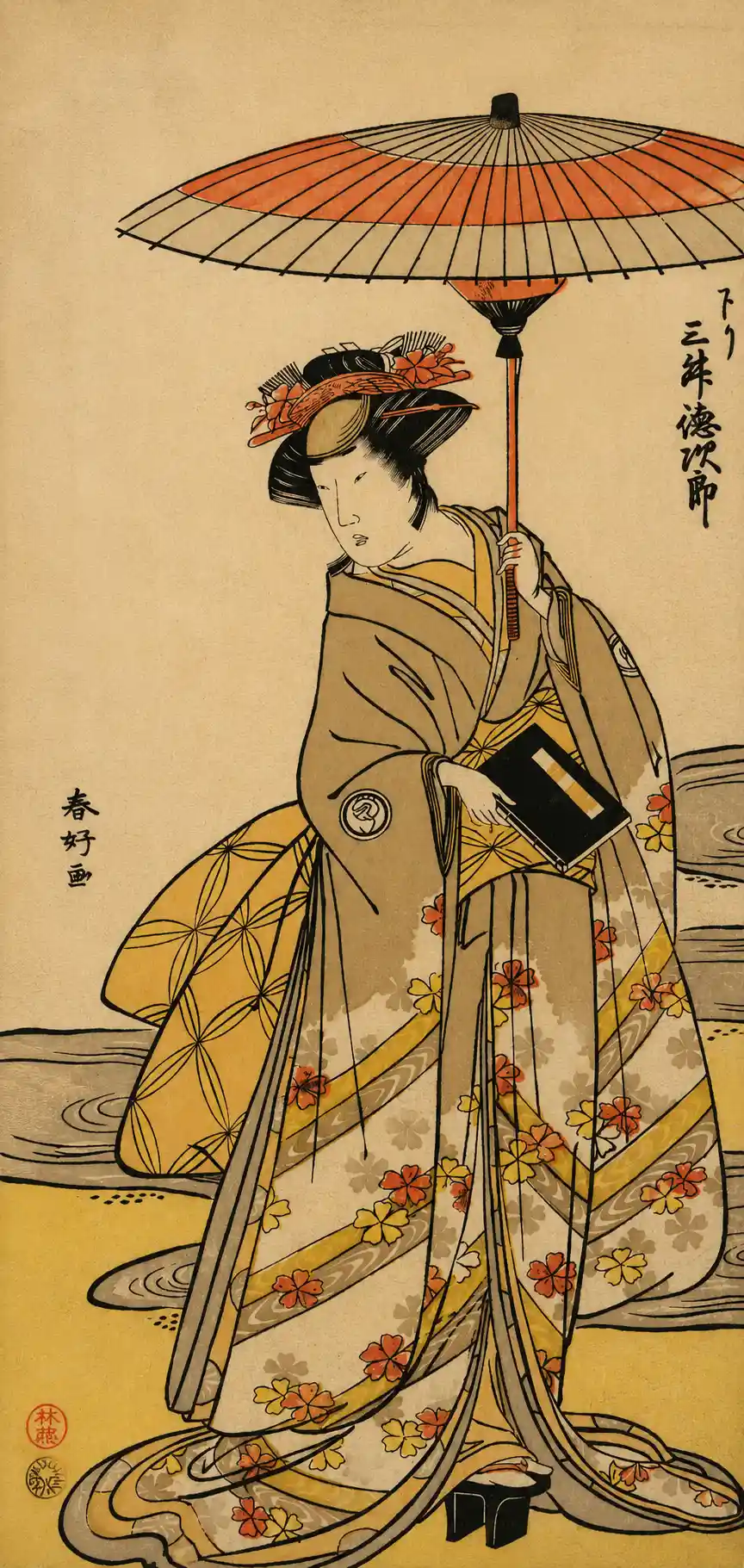
The Standing Stream
A breeze rustles through the leaves, whispering secrets to the winding stream below. The water chuckles softly, weaving its path through the stones. Standing there, a woman, wrapped in the layers of her kimono, gazes into the rippling reflections. Her eyes, dark and serene, hold a mystery like the water's depths.
The fabric of her robe shimmers, catching the moonlight that dances through the canopy. Her presence is ethereal, a ghostly elegance amidst the quiet of nature. Yet, there is a weight to her stance, as if the earth itself holds her in place.
Mimasu Tokujuro, though known for his robust performances, now embodies a delicate grace. His transformation is complete. The stage is not a theatre but this secluded spot, where nature is the only audience. Each rustle of fabric, each tilt of his head, speaks a language of its own.
The air is cool, carrying the scent of damp earth and distant pine. Silence envelopes the scene, broken only by the gentle murmur of the stream. It is a moment suspended in time, where reality and illusion blur like a dream upon waking.
Historical Echo
In the late 18th century, the Edo period flourished with the art of ukiyo-e. Katsukawa Shunkō, a master of this form, captured the essence of kabuki actors with finesse. Mimasu Tokujuro, renowned for his versatile roles, often portrayed women on stage. This print, created around 1780, is a testament to his artistry and Shunkō's skill. The winding stream, a symbol of life's transient nature, mirrors the fleeting beauty of performance. Here, art and nature intertwine, leaving an indelible mark on the viewer's soul.