

Picking Clams
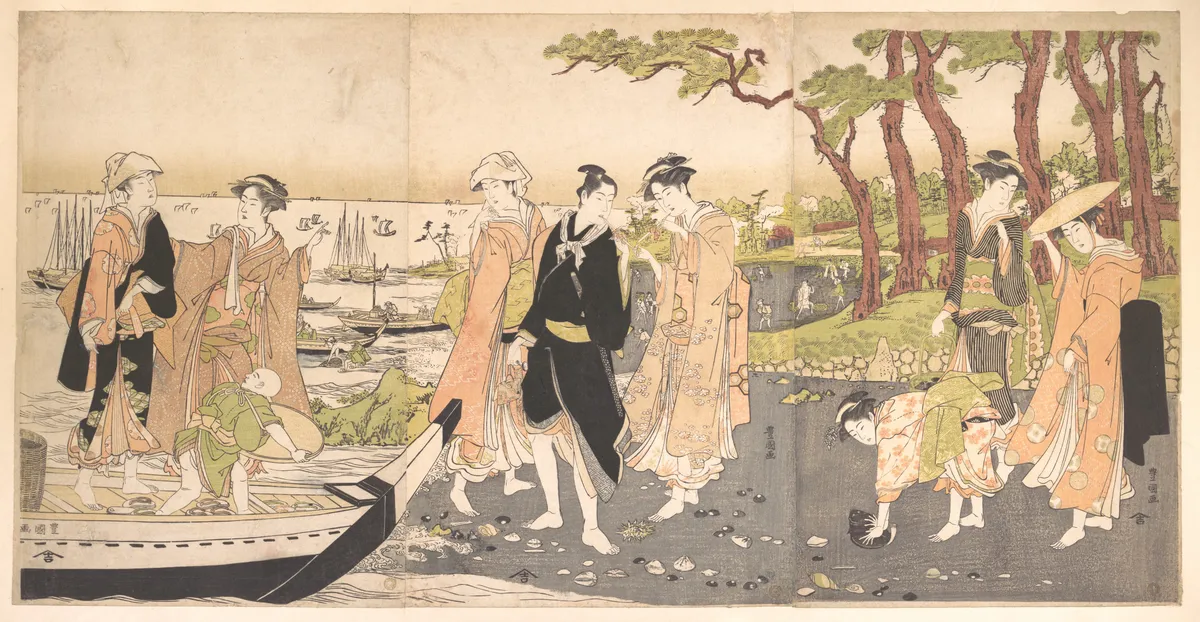
Amidst the hushed murmur of the sea, a group of women bends towards the sand. The shoreline stretches endlessly, grey and serene under a muted sky. Their hands move swiftly, collecting clams, each shell a muted echo of the ocean's whisper. The air is thick with salt, mingling with the scent of seaweed and damp wood. Kimono fabric rustles softly, patterned in delicate blues and greens, their hues blending with the seascape. Waves lap gently, a rhythmic lullaby to their work. The women speak in low tones, their voices lost to the wind, as if sharing secrets with the sea. A child, her laughter bright against the muted tones, runs with a small basket. Her feet leave fleeting imprints on the wet sand, soon claimed by the tide. The scene is simple, yet the air is heavy with the weight of ancient rituals, the timeless dance between land and sea.
Historical Echo
In the late 18th century, clamming was more than sustenance. It was a community ritual, a testament to the harmony between people and nature. Utagawa Toyokuni I captures this moment with quiet grace. His lines speak of the simplicity of life, the shared labour, and the silent understanding passed down generations. Clamming was a task shared by women and children, a scene of gentle resilience against the vastness of the ocean. This print reflects the Edo period's appreciation for daily life, captured not in grandeur but in the delicate balance of existence.