

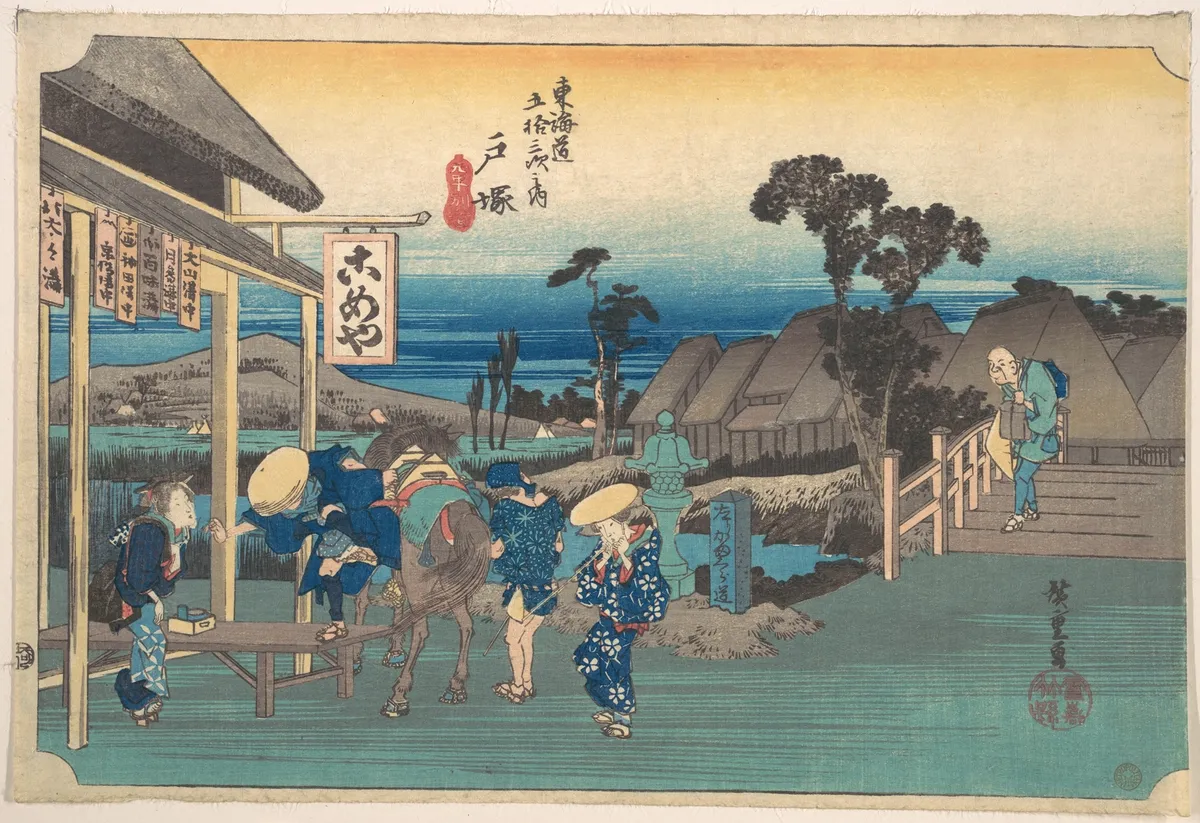
Totsuka's Whisper
The road stretched ahead, enveloped in a gentle mist. A lone traveller walked steadily, his wooden sandals tapping softly against the earth. The air was cool, carrying the faint scent of pine and wet soil. Above, the sky was a muted grey, hinting at rain. The village of Totsuka lay quietly in the distance, its thatched roofs peeking through clusters of trees.
Two figures approached, their silhouettes merging with the damp landscape. One led a horse, its hooves pressing heavily into the softened path. The other, a merchant, balanced a straw hat against the breeze. They exchanged nods, their voices low and indistinct, swallowed by the vastness of the open road.
The mountains loomed softly in the background, shrouded in mist. They stood as silent guardians over the village, their presence ancient and unmoving. The road wound towards them, a ribbon of earth weaving through the serene tableau.
A bird called out, its note hanging in the stillness before fading into the distance. The world seemed suspended, caught in a moment of quiet transition. Here, in Hiroshige's vision, time flowed gently, like the unseen streams that nourished the land.
Historical Echo
In the early 19th century, Totsuka was a vital post station along the Tōkaidō road. Travellers found respite here, amidst landscapes that inspired countless artists. Hiroshige captured the subtle beauty and transient nature of these journeys, inviting viewers into the stillness of Edo's past. His prints offered a glimpse into a world where the rhythm of footfalls and rustling leaves composed the day's music.