

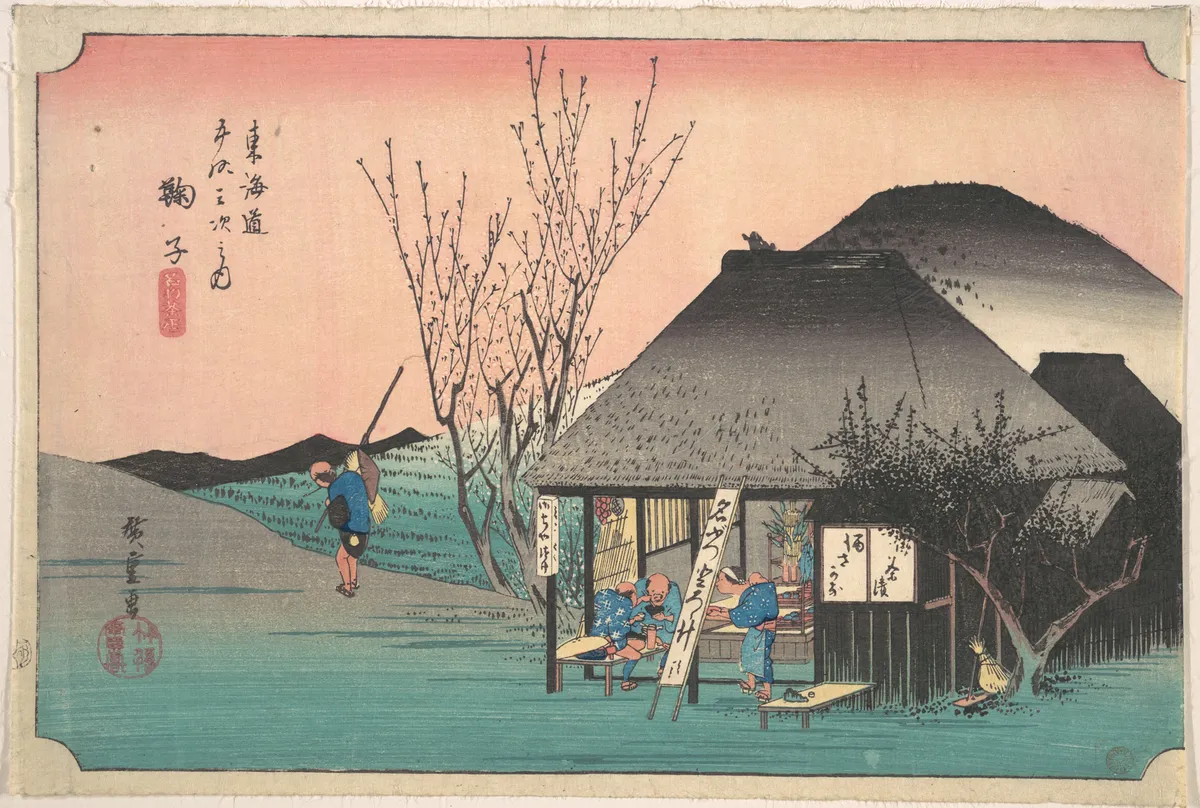
The Rest at Mariko
The road to Kyoto winds through Mariko. A chill lingers in the morning air. Travellers pause at a teahouse, the Meibutsu Chaya. The wooden structure creaks gently. Steam rises from cups of tea, mingling with the mist. A woman in a kimono moves gracefully, serving the tired guests. Her footsteps are soft on the tatami mats. The scent of green tea is warm, soothing. Beyond the teahouse, the landscape stretches out. Pine trees stand tall, their needles dark against the sky. The air is thick with the promise of rain.
A traveller sits alone, his eyes on the distant hills. His journey has been long, his feet weary. Yet, here, time slows. The low murmur of conversation blends with the rustle of leaves. The teahouse, a haven, holds the stories of many passersby. On this road, each traveller leaves a whisper of their presence. The woman pauses, her gaze meeting the traveller's. In silence, they share a moment, a brief connection in the vastness of their separate journeys.
Historical Echo
Mariko, a post town along the Tōkaidō, was a frequent stop for weary travellers. This scene by Utagawa Hiroshige captures the essence of Edo period travel. The Meibutsu Chaya, famed for its delicacies, offered respite. Hiroshige, with his keen eye, immortalised the quiet dignity of these moments. The simplicity of a teahouse, the beauty of a fleeting pause, speaks volumes.