

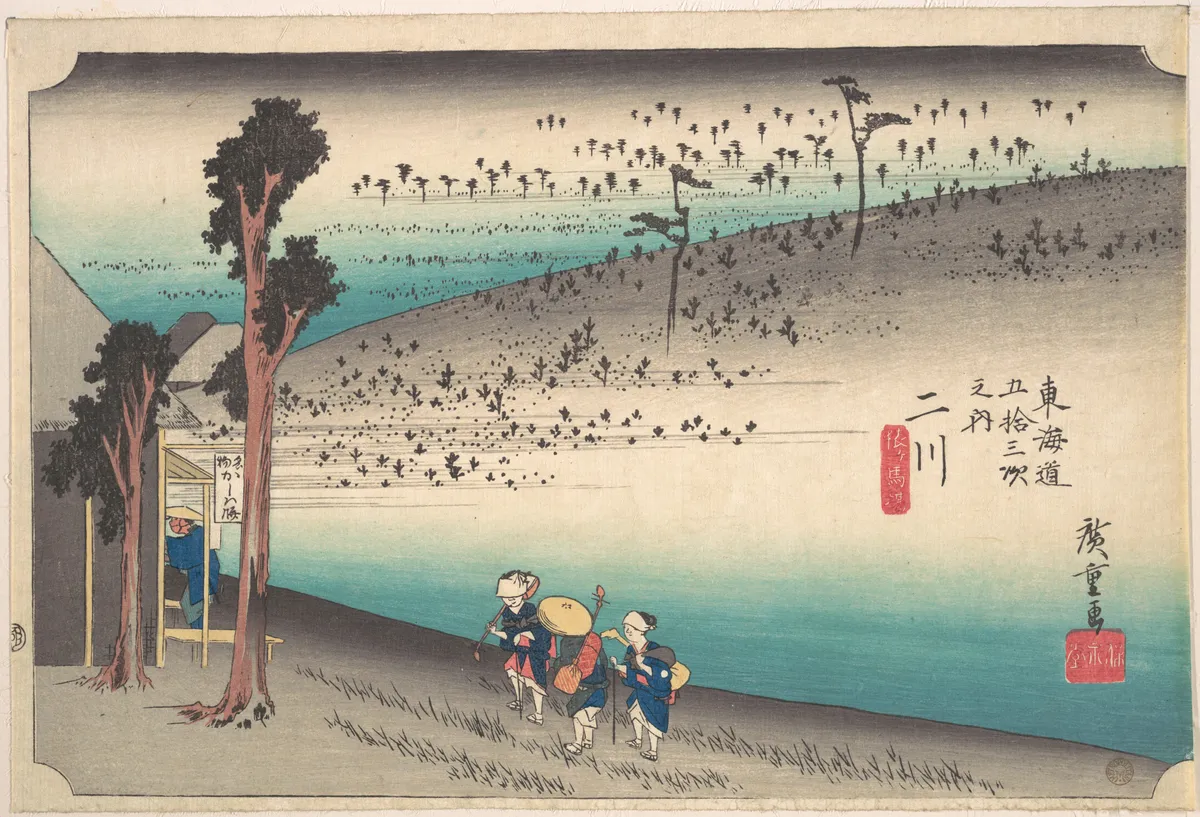
Futagawa, Saru ga Baba
The road stretched, a pale ribbon through the land. It wound past gnarled trees and distant mountains, cloaked in mist. Travellers moved like shadows, their footsteps muffled by the damp earth. Wooden geta clacked softly, a rhythm in the cool morning air. The sky, a muted grey, held the promise of rain. A lone figure paused, adjusting a straw hat, eyes scanning the path ahead. They walked on, the fabric of their kimono whispering with each step. The scene was heavy with silence, broken only by the soft rustle of leaves. This was Futagawa, where the road met the spirit of the land.
Historical Echo
Hiroshige captured Futagawa with a quiet reverence. In 1834, travel was a meditative journey. Roads were veins of connection, yet also solitary paths. His woodblock print reflects this duality, the isolation and unity of the journey. Travellers in his work become part of the landscape, their presence as natural as the trees and mountains. The muted tones of the print echo the subdued, contemplative mood of Edo period travel.