

The Quiet Road to Fujikawa
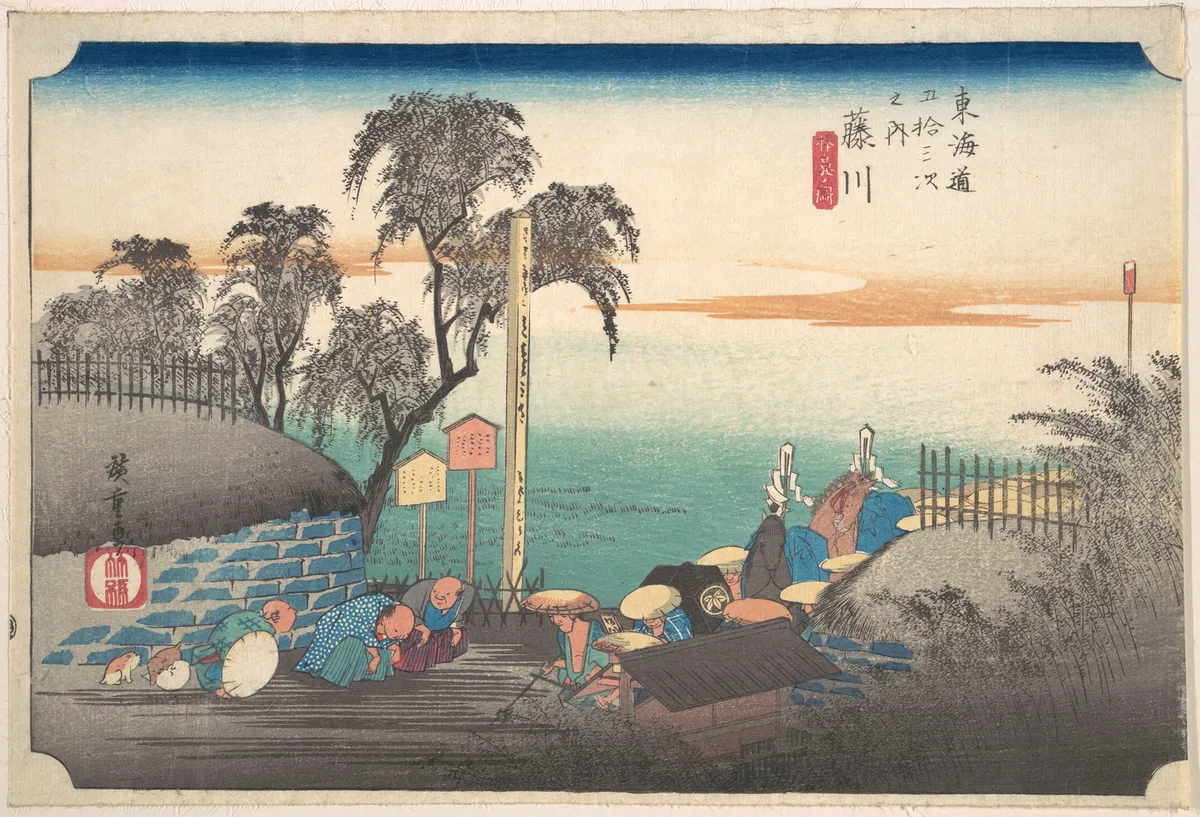
The road stretched quietly under the pale grey sky. A damp chill hung in the morning air. Villagers shuffled along, their straw sandals brushing softly against the earth. Pine trees stood silently by the roadside, their branches heavy with the night's rain.
In the distance, the mountains loomed, their silhouettes softened by mist. A lone traveller paused, adjusting the weight of his pack. His breath visible, mingling with the fog. Nearby, a woman in a straw hat guided her child, their whispered words lost in the vastness.
The village of Fujikawa lay ahead, a promise of warmth and rest. The road, lined with tall grasses, whispered of countless journeys. Boots, hooves, and wheels, all leaving their mark in the mud. Each step forward was a step into the embrace of the land.
The air smelled of wet leaves and distant smoke. A single bird called out, its voice echoing through the stillness. The travellers moved like shadows, each absorbed in their own thoughts. The world seemed to hold its breath, waiting for something known only to the wind.
Historical Echo
Fujikawa was a well-trodden stop on the Tōkaidō, the vital route connecting Edo and Kyoto. In 1834, as Hiroshige created this scene, the road was alive with merchants, pilgrims, and travellers. Each brought stories, weaving them into the landscape. The simplicity of the print belies its depth, capturing a fleeting moment in the timeless journey of life.