

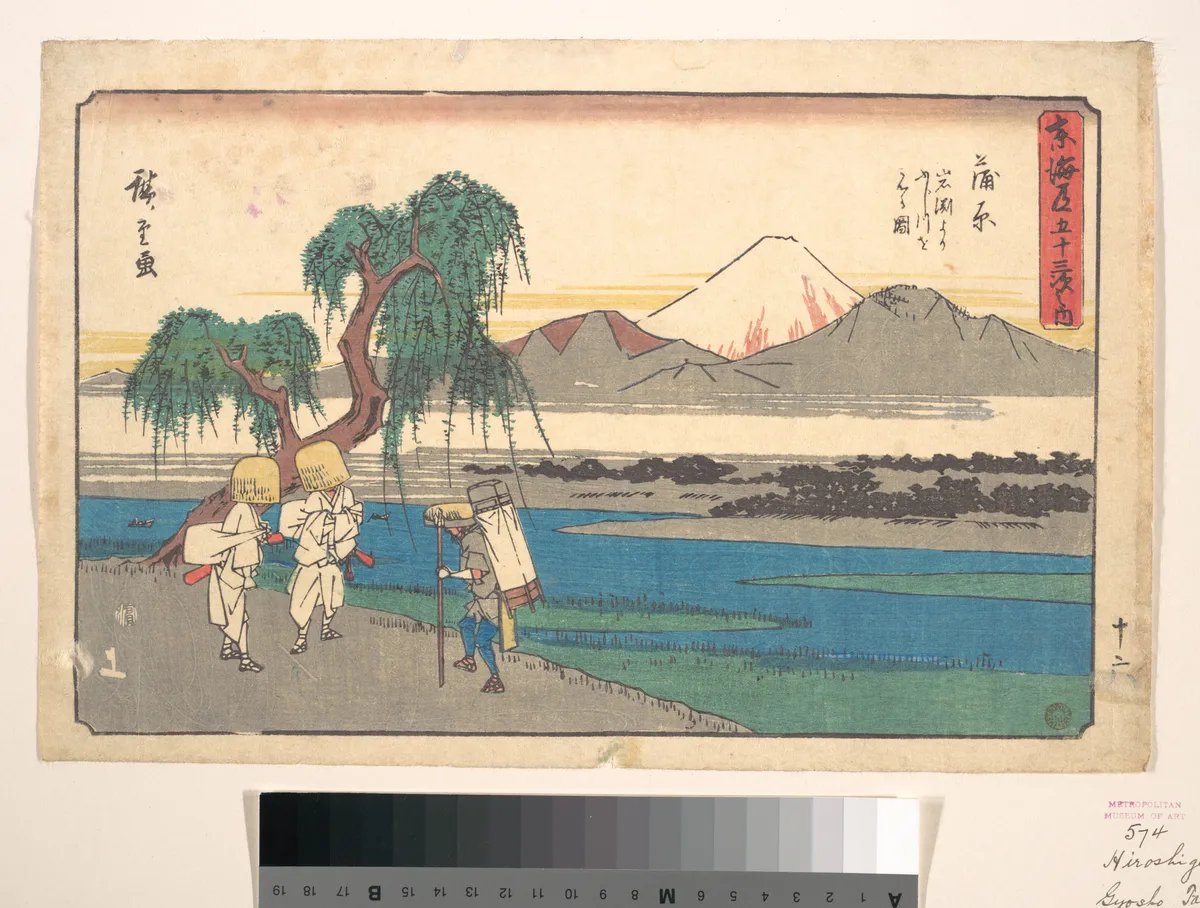
Kambura Station
The air is crisp at Kambura Station. A lone figure trudges along the path, footsteps soft upon the damp earth. Morning mist lingers, clinging to the edges of pine trees. The sky, a muted grey, promises rain. A distant mountain looms, its peak shrouded. Shadows play upon the slopes, shifting as if alive. The traveller pauses, adjusting the weight of his pack. A faint scent of smoke drifts from a nearby dwelling, hinting at warmth within. Silence reigns, broken only by the soft rustle of leaves. The world feels hushed, as if holding its breath.
Historical Echo
In the Edo period, stations like Kambura were lifelines. They linked towns, carrying news and goods. Hiroshige captured this in quiet elegance. His prints, a window to a past rhythm, echo the journeys of countless souls. The simplicity of nature, the solitude of travel, are etched in each line. The woodblock’s grain adds texture, a tactile memory of the artist’s hand at work. Kambura stands still, a moment suspended in time, whispering stories of old paths and distant travellers.