

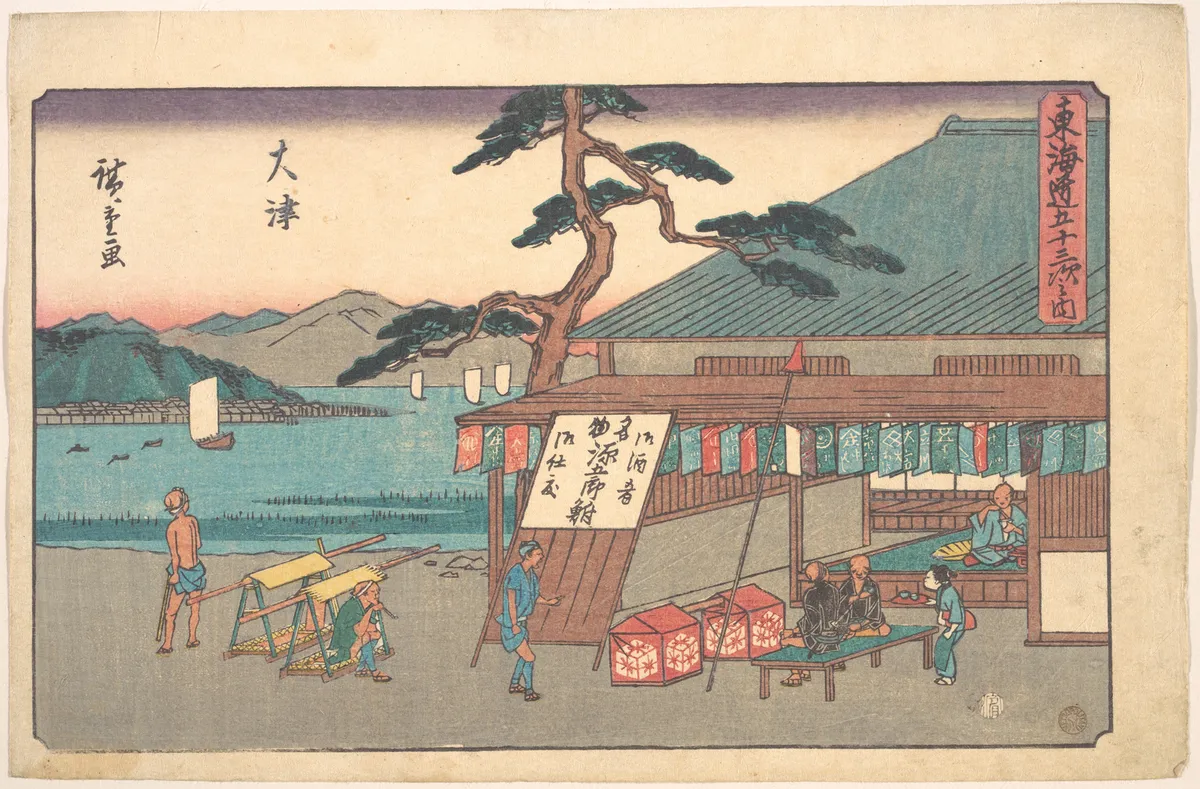
Ōtsu Station
Dawn creeps in quietly over Ōtsu. The air is thick with mist. A distant mountain looms, its outline softened by the morning haze. Footsteps crunch on gravel as travellers pass, their figures heavy with the weight of their journeys. A lone lantern sways gently from a roadside tea shop, casting a dim glow on the ground. The scent of damp earth mingles with the faint aroma of brewing tea.
Wooden buildings line the path, their eaves dripping with dew. A man pauses, adjusting the load on his back. His breath forms small clouds in the chill. The road stretches ahead, narrow and winding, leading to places unknown. Silence envelops the scene, broken only by the occasional rustle of leaves stirred by a passing breeze.
This is Ōtsu, one of the fifty-three stations along the Tōkaidō Road. A place where the past lingers in the shadows, whispering stories of those who have come and gone. Each traveller leaves a trace, a moment captured in the wood and ink of Hiroshige's hand.
Historical Echo
Ōtsu was a critical waypoint on the Tōkaidō Road during the Edo period. It connected the bustling city of Edo with Kyoto. Travellers from all walks of life passed through, each adding to the tapestry of stories that defined this historic route. Utagawa Hiroshige, a master of ukiyo-e, captured these fleeting moments, preserving the essence of a time when the journey was as significant as the destination. His prints remain a window into a world where silence and subtlety spoke volumes.