

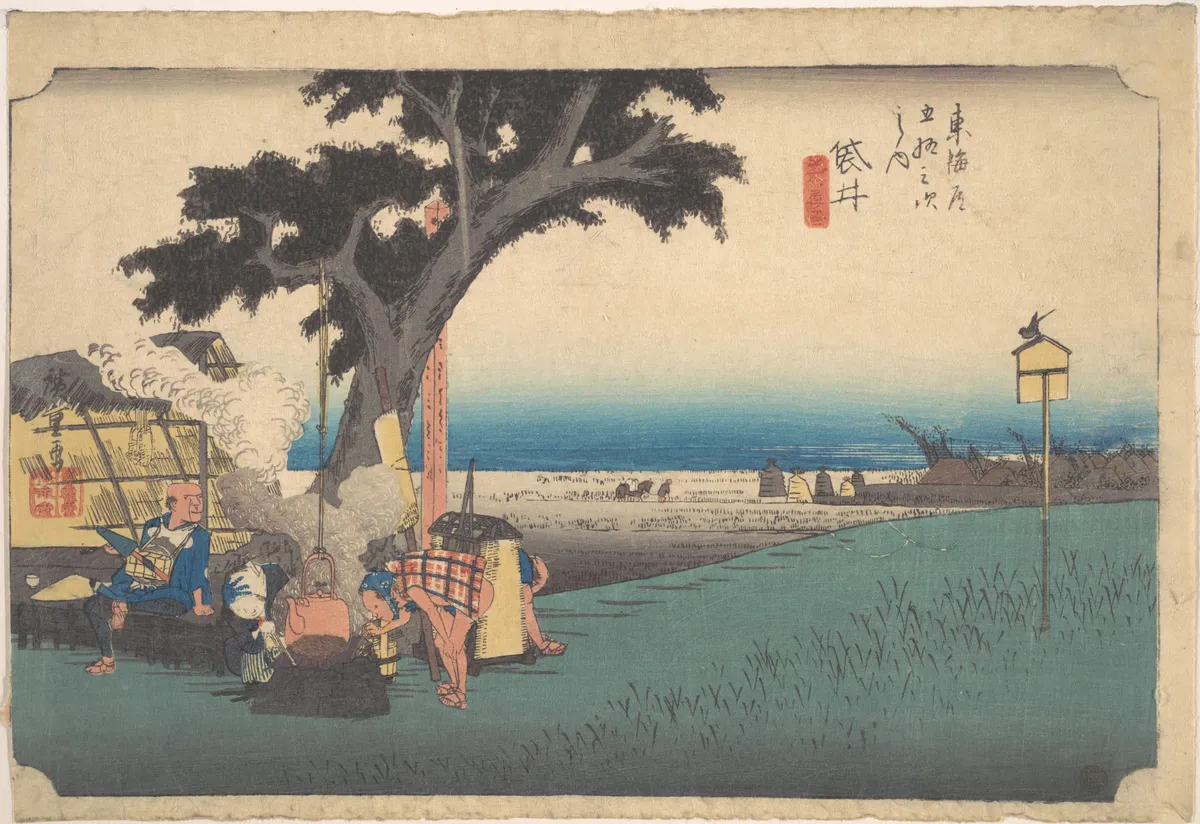
Fukuroi; De Chaya
The air hung heavy with mist. Morning light filtered through the trees, casting long shadows on the damp earth. A tea house stood quietly by the road in Fukuroi. Its wooden walls absorbed the whispers of the forest.
Travellers paused here, seeking warmth and rest. Their footsteps muffled by the soft ground, they approached slowly. The scent of tea mingled with the crisp smell of pine.
Inside, low voices murmured over steaming cups. The crackle of a small fire punctuated the silence. A woman in a simple kimono moved gracefully, serving each guest with a quiet nod.
Outside, a thin veil of fog lingered over distant hills. The road stretched onward, a silent promise of journeys yet to come. In this moment, time felt suspended, caught between the past and the future.
The tea house, a humble refuge, stood steadfast. It watched as lives passed by, collecting stories like fallen leaves.
Historical Echo
Fukuroi was a post station on the Tōkaidō road, connecting Edo and Kyoto. Travellers often paused at such stations, finding solace in small tea houses like this. Utagawa Hiroshige captured not just the scene, but the gentle rhythm of travel, the quiet moments that punctuated long journeys. His work whispers of an era defined by movement and transience.