

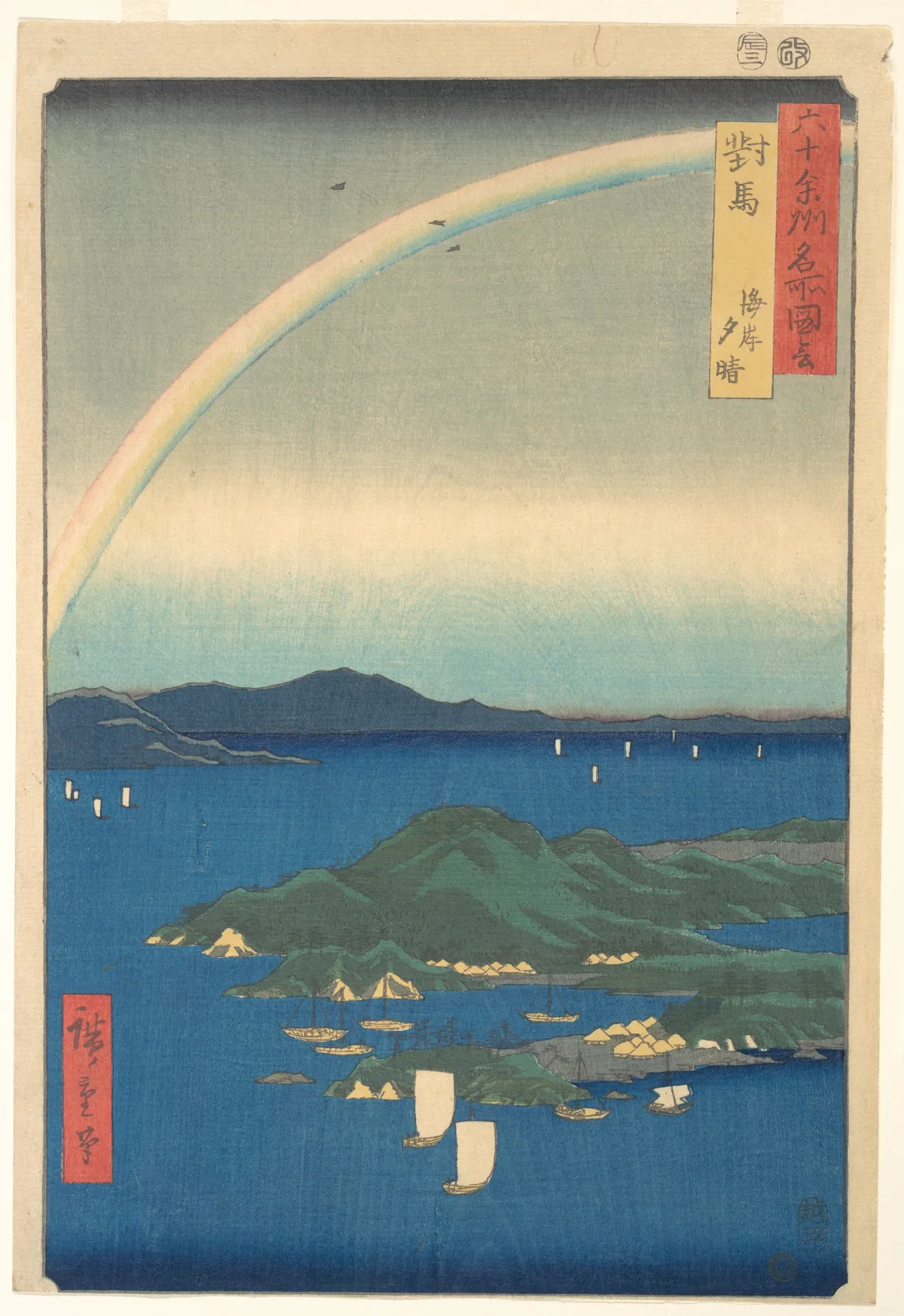
Tsushima's Evening Glow
The sun dipped low over Tsushima's coast. Its glow painted the sea in fiery hues. A lone fisherman paused. He felt the warmth on his weathered skin. The waves whispered secrets of distant lands. His boat rocked gently, tethered to the shore. Sea birds circled above, their cries sharp against the quiet. The air was thick with salt and promise. Around him, the world held its breath. The evening was still, yet alive. Shadows stretched long and thin. They reached towards the horizon, merging with the dusk. He knew this moment was fleeting. Soon, night would weave its dark tapestry. But for now, he savoured the light. It lingered, golden and soft, a gift from the sun.
Historical Echo
Utagawa Hiroshige captured fleeting beauty. His woodblock prints immortalised moments like this. 1856 marked the dragon year, a time of change. His art spoke to the heart of Edo Japan. It echoed the natural world. Hiroshige’s work was quiet, yet powerful. It drew viewers into its gentle embrace. Each print was a window into his world. A world where nature and humanity danced. This scene, Tsushima’s coast at sunset, held a mirror to that dance. Time passed, yet his art endured. It whispered stories of a bygone era. An era where the sea met the sky in perfect harmony.