

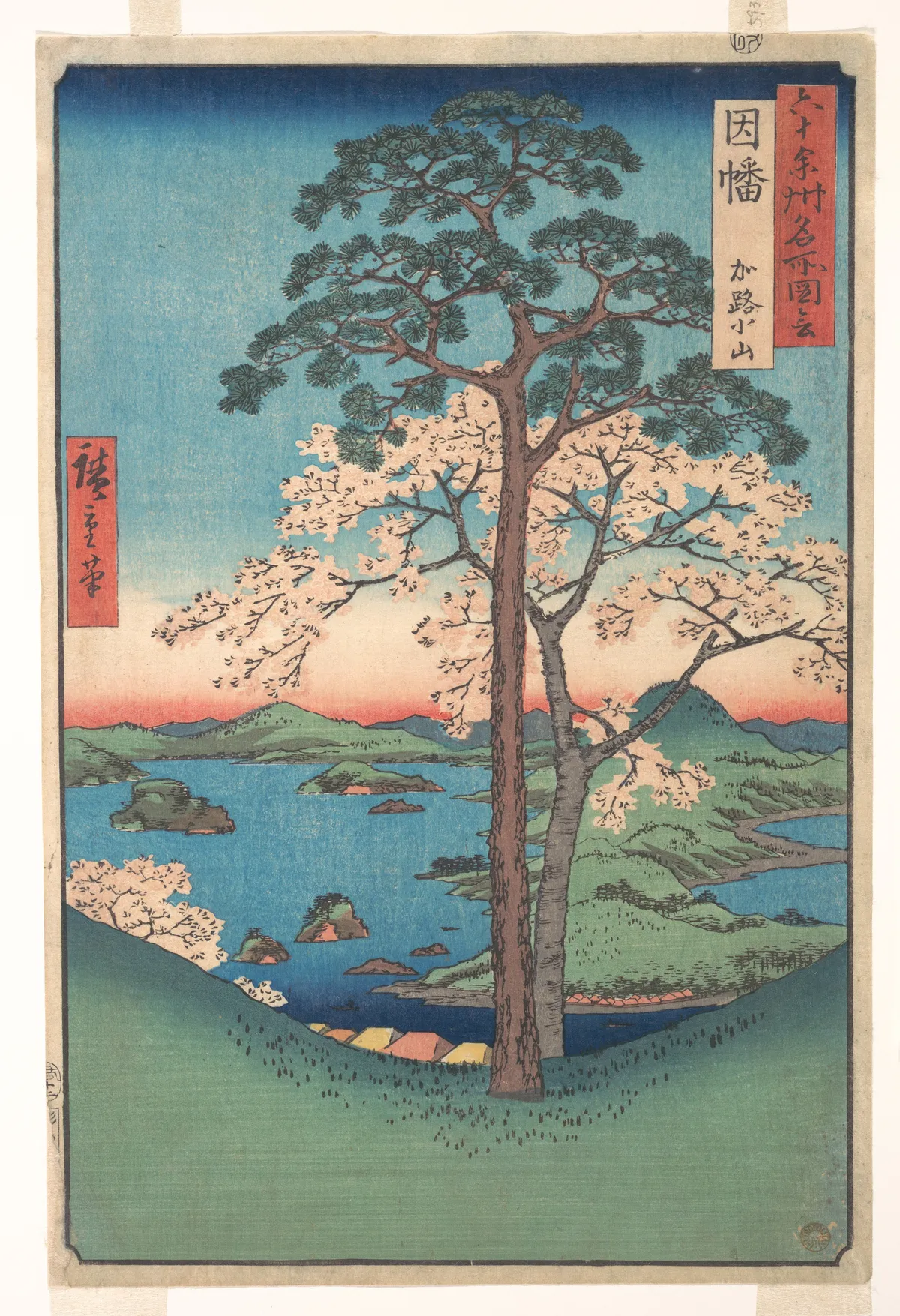
Kajikoyama's Silent Breeze
The mountain looms in gentle silence. Kajikoyama stands under a sky brushed with the soft hues of dawn. Pine trees, rooted in the earth, whisper secrets to the wind. Below, a river winds, its surface a mirror to the heavens above. Villagers tread the narrow path, their wooden sandals leaving faint imprints in the soil. They move in quiet, their burdens balanced against their backs. The air is cool, carrying the scent of moss and distant rain. In the distance, the mountain watches, eternal and unmoved. Shadows stretch across the landscape, painting the earth in shades of grey and green. A bird calls out, its voice a lone echo in the vastness. Morning light catches the edges of leaves, turning them to gold. All is tranquil, yet alive with the sound of nature's breath.
Historical Echo
In the 1850s, Hiroshige captured Japan's soul through his landscapes. His woodblock prints became windows to distant provinces. Kajikoyama, a serene vista in Inaba, was one such scene. The ukiyo-e master portrayed nature's quiet power, its subtle beauty. Through his eye, the ordinary became extraordinary. Each print a testament to fleeting moments, now eternal.