

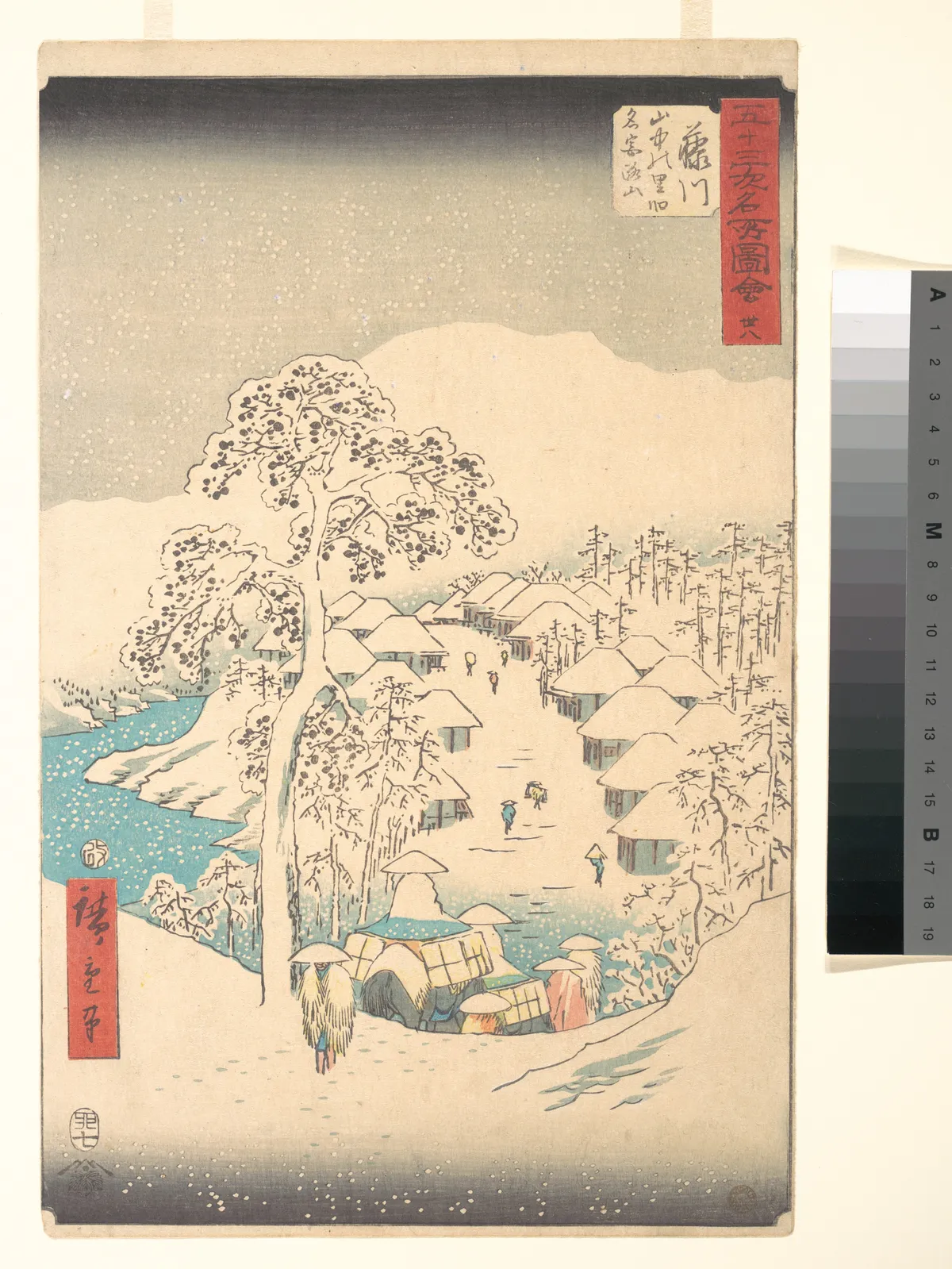
Fujikawa; Sanchu Yamanaka no Sato Miyajiyama
The mist clings to the mountain air. Shadows stretch across the silent village of Yamanaka. The wooden houses huddle together, their thatched roofs dark with the dampness of the morning. A narrow path winds through, leading travellers towards the distant peaks of Miyajiyama.
Pine needles glisten with dew, the earth beneath soft and yielding. The river flows quietly, a silver thread weaving through the landscape. It whispers secrets to the stones, secrets only the wind can carry.
The sky above is an expanse of muted colours, heavy with the promise of rain. In the distance, Fujikawa snakes its way through the valley, a silent guardian of the land. Its presence is felt, a reminder of the ancient strength carved into the earth by time and water.
A lone figure stands on the path, a traveller paused in their journey. They breathe in the mountain air, the scent of pine and river filling their lungs. The weight of their footsteps leaves temporary imprints on the path, soon to be erased by the coming rain.
The village remains still, the only movement the gentle sway of trees. The world holds its breath, caught in the quiet embrace of the morning.
Historical Echo
The Yamanaka village, nestled in the mountains, has long been a place of passage. In 1855, when Hiroshige captured this scene, it was a year marked by the cycle of the hare. The print reflects a moment suspended in time, where nature and human presence coexist in harmony. The river Fujikawa, a vital artery of travel and commerce, was a lifeline for many. Its waters carried stories and goods, connecting isolated communities to the wider world. Through Hiroshige's eyes, the landscape becomes a character itself, a silent witness to the ebb and flow of life along its banks.