

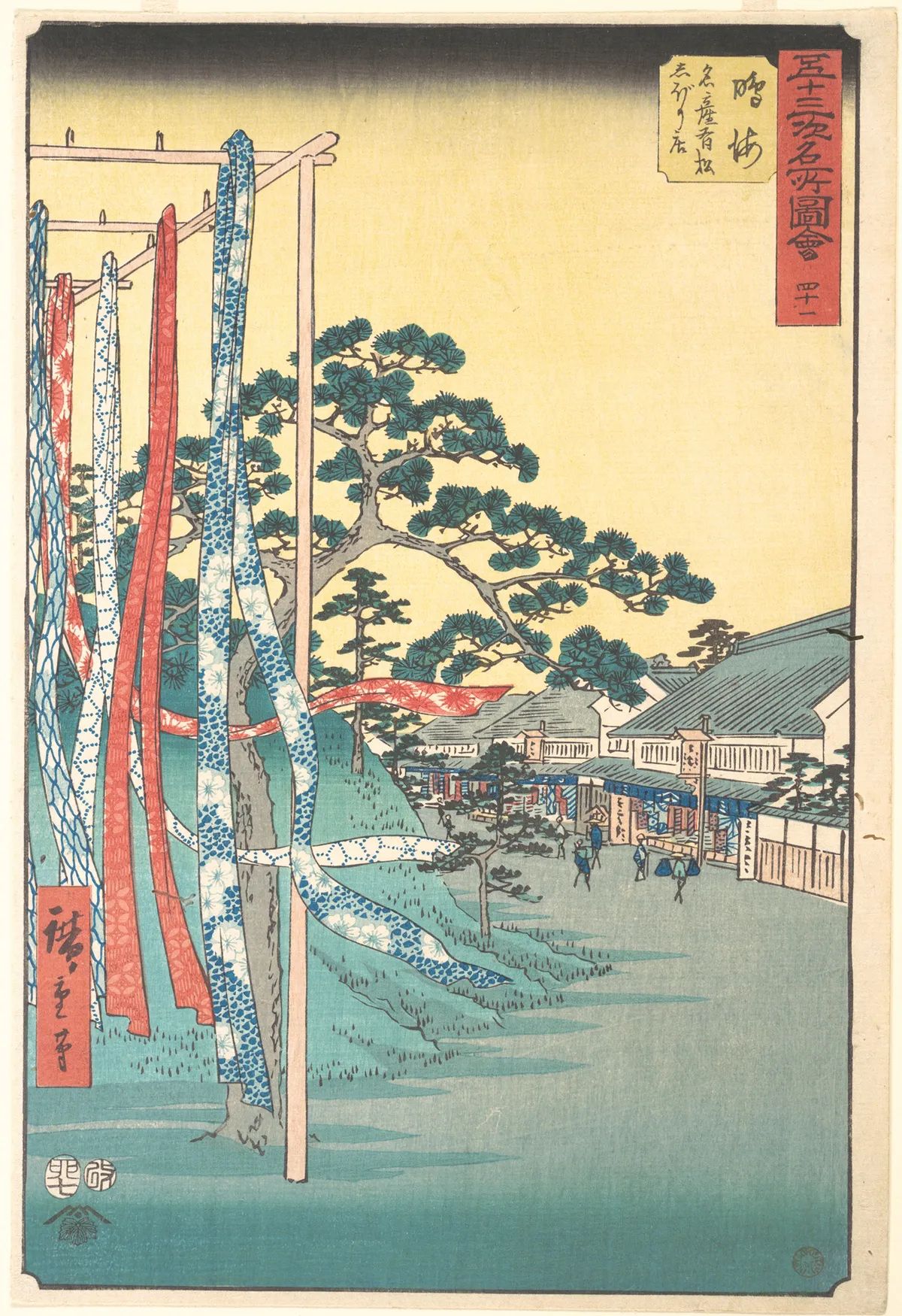
Narumi's Whispered Threads
The air is thick with dye. Indigo seeps into the fibres of the cloth, staining fingertips and filling the small shop with its earthy aroma. Outside, the sun hangs low, casting long shadows across the village of Narumi. Hiroshige captures this moment as if it were a memory suspended in time.
Women, their sleeves tucked back, deftly twist and bind fabric with practised hands. The shibori technique, a dance of fingers and cloth, transforms plain cotton into intricate patterns. Each piece, unique in its creation, tells its own whispered story.
Footsteps crunch on the gravel path outside. Travellers pause, drawn by the vibrant display of textiles. The shopkeeper, with a nod and a smile, invites them to feel the woven stories of Arimatsu. The cloth, cool and smooth to the touch, holds the promise of a journey, a connection between the past and the present.
The light fades, yet the shop remains aglow with the warmth of lanterns. As night descends, the rhythm of the day lingers in the air. Each fold of fabric, each knot, is a testament to the quiet art of creation.
Historical Echo
Narumi, known for its exquisite Arimatsu Shibori, lies along the Tokaido Road. This ancient highway, connecting Edo to Kyoto, was a lifeline of commerce and culture. Hiroshige’s depiction of the shibori shop captures not just a place, but a moment in the ebb and flow of history. The craft of shibori, intricate and painstaking, echoes the resilience and artistry of the Edo period. It is a silent witness to the passage of time, a thread woven through Japan's cultural tapestry.