

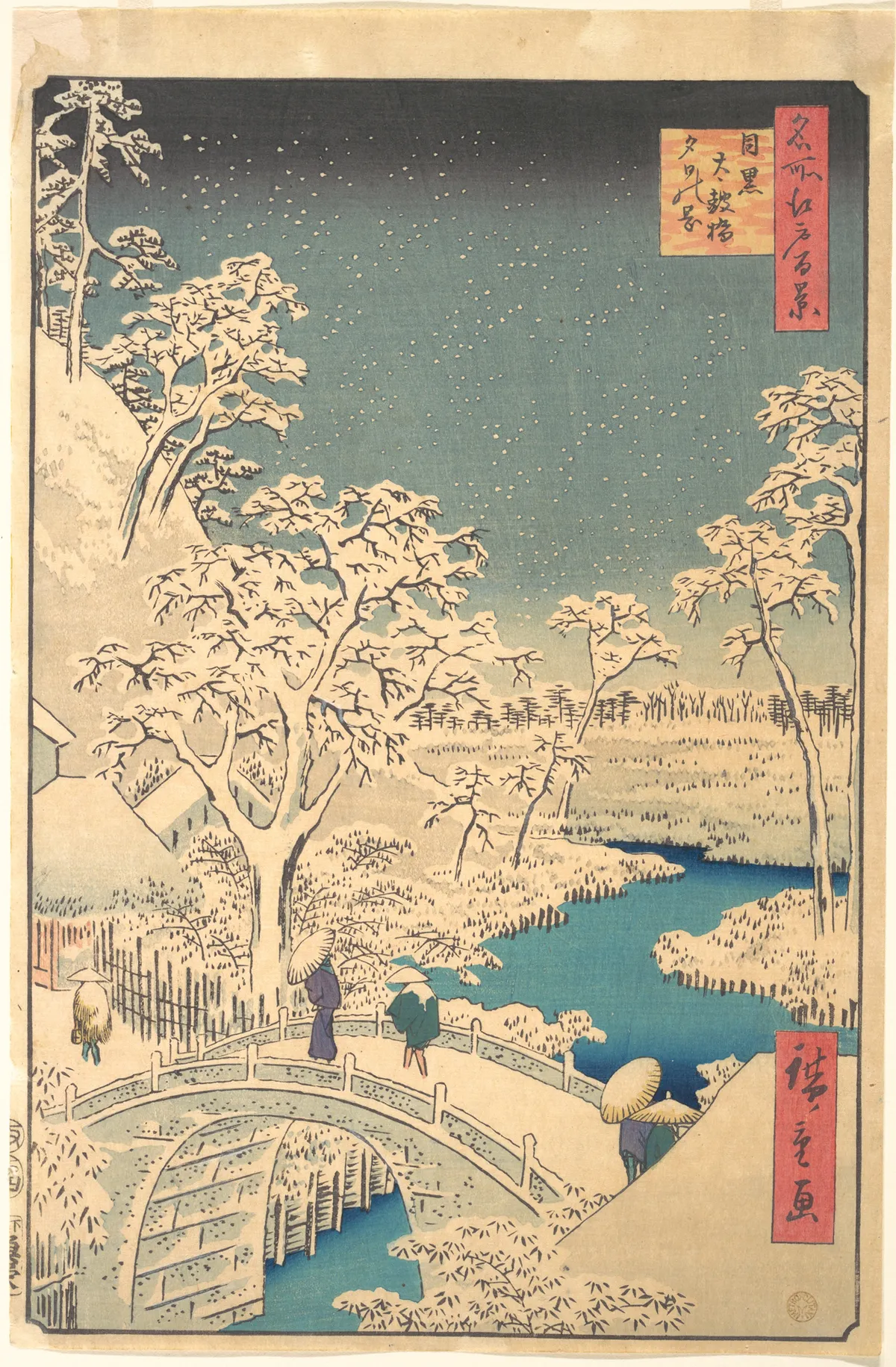
Taiko Bridge, Meguro, on a Snowy Evening
The snow fell silently, each flake a whisper against the night. Taiko Bridge stood alone, draped in white. Its arches curved softly over the river, a gentle rise in the landscape. The air was heavy with the cold, thick with the scent of snow.
Footsteps crunched in the distance. A lone figure moved slowly, a shadow among shadows. Cloaked in layers, they pulled their robe tighter, seeking warmth. The bridge creaked softly under the weight, echoing in the stillness.
Lanterns flickered, casting a dim glow on the snow. The light danced over the bridge, revealing the delicate patterns of frost. The world was muted, hushed, save for the gentle lapping of water beneath the arches.
In the distance, Meguro lay asleep, blanketed in silence. The trees bowed with snow, their branches heavy, their forms hidden. The world seemed to hold its breath, caught in the timeless moment between dusk and night.
Time passed slowly. The figure paused at the bridge's crest, gazing into the distance. Breath misted in the cold air, a fleeting cloud against the night. The snow continued to fall, a quiet curtain over the world.
Historical Echo
In the fourth month of the snake year 1857, Edo witnessed this tranquil scene. Hiroshige captured the essence of a snowy evening, a fragile beauty in the midst of a bustling city. Taiko Bridge, a familiar landmark, became a symbol of solitude, of quiet moments stolen from the chaos of life. Snow transformed the ordinary into the extraordinary, each flake a ghostly reminder of seasons past.