

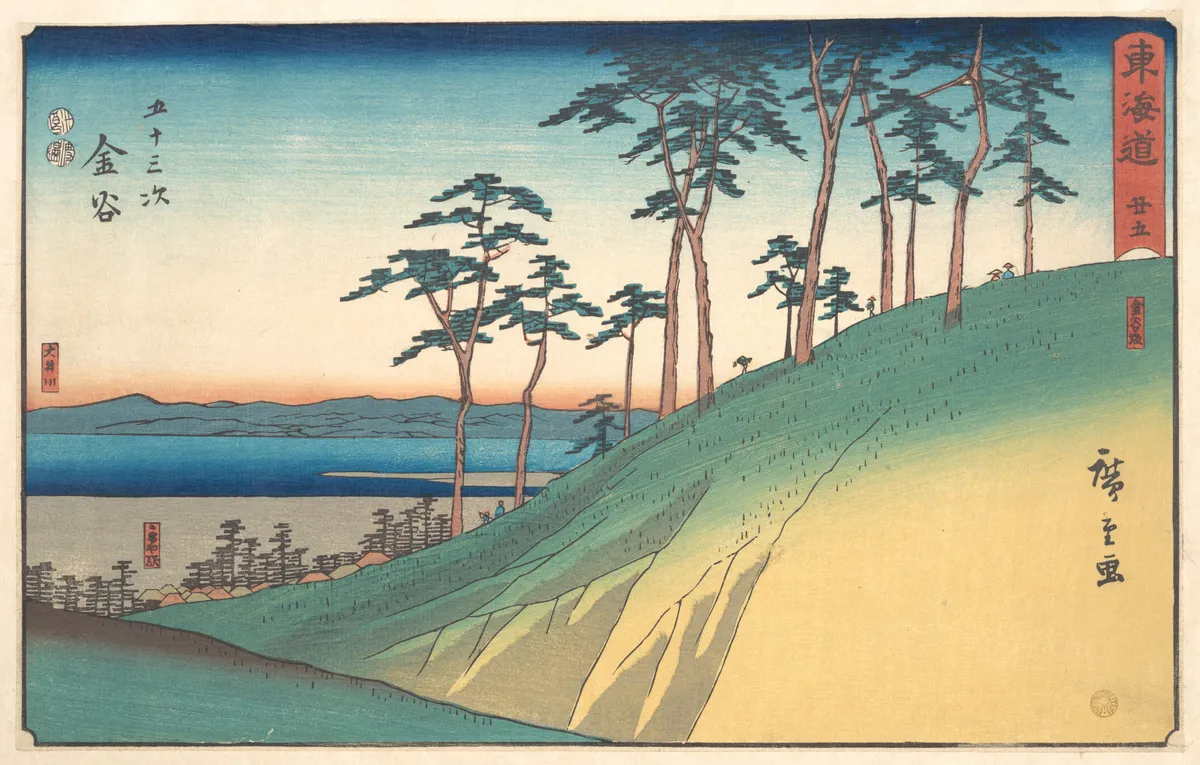
Under the Kanaya Bridge
The air is thick with anticipation. A bridge stretches over the Oi River, its wooden planks creaking underfoot. Travellers pause, eyeing the swirling waters below. The wind carries whispers of the journey ahead, rustling through their clothing. Footsteps echo in the silence.
Beside the bridge, a lone pine tree stands. Its needles sway gently, casting shadows on the ground. The river, a wide expanse of motion, glistens under the muted light. Reflections shimmer, broken by the ripples of passing boats.
A traveller adjusts his wide-brimmed hat, the fabric brushing softly against his face. His gaze follows the distant horizon, where mountains loom, shrouded in mist. He can taste the salt of sweat, the dust of the road lingering in the air.
The path ahead is uncertain, yet the bridge holds steady. An invitation to move forward, to cross from one world into another. The wooden structure groans under the weight of history, every step a testament to those who have come before.
Historical Echo
Kanaya was an important stop along the Tōkaidō road. It connected Edo and Kyoto during the Edo period. Travellers often faced challenges crossing the Oi River, especially during high tides. The bridge, a vital link, symbolised both separation and connection. Hiroshige captures this moment of transition, where nature and humanity intertwine.