

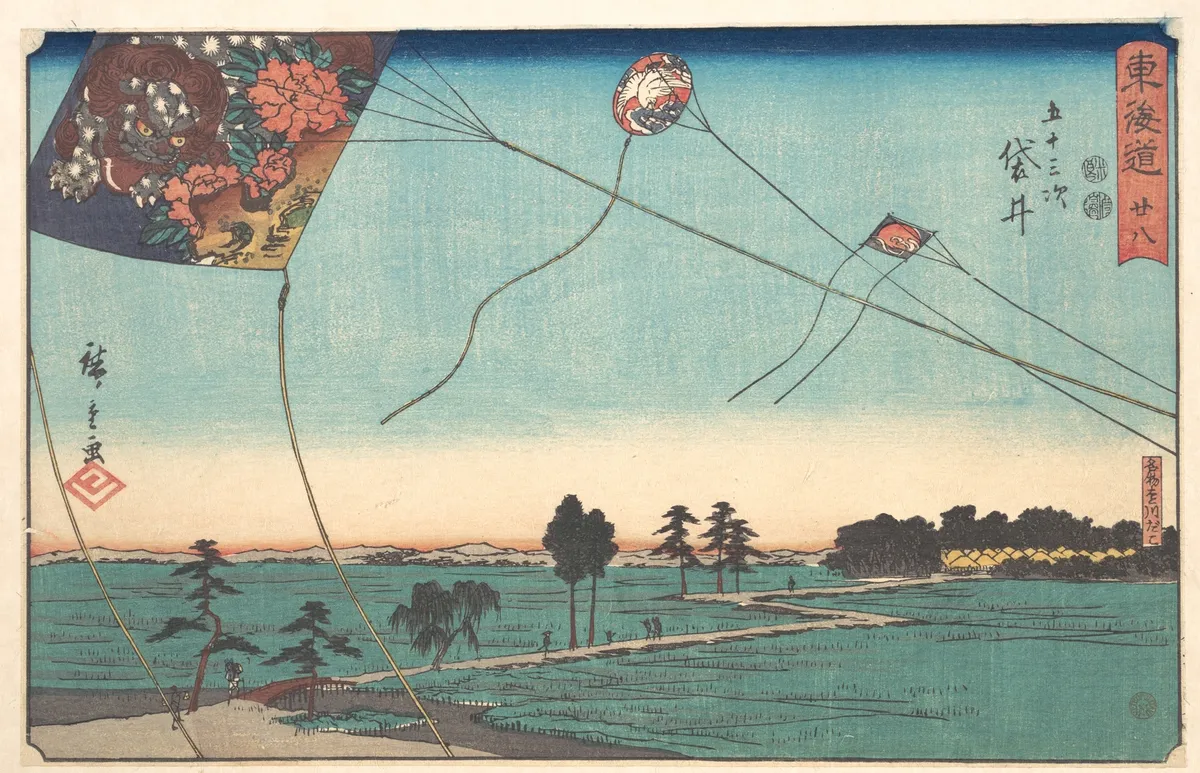
Fukoroi
A narrow path threads through the village of Fukoroi. The air, heavy with the scent of damp earth and pine, clings to the travellers' clothes. Lanterns flicker, casting brief halos in the deepening twilight. Footsteps crunch softly on gravel, a rhythm of departure and return.
A lone figure pauses, listening to the wind whisper through the pines. The rustle of leaves overlays the distant murmur of a river. Above, the sky stretches, a canvas of fading indigo.
Small houses line the path, their wooden walls darkened by time and weather. Smoke curls from chimneys, promising warmth and quiet conversation. Voices rise and fall, a gentle cadence barely above the wind.
In the distance, a carriage creaks, its wooden wheels straining against the weight of the journey. Horses snort, their breath visible in the cool air. The scene is a tapestry of motion and stillness, echoing the endless flow of travellers along the Tōkaidō.
Historical Echo
The Tōkaidō road, vital and restless, connected Edo to Kyoto. It bore witness to countless souls, each with stories woven into the landscape. Hiroshige captured these moments, freezing the transient into permanence. In "Fukoroi," he distills the essence of a fleeting evening, where past and present converge in quiet harmony. The print, a testament to the enduring allure of the journey, offers a glimpse into the heart of Edo-period Japan, where every footfall on the path reverberated with history.