

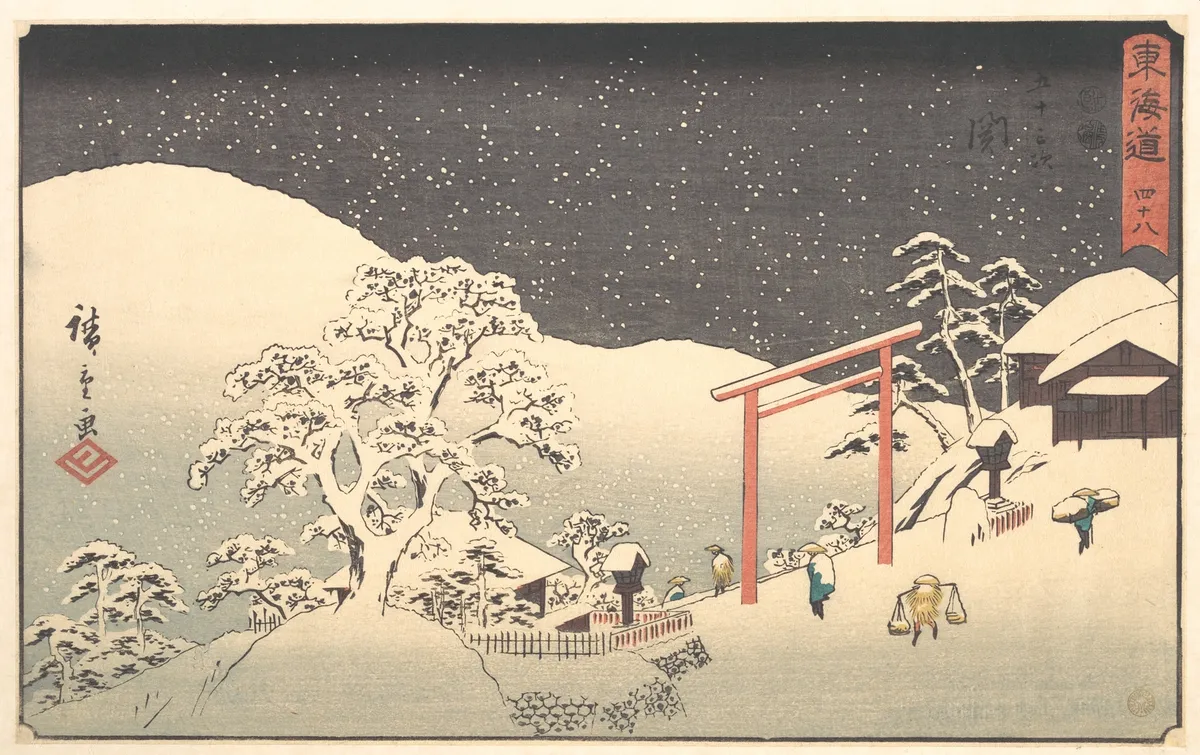
Seki
The evening air is heavy with silence. A traveller pauses on the path. Seki, a quiet post station, lies shrouded in twilight. Lanterns flicker softly, their glow barely reaching the edges of the road. The traveller, cloaked and weary, listens to the faint rustle of leaves. The air is damp, carrying the distant scent of pine. An old teahouse crouches by the roadside. Its wooden beams creak under the weight of years. Shadows play across the tatami mats inside, where a lone figure sips tea. The traveller inhales deeply, feeling the weight of the journey in his bones. Footsteps echo softly as he resumes his walk. A gentle breeze stirs the branches. The post station fades into the gathering night, leaving only the memory of warm tea and shadowed faces.
Historical Echo
Seki was one of the fifty-three post stations along the Tōkaidō road. It served as a waypoint for travellers moving between Edo and Kyoto during the Edo period. The station was a place of rest and quietude, a transient haven for weary souls. The air, thick with history, whispered tales of samurai, merchants, and pilgrims. Each footfall left an imprint on the ancient path, weaving a tapestry of journeys and farewells.