

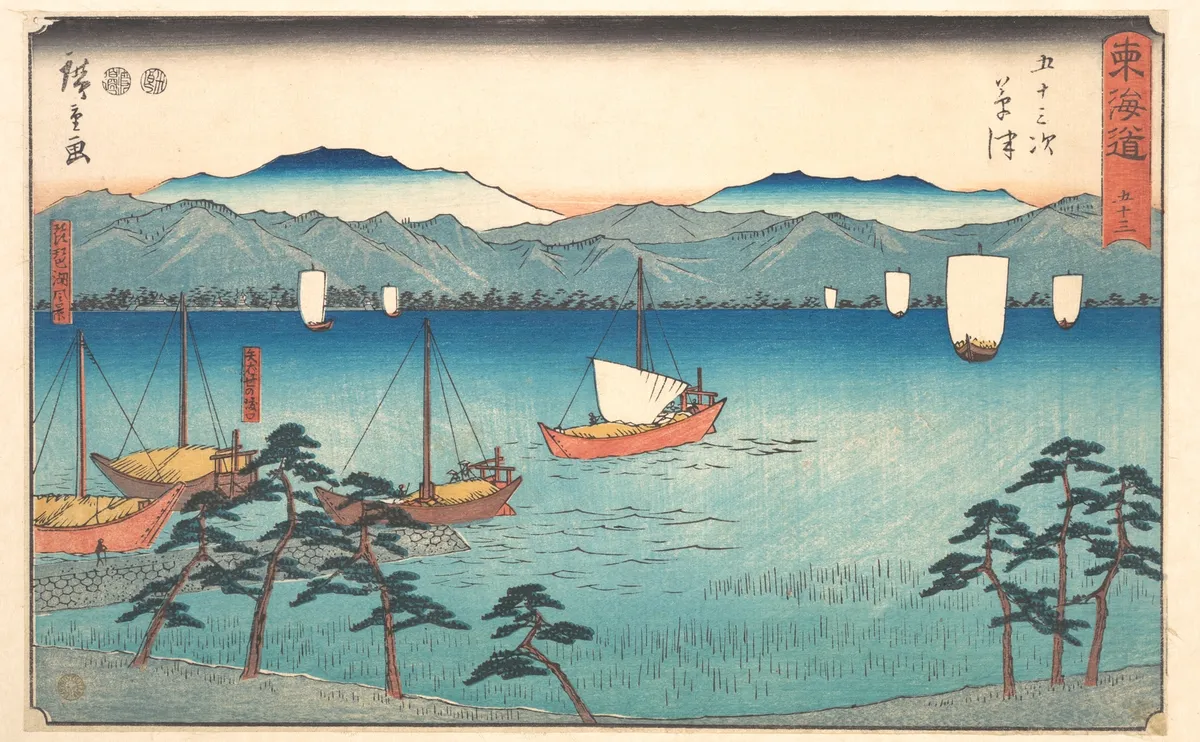
Kusatsu: The Rain Road
Rain falls relentlessly. It patters against the wide-brimmed hats of travellers. The road through Kusatsu is a ribbon of mud. Shadows of pine trees loom, their branches dripping. The air is thick with the scent of wet earth. Lanterns flicker in distant inns, promising warmth. Footsteps squelch, slow and steady. Faces are hidden beneath straw hats, eyes fixed on the path ahead. Cloaks cling to bodies, soaked and heavy. Silence, save for the rain and the occasional creak of cart wheels. The world narrows to the rhythm of the journey. Kusatsu remains a quiet witness, a moment suspended in time.
Historical Echo
Kusatsu, a post station on the Tōkaidō Road, was a place of brief respite. Travellers passed through, seeking shelter from the elements. Utagawa Hiroshige captured this transient life, where nature and humanity shared the stage. His prints immortalised the ordinary, the fleeting. Rain, mud, and pine trees became echoes of a journey, whispers of Edo's past.