

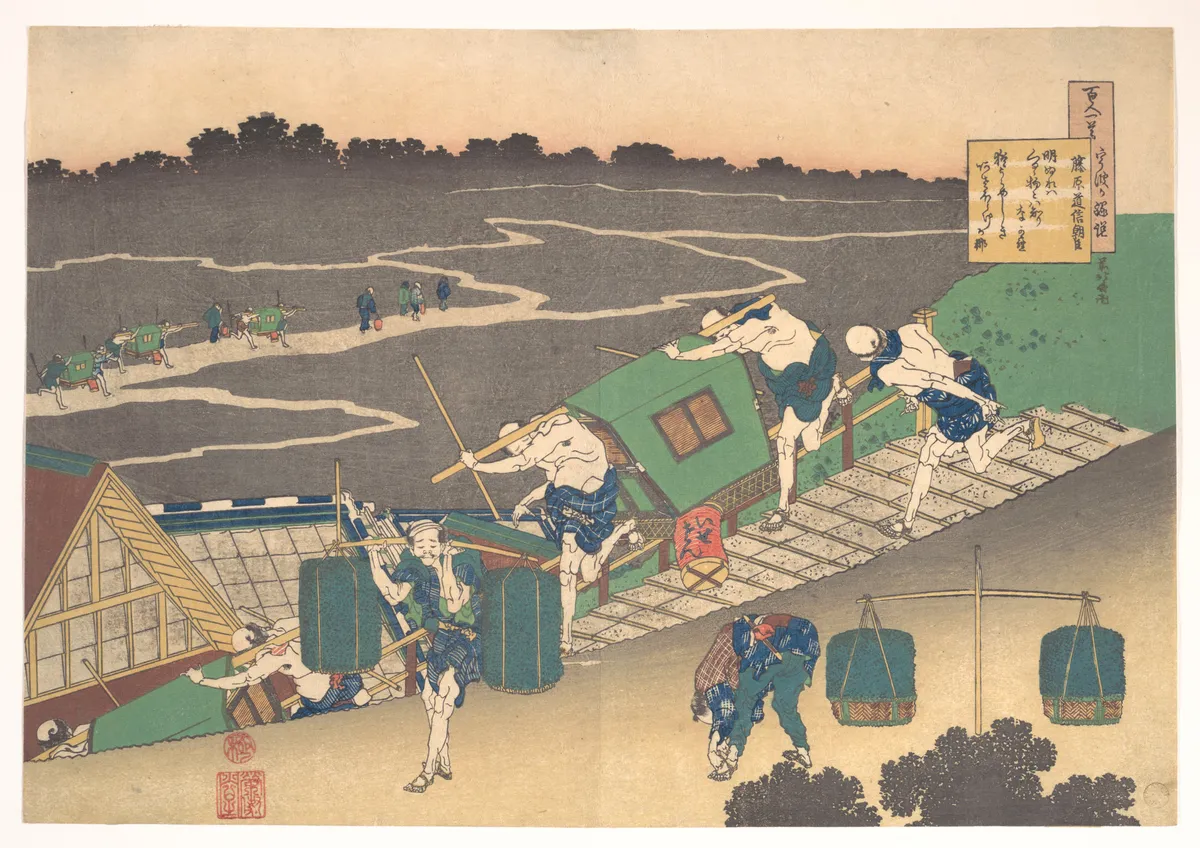
A Quiet Morning with Fujiwara
The mist hung low over the river. A lone figure stood by the water's edge. His robes were a muted grey, blending with the early dawn. Fujiwara no Michinobu Ason, known for his poignant poetry, gazed across the gentle flow. His breath mingled with the cool air, forming soft clouds that drifted away, unnoticed.
Beneath his feet, the earth was damp. Each step was a whisper against the world. The river, a constant song, murmured as it wound through the landscape. Fujiwara's eyes traced its path, losing themselves in the serene dance of water and light.
A soft rustle of leaves, a distant bird call. Nature's quiet symphony played around him. Fujiwara reached into his sleeve, retrieving a small scroll. Unfurling it, he penned a verse, the ink dark against the pale paper.
His words, a reflection of the world before him, captured the fleeting beauty of the moment. They spoke of the river's endless journey, the ephemeral mist, and the silence that enveloped him. A lone spectator to the eternal.
Fujiwara no Michinobu Ason stood still, letting the morning unfold. His heart, like his poem, was at peace.
Historical Echo
Fujiwara no Michinobu Ason, a poet of the Heian period, is remembered for his elegant and sorrowful poetry. In this print by Hokusai, the essence of his verse is captured through the tranquil scene. Hokusai's work often intertwined the natural world with human emotion, creating a timeless dialogue between the two. The scene reflects the simplicity and depth of Fujiwara's poetry, inviting the viewer to pause and reflect on the beauty of impermanence.