

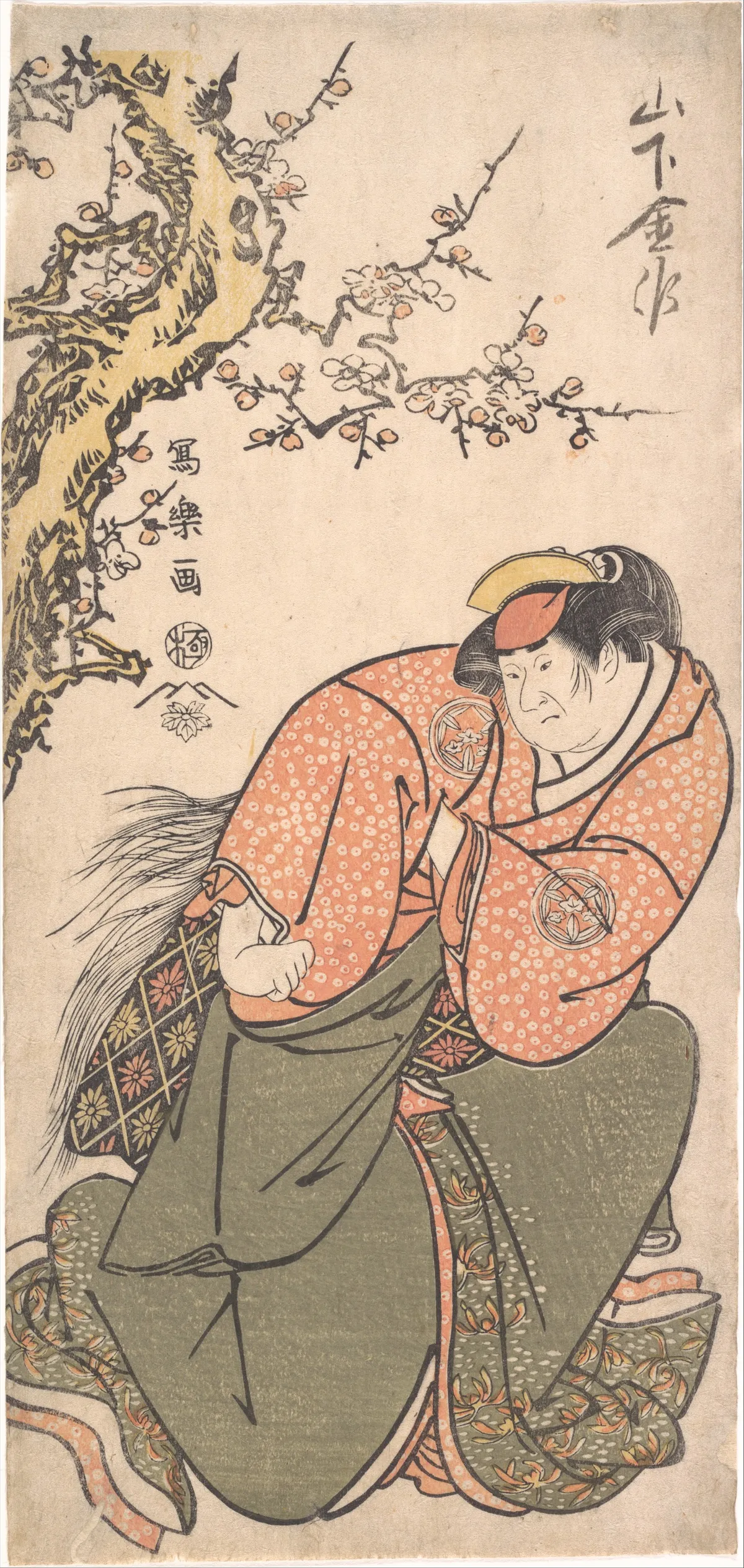
The Silent Gaze
Iwate stood beneath the dim glow of paper lanterns. Her kimono rustled softly. The air was thick with incense and whispers. She was Sadato's wife, portrayed on stage by Yamashita Kinsaku II. The actor's face, a mask of painted emotions, captured the audience. His eyes, dark and deep, seemed to hold secrets untold.
A hush fell over the theatre. The audience leaned in, breathlessly awaiting the next moment. The flickering candlelight played tricks on her expression, casting shadows like fleeting thoughts. The weight of her sorrow hung heavy in the air, like mist over a silent lake.
The boards beneath her creaked with every subtle shift. Her hands, delicate and poised, spoke of a life entwined with duty and despair. The scent of old wood and aged fabric mingled with the audience's anticipation.
In this transient world of make-believe, Kinsaku's Iwate was as real as the night itself. Her silence was a language all its own, echoing through the ages.
Historical Echo
In the late 18th century, the ukiyo-e master Tōshūsai Sharaku captured the ephemeral world of kabuki. His prints, vivid and haunting, revealed the soul of Edo's theatre. Yamashita Kinsaku II was renowned for his transformative performances. As Iwate, he embodied the delicate balance of strength and vulnerability. Sharaku's work immortalised these actors, their fleeting moments preserved in wood and ink.