

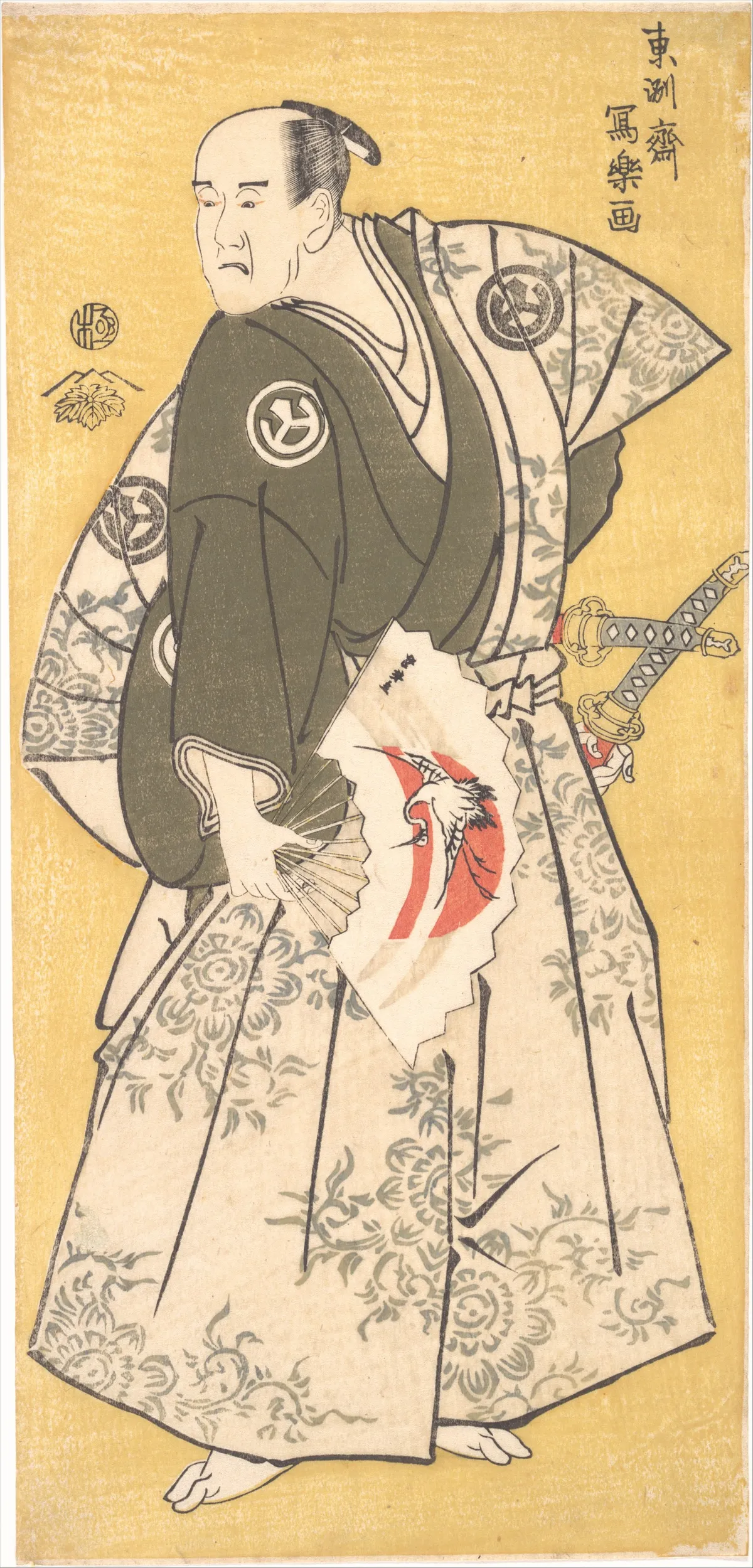
The Shadowed Stage
The dim glow of paper lanterns flickers against the wooden stage. Yamashina Shirojuro, poised, embodies Nagoya Sanzaemon. His eyes, intense and focused, carry the weight of unspoken stories. The air is thick with anticipation, mingling with the scent of freshly cut wood.
A hush falls over the audience. The silence is palpable, broken only by the rustle of silk robes as Shirojuro shifts his stance. His hand, steady and deliberate, rises, casting a shadow in the lantern light. The play's tension coils around him like a living thing.
Each movement is precise, each gesture a whisper of the character's inner turmoil. The actor's face, painted with care, reveals the nuances of Sanzaemon's plight. Beneath the surface, there is a storm—a flicker of vengeance, of honour lost and found.
The theatre, a world unto itself, breathes with the audience's collective anticipation. The weight of history presses in, echoing through the boards of the stage. Shirojuro's performance becomes a vessel, carrying the ghosts of past performances, the spirits of stories long told.
His voice, when it finally breaks the silence, is a low rumble. It reverberates through the space, weaving a spell that binds the onlookers. The moment is both eternal and fleeting, a dance of shadow and light.
Historical Echo
In the late 18th century, Tōshūsai Sharaku captured the ephemeral world of kabuki. His woodblock prints froze actors in moments of transformation. Yamashina Shirojuro, depicted here, was renowned for his intense performances. Sharaku's work, though brief in its time, left an indelible mark on the portrayal of kabuki actors. The prints reveal the tensions and dramas that played out on Edo's stages, offering glimpses into the heart of Japanese theatrical traditions.