

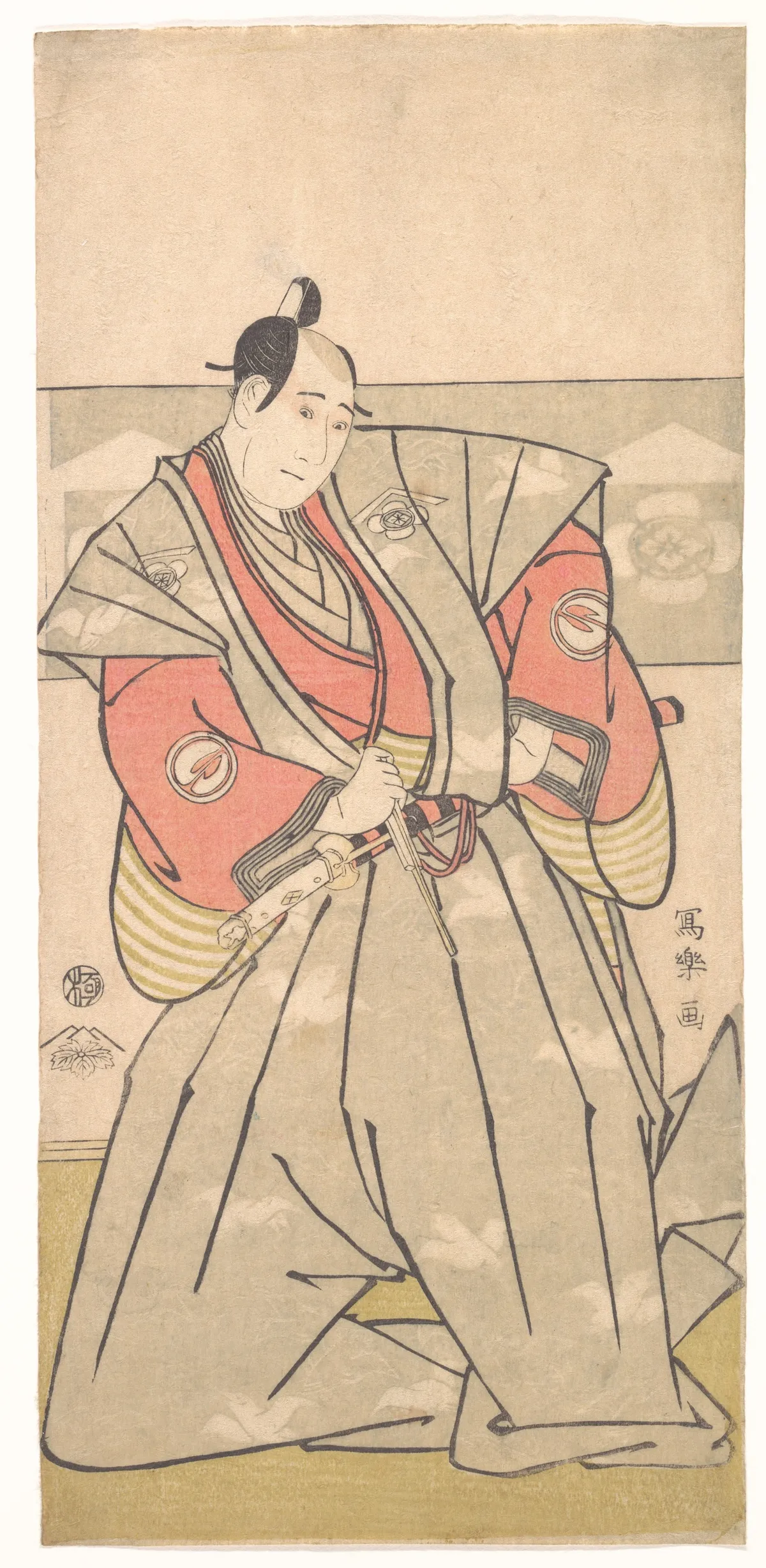
Sawamura in Shadow
The air is thick with anticipation. Paper lanterns flicker, casting shadows on the wooden stage. Sawamura Sojuro III stands, poised. His gaze is intense, piercing through the audience. Silence envelops the room, broken only by the rustle of silk robes. The actor's painted face, a mask of emotions, conceals more than it reveals. He is a living tableau, a figure frozen in the dim glow. Each gesture, deliberate and slow, speaks volumes. The audience is spellbound, caught in the actor's silent allure. The scent of incense lingers, mingling with the faint smell of lacquered wood. A cough echoes softly, quickly swallowed by the darkness. Sawamura's eyes, heavy with stories untold, hold the past and present in a single glance. The scene is a delicate dance of light and shadow, of presence and absence. In this moment, time seems to pause, as Sawamura Sojuro III becomes both actor and ghost.
Historical Echo
Tōshūsai Sharaku captured Sawamura Sojuro III at the peak of his craft. The year was 1794, a time when kabuki thrived in Edo. Sharaku's work remains enigmatic, his identity shrouded in mystery. This print, a striking portrait of the actor, reflects the intensity of the kabuki stage. Sawamura, known for his versatile performances, was a celebrated figure, immortalised in Sharaku's bold lines and stark contrasts. The ukiyo-e serves as a window to a world where theatre was both life and art, where actors like Sawamura were revered yet transient, much like the shadows they cast.