

A Night Behind the Mask
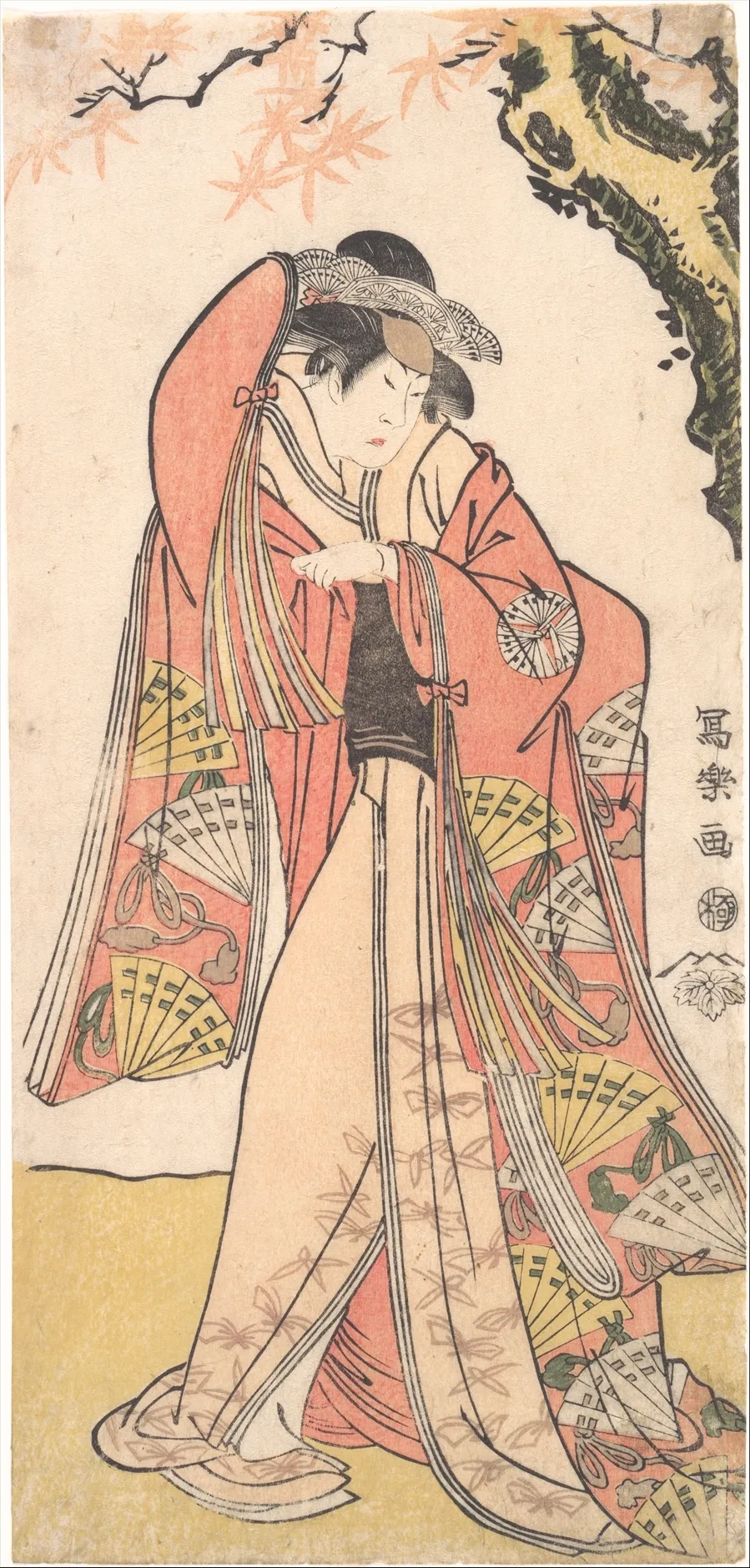
A hush falls over the theatre. The air is thick with anticipation. The flickering lanterns cast long shadows, dancing across the wooden stage. From behind the curtain, a figure emerges. It is Sakakiyama Sangoro II, transformed into Princess Otae.
Layers of silk rustle gently with each step. The scent of incense hangs in the air, mingling with the earthy smell of the wooden beams. His eyes, hidden beneath delicate makeup, scan the crowd. They seem distant yet piercing, as if searching for a forgotten memory.
The audience leans forward, captivated by the transformation. They are drawn into the world within the painted woodblock. Every gesture, every subtle movement, tells a story. The silence deepens, interrupted only by the soft murmur of the crowd.
In the dim light, Sangoro becomes Otae. The princess's quiet elegance emerges through the actor's practiced grace. Her tale unfolds, a whisper of courtly intrigue and unspoken longing.
The night stretches on. The theatre becomes a realm suspended between reality and illusion. Sangoro, beneath the layers of ink and costume, breathes life into Otae, if only for a fleeting moment.
Historical Echo
Tōshūsai Sharaku's prints capture fleeting moments of Edo's vibrant theatre scene. Active only for a brief period, Sharaku's works are enigmatic, shrouded in mystery. His portrayals of kabuki actors reveal the hidden layers of performance, the duality of actor and character. This particular print immortalises Sakakiyama Sangoro II as Princess Otae, bridging the ephemeral nature of theatre with the enduring art of ukiyo-e.