

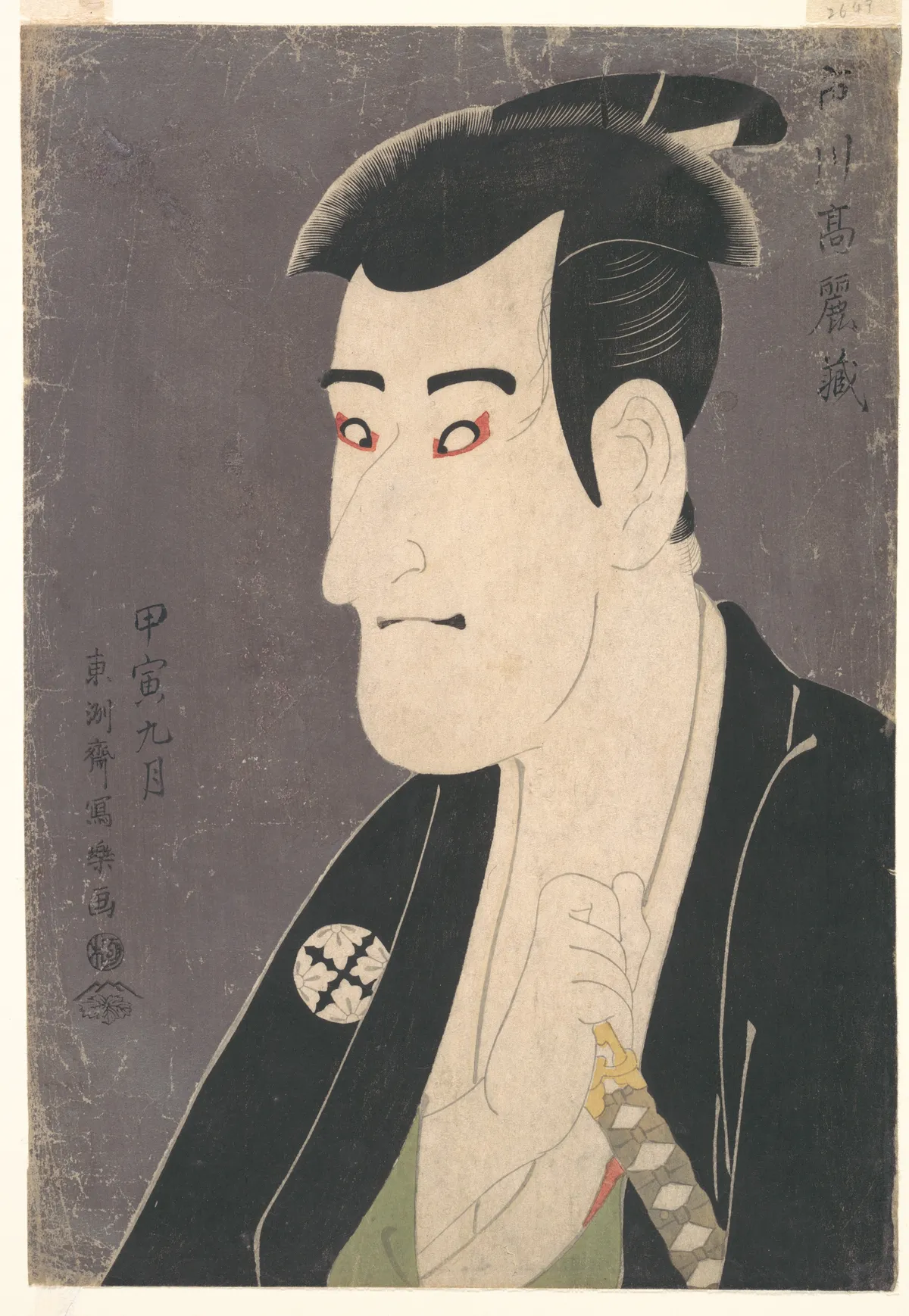
Shiga Daishichi's Silent Resolve
The air is thick in the theatre. A hush falls as Ichikawa Komazō III steps forward. His eyes are sharp, cutting through the dim light like blades. He is Shiga Daishichi, a man torn by vengeance, cloaked in layers of silk and shadow. His kimono whispers with each calculated movement. The audience leans in, breath held, as if the very air might betray the unfolding tale.
The lanterns cast a muted glow, painting his face with lines of sorrow and fury. Every gesture is deliberate, a dance with the spectres of his past. Daishichi's hands flex, the tension of a thousand unspoken words held within them. The wooden stage creaks beneath his feet, an echo of the weight he bears.
Silence stretches, deep and wide, as Daishichi pauses. A flicker of something soft crosses his face—regret, perhaps, or a memory of peace long lost. The play is revenge, but here, in this moment, it is also a lament. The scent of incense drifts through the room, mingling with the palpable anticipation.
Outside, the world is a swirl of Edo's night, but within these walls, time stands still. The story unfolds with each breath, each heartbeat, and Daishichi's resolve carries it forward, relentless and consuming.
Historical Echo
In the 1790s, Tōshūsai Sharaku captured the raw intensity of kabuki actors. His prints reveal layers of emotion, etched in stark contrasts. Ichikawa Komazō III was renowned for his powerful performances. As Shiga Daishichi, he embodied a complex narrative of revenge and redemption. Sharaku’s work was brief yet impactful, his identity shrouded in mystery. His prints remain a haunting testament to Edo's theatrical vibrance.