

The Immovable One
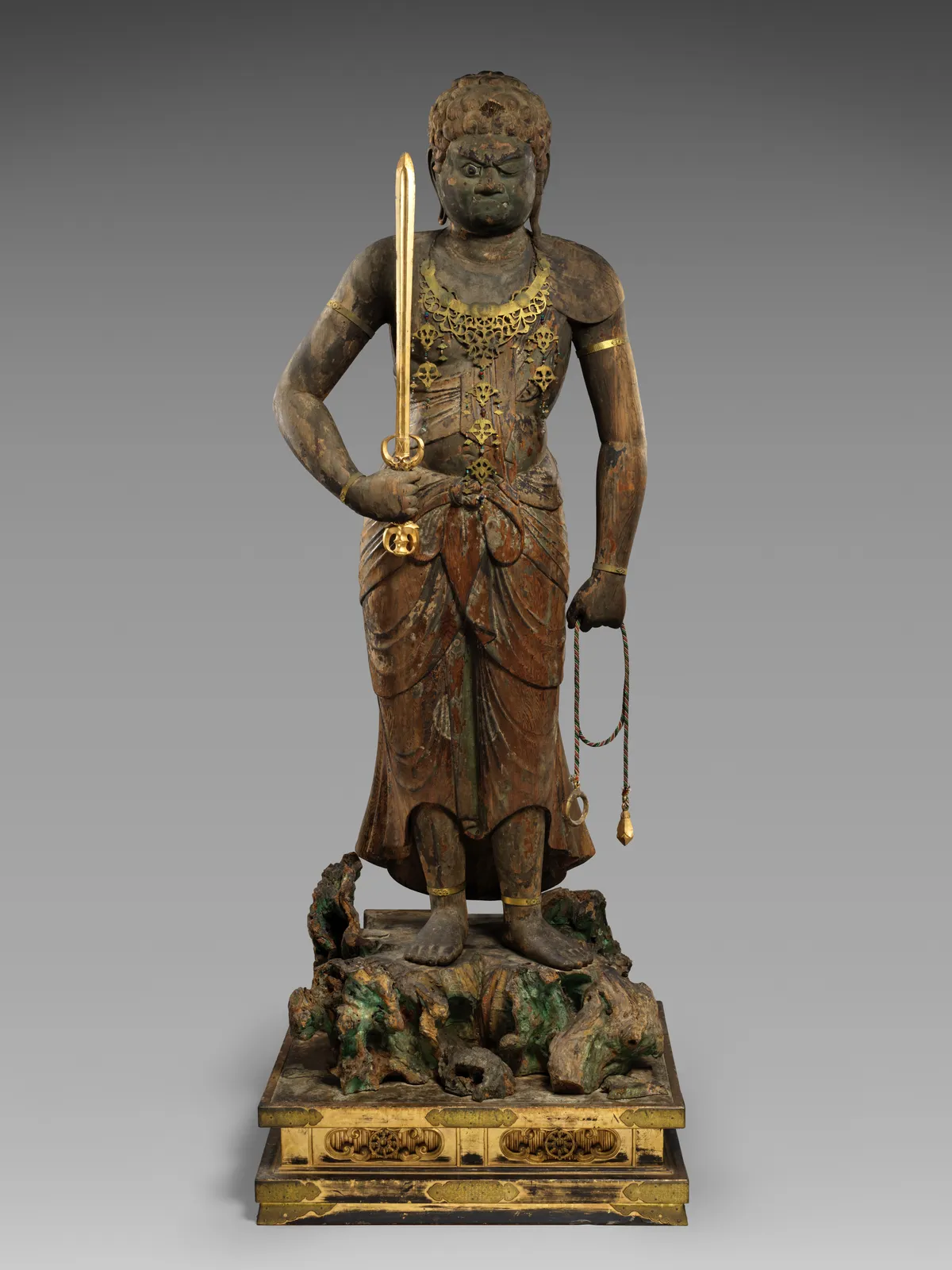
In the dim glow of a solitary flame, Fudō Myōō stands. The deity's eyes pierce the shadows, unwavering, eternal. Around him, fire dances, its heat palpable yet harmless. His body, a fortress of calm amidst the elemental fury.
The air is thick with incense. It coils upward, intertwining with the smoke of the small fire. Each tendril a silent prayer, whispered from forgotten lips. The scent clings to the wooden beams above, ancient and watchful.
In his right hand, he grips a sword. It gleams, a shard of moonlight in the gloom. In his left, a rope, taut and ready. His gaze, however, holds the true power—unyielding, compassionate, fierce.
A shiver runs through the room. The wooden floor creaks softly as if adjusting to the presence of something not quite of this world. Fudō Myōō remains still, his presence a bulwark against chaos. He is the Immovable One.
Historical Echo
Fudō Myōō, known as Achala Vidyaraja, is a protector. He is a guardian of the Buddhist faith, a force against the unruly passions of the world. In the 12th century, such imagery served not only as spiritual guidance but as a reminder of stability. The unknown artist captured this essence—eternity in a moment, serenity amid turmoil.
The woodblock print, with its layers of ink and skill, conveys a story beyond words. In the quiet of a temple or the corner of a humble home, Fudō Myōō's image would have been a steadfast companion. A silent sentinel, a bulwark of peace in a turbulent age.