

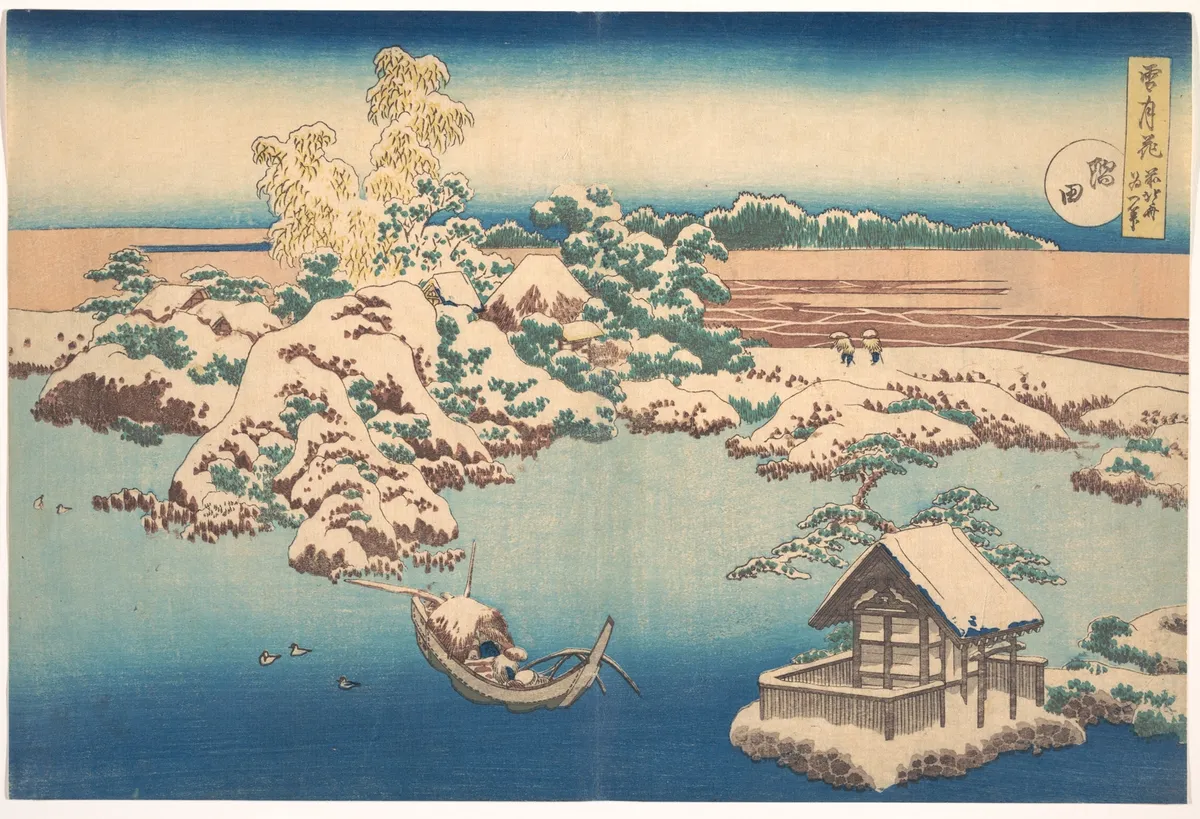
Snow on the Sumida
The river lay silent beneath a shroud of snow. A lone boat cut through the heavy white, its oar slicing the water with deliberate grace. The air, sharp and cold, held the quiet whispers of winter. A distant figure stood, wrapped in layers against the chill, eyes fixed on the horizon where the river met the sky. Snowflakes fell, soft and soundless, disappearing into the dark water. Trees lined the banks, their branches heavy with the weight of snow, arching over the river like silent guardians. The world was hushed, every sound swallowed by the snow. The boatman’s breath hung in the air, a fragile mist in the frozen silence. As he rowed steadily, the river’s surface rippled, a fleeting disturbance in the tranquil scene. It was a moment caught between breaths, a pause in the relentless passage of time. The Sumida River flowed on, indifferent to the cold, carrying with it the quiet stories of those who drifted upon its icy surface.
Historical Echo
In the Edo period, the Sumida River was a vital artery of trade and travel. Boats like the one in Hokusai's print ferried people and goods, weaving through the heart of the city. Winter transformed the river into a serene tableau, a stark contrast to the bustling life that surrounded it. Hokusai captured this stillness, the ephemeral beauty of snow on water, in his series "Snow, Moon, and Flowers." Each flake, each ripple, a testament to the transient nature of life, a theme that resonated deeply in the art and philosophy of Edo Japan.