

The Quiet of Chiyo
In the dim light of dawn, Kaga no Chiyo sat by her window. Her fingers traced the delicate paper of her latest poem. Outside, the world was still wrapped in a gentle mist. The air smelled of wet earth and pine. Her brush hovered over the inkstone, hesitating. She listened to the faint rustle of leaves. A single sparrow chirped, breaking the silence.
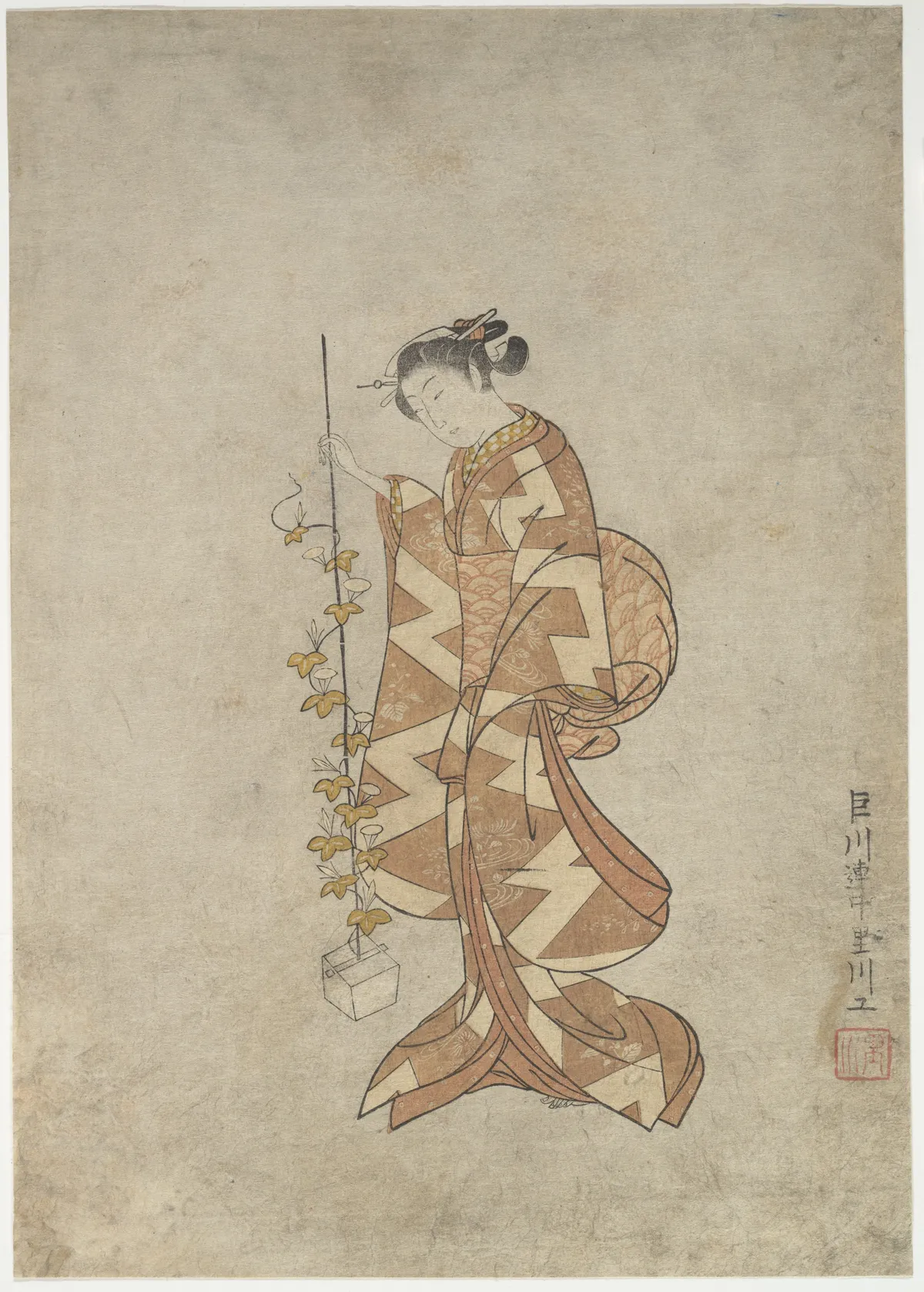
Harunobu captured her in this moment. The weight of her kimono, the soft fall of her hair, the gentle curve of her wrist. Her eyes, focused yet distant, as if seeing beyond the narrow confines of her room. Chiyo was known for her haiku, her words often reflecting the simplicity of nature. Here, she seemed to embody them. The room around her was sparse, save for the scrolls and a single vase holding a fragile flower.
The light shifted as the sun slowly rose. Chiyo dipped her brush into the ink, her movements graceful and deliberate. Each stroke was a whisper. Her poetry spoke of the ephemeral, of moments like these. Outside, the sparrow flitted away, its shadow fleeting against the shoji screen. Chiyo smiled, the corners of her lips barely lifting. In this quiet, she found her voice.
Historical Echo
Kaga no Chiyo, born in 1703, was a celebrated poetess of the Edo period. Her haiku often drew from nature, capturing the transient beauty of the world. Suzuki Harunobu, known for his elegant bijin-ga, depicted her not just as a poet, but as a figure of tranquillity. This woodblock print, created around 1765, reflects both Chiyo's poetic legacy and Harunobu's artistic sensitivity.